Cloudflare vs Akamai vs Fastly: The IT Leader's Guide for CDN and Edge Security in 2026
Cloudflare, Akamai, or Fastly — which enterprise CDN is right for your security stack in 2026? This in-depth comparison covers WAF capabilities, compliance certifications, real-time log access, TCO, and the contract questions your procurement team needs to ask before signing.

Choosing a CDN used to be a network engineering decision. A conversation between your infrastructure team and a vendor's solutions architect, focused on POPs, cache-hit ratios, and egress costs.
That conversation has changed. CDN platforms now own your WAF, your bot management layer, your DDoS mitigation, your API security, your Zero Trust access controls, and in some cases your edge compute runtime, all under one contract. The platform you select determines your security posture at the edge, your compliance standing with auditors, your log access during an active incident, and your total cost of ownership across a multi-year agreement.
I've seen IT leaders spend weeks evaluating TTFB benchmarks and sign contracts that leave them operationally blind during a DDoS event because real-time log streaming wasn't included in the tier they bought.
Let's compare Cloudflare, Akamai, and Fastly and understand which ones suits you.
IT Leaders Report 2026
What are your IT peers investing in 2026?
We spoke to about 1,300 IT leaders from various organisations to understand what they're evaluating. Most of it is the kind of thing you'd only hear from a peer you know well enough to ask, so we've put it in one place.
Read the report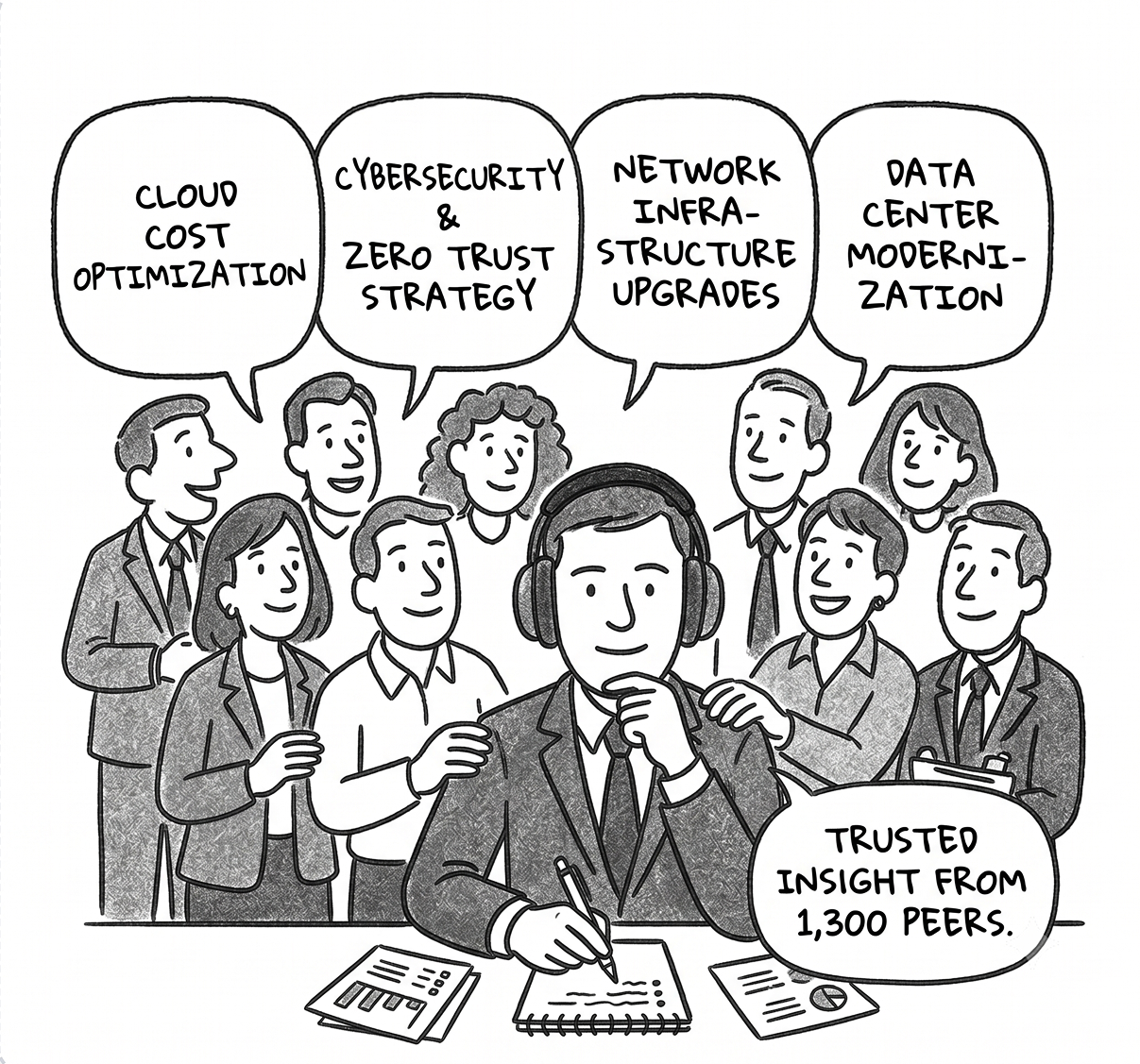
Why This Decision Now Touches Your Entire Security Stack
Cloudflare processes over 10 trillion requests per month. Akamai delivers 95 exabytes of data annually across billions of devices. These are infrastructure-at-scale numbers, but they also illustrate why these platforms sit directly in front of every application your users touch.
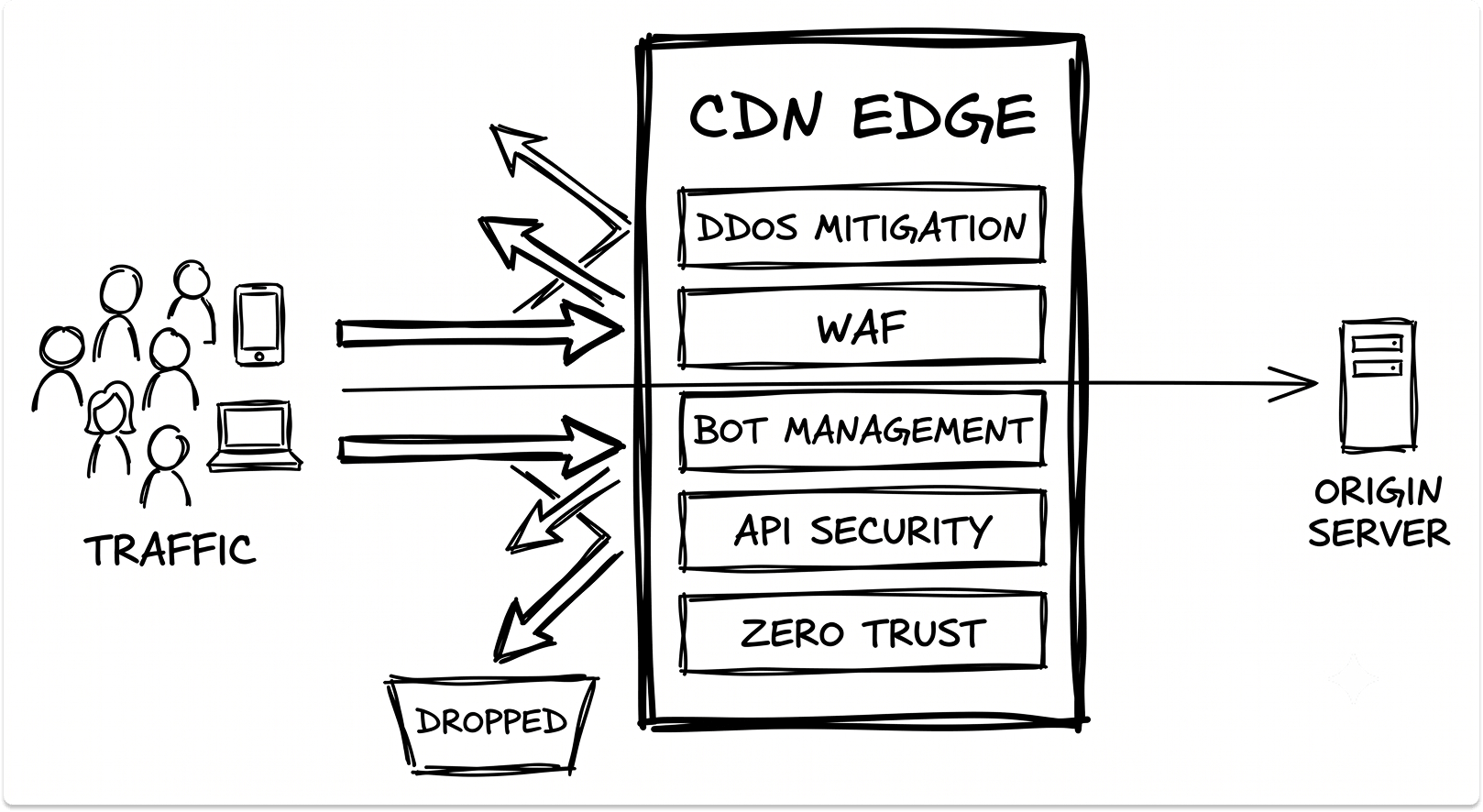
The security surface that lives on these platforms now includes:
- Layer 7 DDoS mitigation — absorbing application-layer attacks before they reach your origin
- Web Application Firewall (WAF) — blocking OWASP Top 10 attacks, SQLi, XSS, and custom threat patterns
- Bot management — distinguishing legitimate crawlers from credential-stuffing automation
- API security — schema validation, endpoint discovery, anomaly detection on API traffic
- Zero Trust Network Access — replacing legacy VPN with identity-aware, least-privilege access
- Edge compute — executing security logic (auth, rate limiting, token validation) at the network edge before requests reach your application
This means the decision touches your CISO, your legal team on compliance and data residency, your procurement team on contract structure and renewal terms, and your infrastructure team on operational integration. Treating it purely as a networking procurement misses most of what you're actually buying.
Where Each Platform Actually Stands in 2026
Cloudflare
Cloudflare operates 310+ cities globally, including 54 North American POPs, 47 in Europe, 45 in Asia, and 55 in Latin America, the widest geographic coverage of the three. The network is Anycast, meaning traffic automatically routes to the nearest POP without DNS-based steering logic.
Cloudflare's own Real User Measurement benchmark, run across 20,728 ASNs, shows the platform ranking first or second in TTFB across 69.9% of the top 1,000 global networks. On Cox Communications, p95 TTFB was 332ms versus Akamai's 441ms, a 32% gap on a major US ISP. On Comcast, Fastly and Cloudflare were effectively identical at 323ms and 324ms respectively. The methodology used browser Resource Timing API data, not synthetic probes, so it reflects real-user conditions.
Note that 37 of Cloudflare's POPs are in China but those operate under a separate enterprise agreement with a Chinese partner entity. Your standard global contract does not cover China-region traffic. The data processing agreement for that coverage needs to be negotiated and signed separately, and it carries distinct data sovereignty implications.
The security breadth out of the box is the widest of the three: WAF with Managed Rulesets, Custom Rules, Rate Limiting, API Shield with schema validation and mutual TLS, Bot Management, and Page Shield, which monitors third-party JavaScript on your pages for supply chain injection attacks. No other platform in this comparison offers a native equivalent to Page Shield.
For teams without dedicated security engineering capacity, Cloudflare's managed rulesets are the fastest path to solid baseline protection.
The meaningful limitation: real-time log streaming is locked behind the Enterprise tier. Below that, you get sampled analytics. During an active DDoS or WAF incident, real-time logs are your primary signal. Confirm whether your contracted tier includes this before signing.
Compliance certifications: SOC 2, PCI DSS, ISO 27001, HIPAA, FedRAMP.
Akamai
Akamai runs 100,000+ servers across 1,300+ locations. This is not a meaningful comparison to Cloudflare's POP count — Akamai's architecture is ISP-embedded, meaning servers live inside carrier networks at the last mile.
The consequence is performance consistency in Tier 2 and Tier 3 markets where other CDNs route traffic through longer paths.
On raw TTFB in major US markets, Akamai trails Cloudflare. The Cox Communications p95 figure of 441ms versus Cloudflare's 332ms reflects this. But TTFB on a single network is one data point.
Akamai's Global Server Load Balancing and advanced routing algorithms are purpose-built for complex, multi-region architectures where latency consistency across diverse markets matters more than peak performance on a single ISP.
The security depth is the most mature of the three. Akamai's Adaptive Security Engine uses machine learning to auto-tune WAF rules per application over time, which reduces the operational burden of manual rule management as your application changes.
Bot Manager uses behavioral analysis, device fingerprinting, and ML-based detection, the most mature bot mitigation capability in this comparison. Account Protector adds a dedicated layer for credential stuffing and account takeover detection on top of the standard WAF.
Akamai is also the only platform here that offers an optional 24/7 SOC managed security overlay, human analysts monitoring your traffic and responding to incidents. For organizations without an internal security operations team, this changes the resourcing calculus significantly.
The platform requires skilled configuration, and reliance on Professional Services hours for initial deployment and ongoing tuning is one of the most consistent operational criticisms from practitioners. Procurement requires custom scoping, and the sales cycle typically runs 4–8 weeks.
Compliance certifications: SOC 2, PCI DSS, ISO 27001, ISO 27017, ISO 27018, FedRAMP, HIPAA. Akamai is the only platform here that publicly holds ISO 27017 and ISO 27018 — the cloud-specific extensions covering security controls for cloud services providers and protection of personally identifiable information in the cloud. For organizations in financial services, healthcare, or federal contracting, this distinction matters in an audit.
Fastly
Fastly has 76 POPs globally, significantly fewer than the other two. The number is misleading on its own. Fastly's architecture concentrates investment in per-POP hardware: 768GB RAM, 24TB SSD storage, and 100Gbps connectivity per server. Each POP caches a substantially larger working set than typical CDN edge nodes. Fewer locations, but each location handles significantly more edge-resident content before going back to origin.
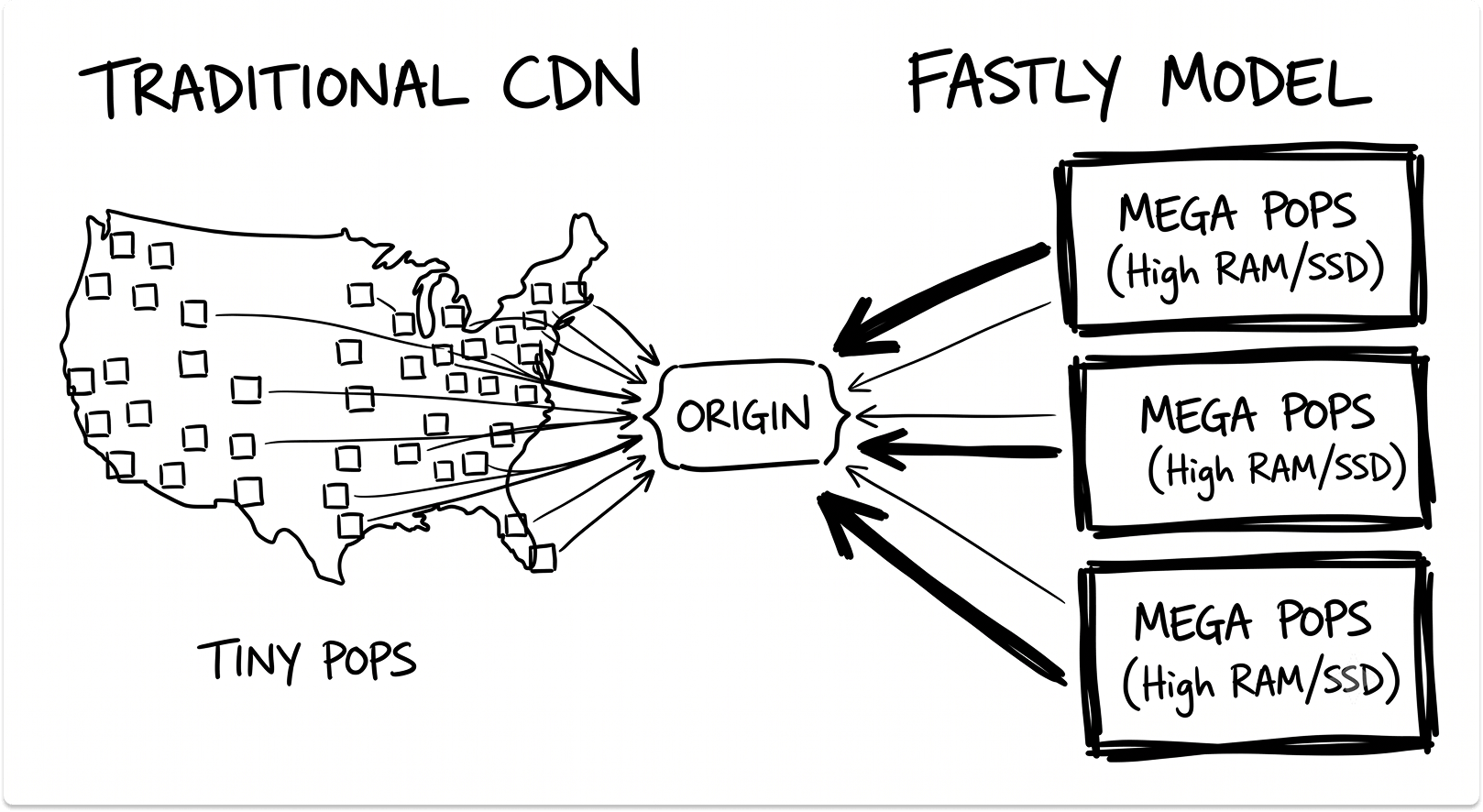
Fastly's Instant Purge propagates globally in approximately 150ms. For comparison, Akamai's Fast Purge is sub-5 seconds for web objects but for video-on-demand content, purge propagation can extend to 120 minutes. For any use case where content invalidation speed is a functional requirement, Fastly leads.
The programmability of the platform is a genuine technical differentiator. Fastly is built on Varnish, and VCL (Varnish Configuration Language) upload gives your engineers per-request decision-making power that Cloudflare's Workers and Akamai's EdgeWorkers cannot match in flexibility.
Authentication logic, paywall enforcement, edge-side personalization, complex cache key construction — all executable in VCL before the request hits origin. The operational requirement is that someone on your team can write and maintain it.
The WAF uses SmartParse technology, which Fastly claims reduces false positives by over 90% compared to traditional regex-based WAFs. False positives are not a minor inconvenience. Every false block is a support ticket, a broken customer workflow, or a failed transaction. The operational cost of tuning a noisy WAF in a high-traffic environment is significant, and SmartParse directly addresses that.
Fastly is the only third-party CDN listed on both AWS Marketplace and Google Cloud Marketplace, which simplifies billing consolidation for organizations running unified cloud procurement.
The hard geographic limitation: Fastly has zero POP presence in China, Russia, and the CIS region. For organizations with users or operations in those markets, this is not a configuration issue — it is a structural gap that cannot be addressed within the standard Fastly platform. If your traffic footprint includes China or Russia at any meaningful volume, Fastly is not a viable primary CDN.
Compliance certifications: SOC 2 Type II, PCI DSS, ISO 27001, HIPAA, GDPR. Fastly explicitly lists GDPR compliance — relevant for organizations with EU-based users where data processing agreements need to map to a certified provider.
Enterprise support: Sub-10-minute response time, 98% CSAT, 98% first-contact resolution.
What CISOs Actually Need to Evaluate on Security Posture
WAF false positive rate and operational burden. A WAF that fires on legitimate traffic creates operational noise your team has to absorb. Cloudflare's Managed Rulesets are well-tuned but require ongoing adjustment as your application evolves.
Akamai's Adaptive Engine self-tunes using ML but the tuning cycle takes time and the initial deployment complexity is high. Fastly's SmartParse uses application context rather than raw pattern matching, which is why the false positive reduction claim is significant. Before signing, ask each vendor for the false positive rate on their default ruleset against a traffic profile similar to yours.
API security depth. API traffic now represents the majority of web application traffic in most enterprise environments. Akamai leads here: API Discovery, schema validation, Account Protector for credential stuffing, and Client Reputation scoring form a layered API defense.
Cloudflare's API Shield provides schema validation, mutual TLS, and anomaly detection. Fastly has API Discovery but the capability is less mature than either. If API protection is your primary security requirement, Akamai is the stronger choice at the cost of higher operational complexity.
Third-party JavaScript monitoring. Supply chain attacks via injected JavaScript are a growing CISO concern after a series of high-profile incidents.
Cloudflare's Page Shield actively monitors third-party scripts running on your pages and alerts on anomalous behavior. If your endpoint security audit includes client-side script risk, only Cloudflare addresses this natively in this comparison.
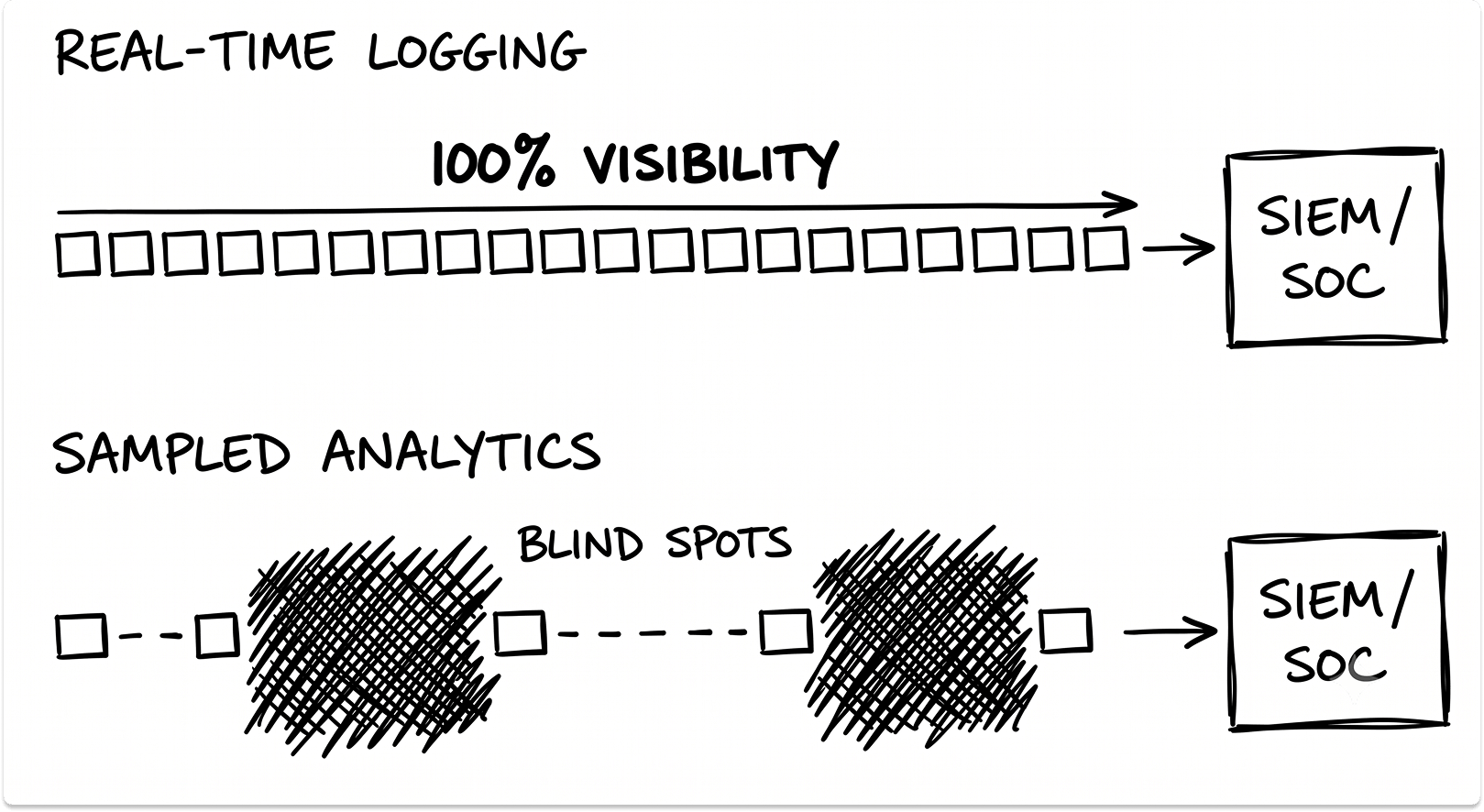
Log access during incidents. When a DDoS hits or a WAF rule triggers at scale, real-time log access is the fastest path to understanding what is happening and whether your rules are working or generating false positives.
Fastly provides real-time log streaming on all plans, with 30+ logging endpoint integrations including Datadog, Splunk, Sumo Logic, and Google BigQuery.
Cloudflare's real-time log streaming requires the Enterprise tier and below that, you get sampled analytics. Akamai's log delivery is available but configuration-heavy. If your SIEM integration requires low-latency log ingestion, this needs to be confirmed before tier selection.
Compliance and Data Residency: The Certifications That Actually Matter
The compliance cert table below reflects what each vendor publicly holds as of 2026. Verify the current status and specific product scope directly before making a compliance-driven decision.
ISO 27017 and ISO 27018 are the cloud-specific extensions of the ISO 27000 family. 27017 covers security controls for cloud service providers; 27018 covers protection of personally identifiable information in public cloud environments.
Akamai is the only platform here that publicly holds both. For organizations in financial services, federal government, or healthcare where auditors specifically look for these certifications, this is a meaningful procurement factor.
FedRAMP authorization is more nuanced than a checkbox. Authorization levels (Moderate vs. High) and the list of specific agency ATOs (Authority to Operate) in place differ between vendors.
Confirm the current authorization level and whether your agency has an existing ATO before treating FedRAMP as a qualification on any of these platforms.
On China-region data: Cloudflare's China network operates through a separate agreement with a Chinese partner entity. Your standard DPA does not extend to China-region traffic automatically.
If your organization has GDPR obligations and routes EU user data through Cloudflare's global network, the specific data transfer mechanisms in your contract need explicit review.
Total Cost of Ownership: What the Pricing Tables Don't Show
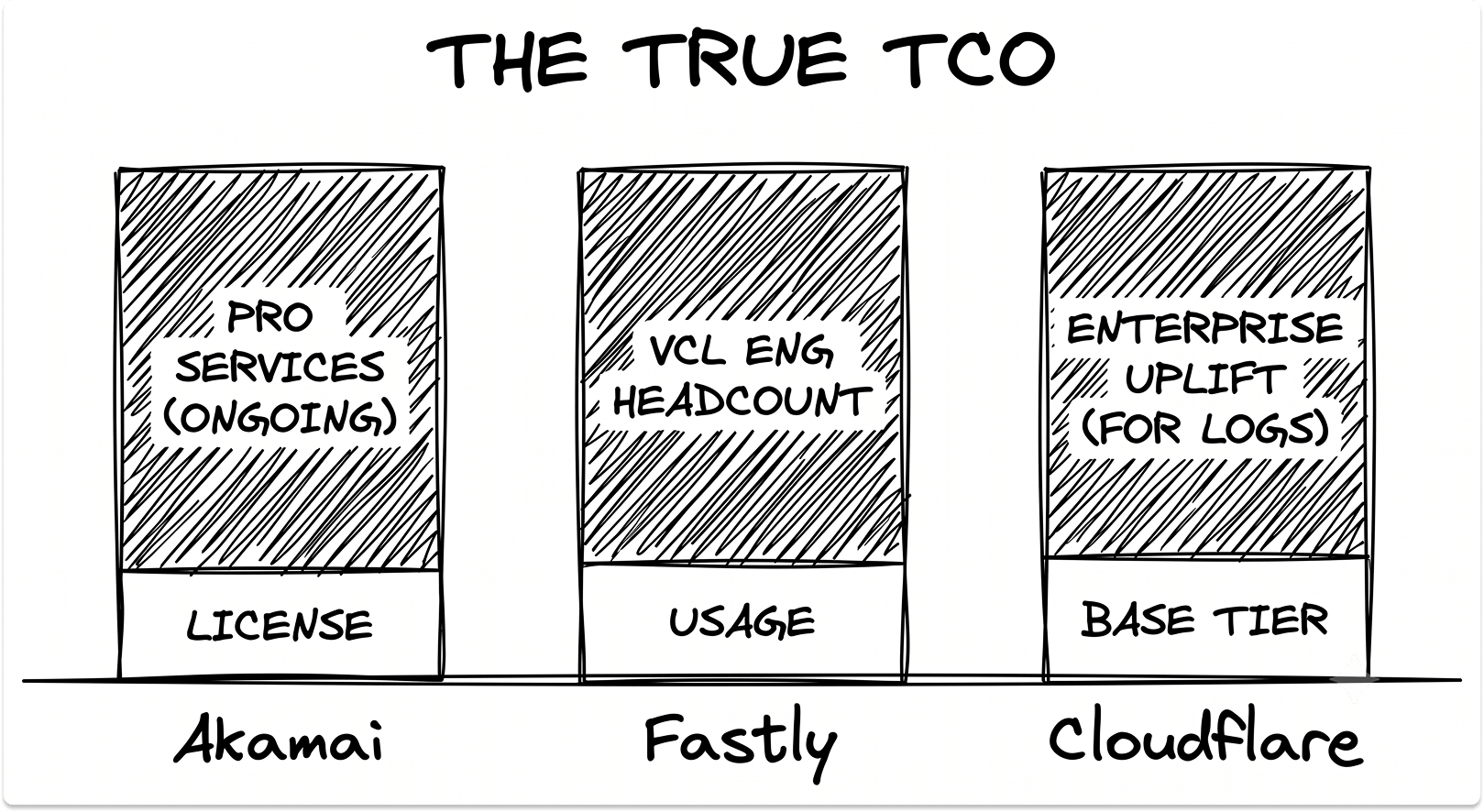
The costs that actually determine TCO over a 3-year contract are not on any pricing page.
Akamai: Professional Services hours are a recurring operational cost, not a one-time implementation fee. The platform requires expert configuration for initial deployment, and WAF rule tuning, behavior matching logic, and performance optimization typically require ongoing PS engagement. Factor this into your annual run cost. The sales cycle runs 4–8 weeks with custom scoping so plan procurement timelines accordingly.
Fastly: The public pricing is usage-based and scales predictably. The hidden cost is internal engineering headcount. Operating Fastly's VCL effectively requires engineers who can write, test, and maintain configuration logic in a domain-specific language. If your team does not currently have that skill, factor in training or hiring. The platform rewards engineering investment with significant flexibility but the investment is real.
Cloudflare: Transparent pricing tiers with predictable monthly costs. The real cost trap is plan selection. If your security operations team needs real-time log streaming, you need the Enterprise tier. If you negotiate a Business plan and discover during an incident that your log access is sampled, you have a contractual gap you cannot close quickly. Map your actual operational requirements to the tier before signing, not after.
Overage risk: Fastly and Cloudflare's usage-based models both carry overage exposure under traffic spike conditions — DDoS attacks, viral traffic events, major product launches. Confirm the overage rate structure and whether your contract includes DDoS traffic at no additional charge before committing.
For a broader framework on how to evaluate vendor contracts before signing, the procurement diligence questions apply directly to CDN contract negotiation.
How Each Platform Fits Your Existing Enterprise Stack
SIEM and observability integration. Fastly's 30+ native logging endpoint integrations, covering Datadog, Splunk, Sumo Logic, Elasticsearch, and Google BigQuery — are the strongest of the three for teams running centralized observability platforms. Cloudflare's log delivery requires Enterprise tier and pipeline configuration. Akamai's log forwarding is available but demands more setup and is not as natively integrated with modern observability tooling.
IAM and Zero Trust. All three support SAML-based SSO at the Enterprise tier. Cloudflare Zero Trust has the deepest native integrations with Okta and Microsoft Entra ID, making it the most practical choice for organizations already running those identity providers. If you are migrating from a legacy VPN to a Zero Trust architecture, Cloudflare One provides a unified platform for ZTNA, Secure Web Gateway, and CASB, a converged approach that reduces the number of vendors you are managing.
CI/CD and DevOps pipelines. Fastly is the only platform designed API-first for DevOps integration. Terraform providers exist for all three, but Fastly's VCL-as-code approach means your CDN configuration lives in version control, deploys through your existing pipeline, and rolls back with a git revert. Cloudflare Workers supports a similar approach but with a JavaScript/Wasm runtime rather than VCL. If your infrastructure team manages everything as code, both are viable: Fastly offers more granular caching control; Cloudflare offers a lower barrier to entry. Migrating security tooling mid-deployment without breaking production requires the same staged rollout discipline that applies to CDN configuration changes.
Cloud marketplace billing. Fastly is the only third-party CDN on both AWS Marketplace and Google Cloud Marketplace. For organizations running consolidated cloud billing through AWS Organizations or GCP Billing, this simplifies procurement significantly. Cloudflare and Akamai require separate billing relationships.
Multi-CDN architecture. Some high-traffic enterprises run two CDNs simultaneously, typically a static asset layer on Amazon CloudFront and a dynamic content and security layer on Fastly or Cloudflare. This is not a theoretical configuration; experienced teams use this approach deliberately to isolate failure domains and optimize cost per traffic type. If your architecture involves significant static blob storage traffic alongside complex dynamic requests, model both components separately before concluding you need a single-vendor CDN solution.
SLA Reality Check: What Each Vendor Actually Commits To
All three platforms offer 100% uptime SLAs on Enterprise contracts with financial credits. The credit structure, claim process, and what constitutes a qualifying outage vary.
I have seen IT leaders sign contracts on the strength of "100% SLA" without reviewing the credit cap or the claim submission window and end up with a $500 credit after a four-hour outage. Before you switch vendors or sign a new contract, extract the specific SLA terms from each vendor's order form and master services agreement, not the marketing page.
Support access by platform:
- Fastly Enterprise: Sub-10-minute response time, 98% CSAT, 98% first-contact resolution. Phone access included.
- Cloudflare Enterprise: Priority response, phone support, dedicated Technical Account Manager. Standard and Business plans are email-only.
- Akamai: Tiered support plus optional 24/7 SOC overlay. TAM engagement typically involves PS hours, confirm what is included versus what is billed separately.
TAMs (Technical Account Managers) are available at the Enterprise tier from all three vendors. At Akamai, TAM engagement often bleeds into PS hours territory for configuration changes. At Cloudflare and Fastly, TAMs are more clearly scoped to relationship management and escalation paths. Confirm the boundary explicitly.
Use the Questionnaire Below to See Which CDN Suits You
The Decision Matrix
No CDN is the correct answer for every enterprise. The right choice is the one that maps to your compliance requirements, your geographic traffic footprint, your internal operational capacity, and your security posture needs.
Eight Questions to Put in Front of Every Vendor
Before any contract goes to legal review, get written answers to these. Verbal commitments during a sales cycle carry no weight after signature.
- What does your SLA credit structure look like, and what is the claim submission process and window?
- Is real-time log streaming included in the tier we are discussing, or does it require an uplift?
- Which compliance certifications apply to the specific product SKUs in our contract, and at what authorization level?
- How are WAF rules tuned at initial deployment, and who owns ongoing rule management — your team or ours?
- What does configuration change propagation look like, and what is the rollback process if a rule change breaks production traffic?
- How do you handle China-region and Russia/CIS traffic, and what separate agreements or data processing addenda does that require?
- What Professional Services are required for initial deployment and ongoing optimization, and how are those billed?
- What is the overage billing structure if we hit 2x our projected monthly traffic, including DDoS-generated traffic?
Every IT leader should have a standard set of procurement questions before choosing a vendor. For CDN and edge security specifically, questions two and eight are the ones most often not asked, and most often regretted.
The platform that protects your applications at the edge, passes your compliance audit, integrates cleanly with your SIEM, and stays within your operational capacity to manage and that is the right choice. Not the one that wins a TTFB benchmark on someone else's test network.
Run the evaluation against your own traffic profile, your own compliance requirements, and your own engineering capacity. Then sign the contract that reflects what you actually need, not the one the sales cycle led you toward.
Find CDN and Edge Security Vendors Anonymously
Browse pre-vetted CDN and edge security vendors on TechnologyMatch. Filter for your stack and match with vendors who fit. Start conversations when you're ready. And it's free.
FAQ
What is the main difference between Cloudflare, Akamai, and Fastly for enterprise security?
Cloudflare offers the broadest native security feature set (including the unique Page Shield for third-party JavaScript monitoring) with easy onboarding. Akamai provides the deepest, most mature security stack — especially for API protection and bot management — backed by an optional managed SOC. Fastly is optimized for DevOps-driven teams that prioritize programmability, low false-positive WAF performance, and tight SIEM integration. The right choice depends on your internal engineering capacity and compliance requirements.
Which CDN is best for compliance-heavy industries like healthcare, finance, or federal government?
Akamai is the strongest choice for strict compliance requirements. It is the only platform among the three that publicly holds ISO 27017 and ISO 27018 — the cloud-specific extensions covering security controls for cloud service providers and PII protection. All three hold SOC 2, PCI DSS, ISO 27001, FedRAMP, and HIPAA, but Akamai's additional certifications carry meaningful weight in audits for financial services, healthcare, and federal contracting.
Does Cloudflare include real-time log streaming on all plans?
No. Real-time log streaming on Cloudflare is restricted to the Enterprise tier. Business and lower plans receive sampled analytics only. This is a significant operational gap — during an active DDoS event or WAF incident, real-time logs are the primary diagnostic signal. Enterprises should confirm log access is included in their contracted tier before signing, not after.
Is Fastly a viable CDN if my users are in China or Russia?
No. Fastly has no POP presence in China, Russia, or the CIS region. This is a structural limitation, not a configuration issue — it cannot be resolved within the standard Fastly platform. Cloudflare does have POPs in China, but those operate under a separate enterprise agreement with a Chinese partner entity and carry distinct data sovereignty implications that require a separately negotiated data processing agreement.
What are the most commonly overlooked costs in a CDN enterprise contract?
Three recurring TCO traps: (1) Akamai's Professional Services hours are an ongoing operational cost, not a one-time setup fee — ongoing WAF tuning and optimization typically require continued PS engagement; (2) Fastly's VCL programmability requires engineers who can write and maintain configuration in a domain-specific language, which means internal headcount or training costs; (3) Cloudflare's overage and log-streaming tier structure can create unexpected costs if your contracted plan doesn't cover DDoS traffic or real-time log access. Always get written answers on overage billing and log access before legal review.