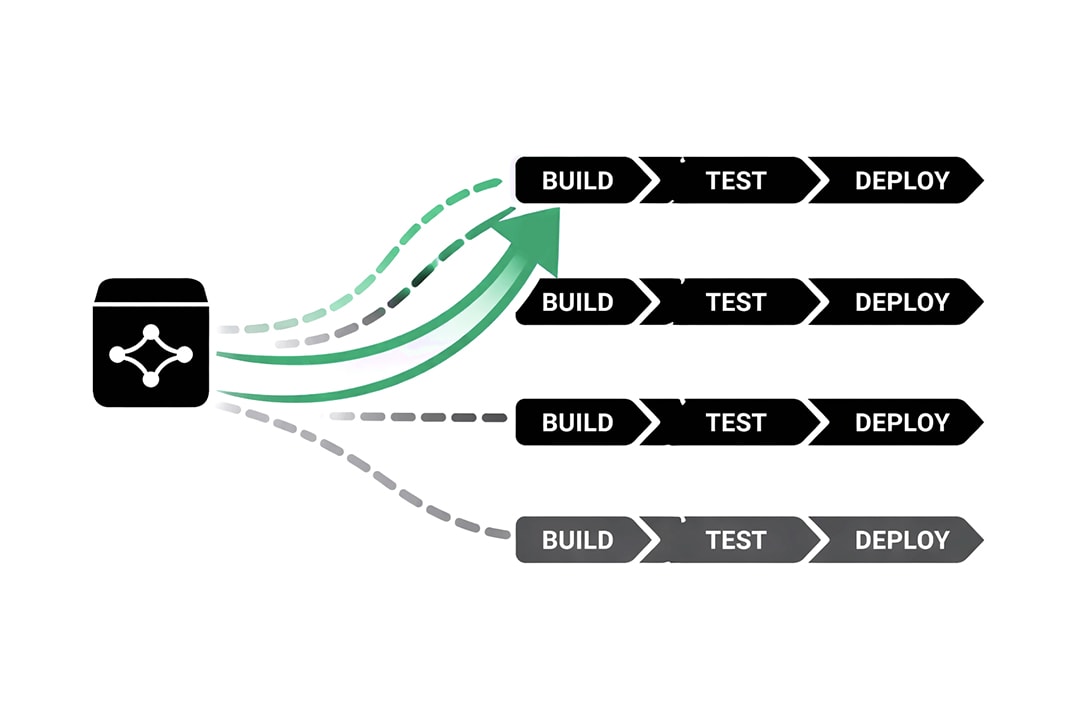
How to Switch IT Vendors or Partners Without Downtime or Loss of Control
IT leaders can switch IT vendors or IT partners safely using phased transitions, strong governance, and knowledge transfer, avoiding downtime while retaining control.

A Practical Transition Framework for IT Leaders
Switching IT vendors is one of the most sensitive decisions an IT leader can make. Even when a vendor is clearly misaligned, the perceived risk of disruption, knowledge loss, or operational instability often delays action. In many organizations, vendor relationships persist not because they are effective, but because change feels more dangerous than staying.
This fear is understandable but often misplaced.
Downtime during vendor transitions is rarely caused by the act of switching itself. It is usually the result of poor transition planning, unclear ownership, weak governance, and rushed execution. When vendor changes are treated as contract events rather than controlled system transitions, organizations lose visibility, confidence, and control.
This article explains how IT leaders can switch vendors deliberately and safely. It focuses on maintaining service continuity, preserving institutional knowledge, and ensuring that control remains with the organization throughout the transition. The goal is not speed. The goal is stability, predictability, and long-term alignment.
Why Vendor Switching Fails at the Handoff, Not the Decision
Most vendor transitions do not fail because the decision to switch was wrong. They fail because the transition process was poorly designed or inadequately governed.
Common failure patterns include compressing transition timelines to meet contract milestones, treating knowledge transfer as a one-time deliverable, and assuming that a new vendor can take ownership without operating context. In these cases, risk concentrates at the handoff, when responsibility shifts faster than understanding.
From a leadership perspective, this is where confidence erodes. Executives see instability. Teams experience confusion. The organization appears reactive rather than in control.
Successful vendor transitions treat the handoff as a technical and organizational change process, not an administrative event. Control must be maintained continuously, not regained after disruption occurs.
Why “Big Bang” Vendor Transitions Increase Risk
Abrupt vendor cutovers are often driven by contractual timelines rather than operational readiness. While appealing on paper, these transitions expose organizations to unnecessary risk.
Technically, big-bang transitions rely on assumptions that are rarely validated. Documentation may be incomplete. Dependencies may be poorly understood. Processes that function under one operating model may not translate cleanly to another. When ownership changes all at once, there is no buffer to identify and correct gaps before impact.
Operationally, teams are forced to absorb multiple changes simultaneously. New processes, new escalation paths, and new tooling often arrive at the same time. Even if each change is manageable on its own, their combined effect increases failure probability.
From a leadership standpoint, big-bang transitions reduce margin for error. When something goes wrong, rollback options are limited, and decision-making becomes reactive. This erodes trust in IT leadership, even when the root cause is structural rather than tactical.
Controlled transitions prioritize continuity over speed and validation over assumption.
Preconditions for a Safe Vendor Switch
A stable vendor transition begins before any operational changes occur. Certain technical and organizational conditions must be in place to reduce risk and maintain control.
Technical Readiness
From a technical standpoint, the organization must have clear visibility into its own environment. This includes accurate documentation of system architecture, integration points, dependencies, and known failure modes. Ownership of each component must be explicit, not assumed.
Access control is particularly important. Credentials, permissions, and administrative access should be reviewed and documented before transition activities begin. Vendor-held access that is not visible internally represents a risk during transition and should be addressed early.
Finally, the organization must understand where vendor-specific dependencies exist. These dependencies shape transition sequencing and determine which components can be moved independently and which require coordinated change.
Organizational Readiness
Organizational readiness is equally critical. Leadership alignment must exist around outcomes, risk tolerance, and transition priorities. Internal ownership during the transition must be clearly defined, with a single accountable leader responsible for coordination and decision-making.
Escalation paths must be explicit. During transitions, ambiguity delays response and increases impact. Decision authority should be clear before execution begins.
Most importantly, success criteria must extend beyond “no outage.” Stability, knowledge retention, and control are equally important measures of transition success.
Designing a Transition That Preserves Control
Control is the defining factor of a successful vendor transition. Losing control—even temporarily—creates uncertainty, increases risk, and undermines leadership credibility.
Parallel Operations Instead of Immediate Cutover
One of the most effective ways to preserve control is through parallel operations. Rather than transferring responsibility all at once, the outgoing and incoming vendors operate simultaneously for a defined period.
During this overlap, the new vendor observes, executes under supervision, and gradually assumes responsibility. This approach allows issues to surface without impacting customers or critical systems. It also creates space for correction and refinement before ownership is transferred fully.
Parallel operations reduce dependency risk. If issues arise, rollback paths remain available. Decisions can be made deliberately rather than under pressure.
From a leadership perspective, parallel operations provide confidence. Executives can see progress without disruption. Teams can adapt incrementally rather than absorb change all at once.
Knowledge Transfer Must Be Continuous, Not Transactional
Knowledge transfer is often treated as a milestone rather than a process. This approach is insufficient for complex environments.
Documentation alone does not convey operational context. It rarely captures the nuances of system behavior, historical decisions, or informal practices that keep systems stable. True knowledge transfer requires interaction, observation, and validation.
Effective transitions incorporate structured shadowing, where the incoming vendor observes operations in real time, followed by reverse shadowing, where they execute tasks under supervision. Operational walkthroughs should focus on decision-making, not just procedure.
Understanding must be validated through execution. If the incoming vendor cannot perform tasks independently and respond appropriately to incidents, knowledge transfer is incomplete.
Leadership should resist pressure to declare knowledge transfer “done” based on deliverables alone. Confidence comes from demonstrated capability, not documentation volume.
Managing the Existing Vendor During Transition
The existing vendor remains a critical dependency until transition is complete. How this relationship is managed directly affects risk.
Professionalism must be maintained throughout the transition. Even when replacement is inevitable, cooperation remains essential. Knowledge sharing, access continuity, and operational stability depend on the existing vendor’s engagement.
Transparency should be measured. Vendors need sufficient information to fulfill contractual obligations and support transition activities, but unnecessary signaling can reduce cooperation prematurely.
Contractual terms should be reviewed carefully. Exit clauses, knowledge transfer obligations, and access rights must be enforced consistently. However, legal leverage should not replace relationship management. Cooperative transitions reduce risk more effectively than adversarial ones.
Leadership must ensure that vendor management discipline does not decline during transition. Attention often shifts to the incoming vendor, leaving gaps that increase exposure.
Phases of a Controlled Vendor Transition
Vendor transitions unfold in phases, each with distinct objectives and risks.
Stabilization Phase
The stabilization phase focuses on reducing variability. Non-essential changes are paused. Documentation and access are secured. Dependencies are identified and, where possible, simplified.
This phase creates a stable baseline from which transition activities can proceed. Skipping stabilization increases complexity and reduces predictability.
Parallel Validation Phase
During parallel validation, the incoming vendor begins active participation. They execute tasks under supervision, respond to incidents, and operate within existing processes.
Issues identified during this phase are addressed without customer impact. Processes are refined. Assumptions are tested and corrected.
This phase builds confidence and surfaces risk early.
Controlled Handoff Phase
The handoff phase transfers responsibility incrementally. Ownership shifts component by component, with rollback options preserved.
Performance and stability are monitored closely. Escalation thresholds remain conservative. Transition pacing is adjusted based on system criticality and observed risk.
Controlled handoffs prevent cascading failures and preserve confidence.
Governance During Vendor Transition
Governance should tighten during transitions, not loosen.
A temporary transition governance structure should be established with clear authority, decision rights, and escalation paths. Meetings should be focused and purposeful, addressing risk, progress, and blockers rather than status reporting.
Decision latency is particularly dangerous during transitions. Governance structures must support timely resolution, not consensus-driven delay.
Leadership visibility is also important. Executives should be informed of progress and risk, but not involved in operational decision-making. Clear communication prevents surprise and builds trust.
Preventing Downtime Through Validation and Rollback Planning
Downtime prevention depends on validation and preparation, not optimism.
Before responsibility is transferred, systems must be tested under real operational conditions. This includes failure scenarios, peak loads, and security events. Testing should reflect how systems are actually used, not idealized conditions.
Rollback planning is essential. For every transition step, the organization should know how to revert safely if issues arise. Rollback plans should be documented, rehearsed, and technically feasible.
Rollback planning is not an admission of failure. It is a recognition that complex systems behave unpredictably and that preparedness reduces impact.
When Issues Occur Despite Careful Planning
Even well-managed transitions can experience minor incidents. The difference lies in impact and recovery.
Prepared organizations detect issues quickly, respond decisively, and recover without escalation. Responsibility is clear. Communication is controlled. Customers experience minimal disruption.
Unprepared transitions amplify small issues into major incidents. Confusion replaces coordination. Decision-making slows. Confidence erodes.
Leadership response matters. Calm, transparent communication reinforces trust. Overreaction creates unnecessary instability.
Post-Transition: Regaining Strategic Momentum
Once transition is complete, attention should shift from stabilization to improvement.
Legacy dependencies should be decommissioned deliberately. Architecture should be reassessed. Governance structures should be reset to reflect the new operating model.
Success should be measured beyond stability. Delivery velocity, operational efficiency, and adaptability are indicators of long-term alignment.
Post-transition reviews are valuable. They identify lessons learned, validate decisions, and prevent repeat failure.
Vendor Switching Is About Control, Not Speed
Switching IT vendors does not have to result in downtime or loss of control. These outcomes are the result of poor planning, rushed execution, and unclear governance, not inevitability.
Successful transitions are deliberate, phased, and disciplined. They prioritize continuity, validate assumptions, and preserve organizational control throughout the process.
Strong IT leadership is most visible during change. When transitions are handled well, they reinforce confidence, restore momentum, and create a foundation for long-term success.
The goal is not to switch vendors quickly.
The goal is to switch vendors correctly.
Looking for IT partners?
Find your next IT partner on a curated marketplace of vetted vendors and save weeks of research. Your info stays anonymous until you choose to talk to them so you can avoid cold outreach. Always free to you.
FAQ
How can IT leaders switch vendors without causing downtime?
IT leaders can switch vendors without downtime by using a phased transition approach that includes parallel operations, validated knowledge transfer, and clear rollback plans. Running the outgoing and incoming vendors simultaneously allows issues to be identified and resolved before full ownership is transferred, reducing operational risk and preventing service disruption.
What is the biggest risk when switching IT vendors?
The biggest risk when switching IT vendors is loss of operational control during the handoff. This typically occurs due to incomplete documentation, unclear ownership, rushed timelines, or weak governance. Downtime is usually a symptom of these issues rather than the vendor change itself.
Should IT teams do a “big bang” cutover when replacing a vendor?
A “big bang” cutover is generally not recommended for IT vendor transitions. Abrupt handoffs increase the likelihood of hidden dependencies, knowledge gaps, and untested assumptions causing outages. A phased transition with parallel validation significantly reduces technical and operational risk.
How should knowledge transfer be handled during a vendor transition?
Knowledge transfer during a vendor transition should be treated as an ongoing process rather than a one-time milestone. Incoming vendors should demonstrate operational capability through supervised execution, shadowing, and real-world testing. Documentation alone is not sufficient to ensure continuity or system understanding.
How long does a safe IT vendor transition usually take?
The length of a safe IT vendor transition depends on system complexity, criticality, and dependency depth. While timelines vary, transitions that prioritize stability typically take longer than contract-driven cutovers. A controlled, phased approach reduces long-term risk even if it extends the transition period.