Wiz vs Prisma Cloud vs Orca vs FortiCNAPP: CNAPP IT buyer's guide for 2026
Wiz vs Prisma Cloud vs Orca vs FortiCNAPP compared. A technical CNAPP for cloud security guide on architecture, pricing, and which platform fits your team in 2026.

Cloud security budgets keep climbing, and so does the number of tools fighting for a place in the stack. A single enterprise often runs one product for posture management, another for workload protection, a third for entitlement analysis, and a fourth for data classification. Each one ships its own alert queue, and the gaps between them are where attackers live.
The numbers explain the urgency. 80% of security exposures sit in cloud attack surfaces, alongside a 66% increase in threats aimed at cloud environments. The average cloud asset now carries 115 vulnerabilities. Volume like that buries small teams unless something does the prioritization for them.
A Cloud-Native Application Protection Platform, or CNAPP, exists to collapse the tool sprawl into one control plane. It ingests configuration data, workload telemetry, identity permissions, and data sensitivity, then maps how those layers connect into real attack paths.
I have run evaluations across all four of the platforms covered here, and the pattern is consistent: the vendors have converged on features while staying very different in how they work and what they cost to operate.
This guide is built to help you decide which CNAPP for cloud security fits your environment, and how to prove it before you sign.
A naming note before we start. Lacework is now FortiCNAPP after Fortinet acquired it, so I use "lacework FortiCNAPP" and "FortiCNAPP" interchangeably. Prisma Cloud is being folded into Palo Alto Networks' Cortex Cloud, so I reference both where the difference matters.
What a CNAPP for cloud security actually has to do
Strip a CNAPP down to its job and four capabilities matter most.
- CSPM finds misconfigurations across your cloud accounts.
- CWPP protects the workloads themselves, including containers and serverless functions.
- CIEM calculates who and what can actually do what, including non-human identities.
- Risk prioritization ties those signals together so you fix the few things that are genuinely exploitable.
Data Security Posture Management (DSPM) and shift-left scanning have moved from nice-to-have to expected. The difference between a platform you tolerate and one you trust comes down to that last item.
A tool that surfaces ten thousand findings is a reporting engine. A tool that tells you which three findings form a path to your customer database is a security product.
The four cloud security competitors at a glance
Here is how the field lines up before we get into the detail.
These four lead most multi-cloud evaluations, but they are not the only cloud security competitors worth knowing. Aqua Security, Sysdig, and Microsoft Defender for Cloud all show up in shortlists. I focused this guide on the four that most often reach the final round.
Architecture is the real decision, not the feature list
The way a CNAPP collects telemetry decides your time-to-value, your operating burden, your blind spots, and how much your engineers will resent the tool. Get this part right and the rest follows.
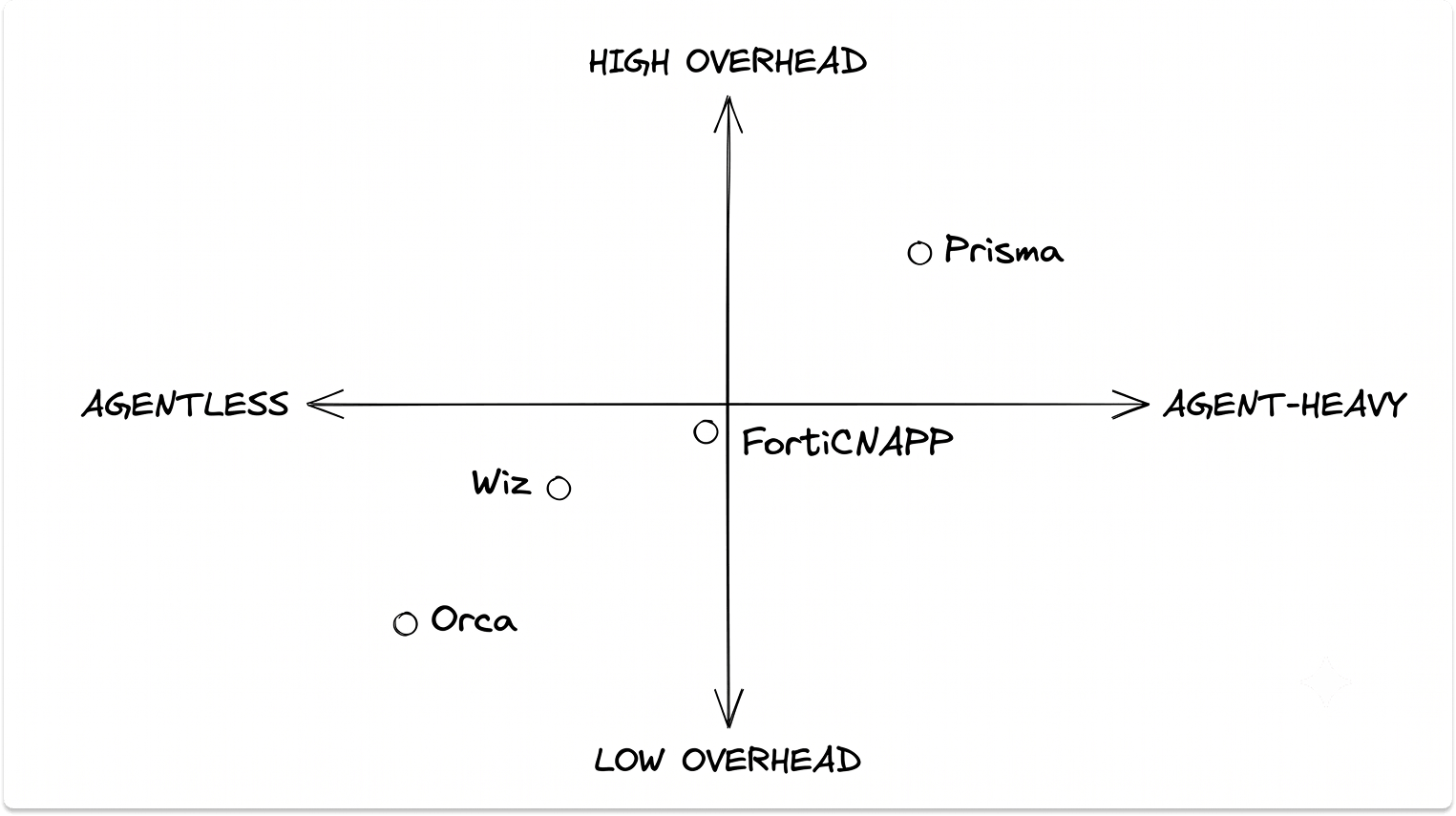
Agentless snapshot: how Wiz CNAPP and Orca CNAPP work
Wiz and Orca both connect through cloud provider APIs with read-only permissions and analyze snapshots of your workloads out of band. Orca's patented SideScanning mounts those snapshots in an isolated sandbox, scans for vulnerabilities, malware, plaintext secrets, and drift, then discards them.
The payoff is speed and zero friction. You can see across thousands of accounts shortly after granting credentials, and Orca advertises a full risk profile within roughly 24 hours. Production workloads feel nothing because the analysis happens elsewhere, and there is no agent fleet to install, update, or babysit.
The structural limit is that a snapshot is a moment in time. On its own, it cannot watch a live process spawn or stop a container escape while it happens. That gap used to be the entire argument against agentless tools, and it no longer holds, for reasons I cover below.
Agent-based prevention: how Prisma Cloud CNAPP works
Prisma Cloud security uses agentless methods for baseline posture, then leans on the Twistlock-lineage Defender agent for runtime protection. The Defender deploys next to each workload, and a runC shim intercepts container creation to check it against policy.
If the policy says no, the container never spawns. If the Defender goes quiet for about 60 seconds, the shim fails open to avoid taking your applications down.
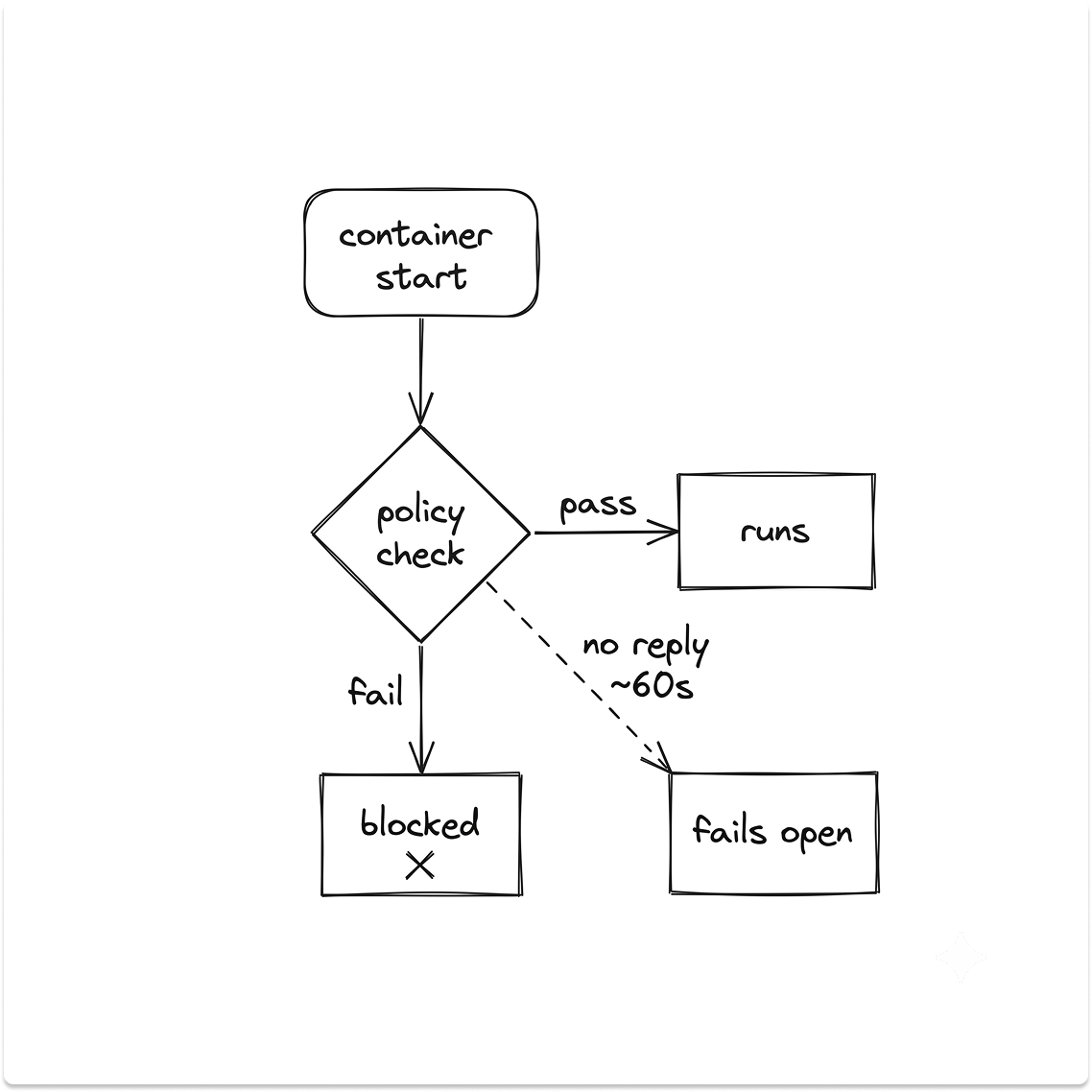
This gives Prisma Cloud CNAPP true inline prevention and an embedded layer-7 web and API firewall, which a pure snapshot cannot match by itself. The cost is operational.
You manage DaemonSets, grant host privileges, open specific ports, keep agents patched, and accept that any workload running without an agent is invisible. In a fast-scaling Kubernetes estate, that maintenance never stops.
Behavioral machine learning: how lacework FortiCNAPP works
FortiCNAPP takes a third path. Its Polygraph engine collects lightweight telemetry across API calls, process execution, network connections, and user behavior, then builds a baseline of normal activity at the process level and flags deviations from it.
This approach catches things signatures miss, including zero-day exploits, insider activity, and credential abuse. The trade-off is built into the design. The baseline needs days to weeks to mature, rapid architecture changes can trigger false positives during re-baselining, and alerting runs slower than an API-driven scan.
To keep noise down, FortiCNAPP groups weak signals into Composite Alerts, and Lacework has historically claimed roughly one to two critical alerts per day with a large reduction in false positives.
The eBPF shift that ended the agentless debate
Here is the development that reshapes the 2026 decision. Extended Berkeley Packet Filter, or eBPF, lets security code run safely inside the Linux kernel without kernel modules or instability.
Both Wiz and Orca now ship eBPF sensors, Wiz Defend and Orca Sensor, that add real-time detection and active blocking for reverse shells, container escapes, privilege escalation, file tampering, and increasingly AI-agent and prompt-injection behavior.
The consequence is practical. Wiz and Orca keep frictionless agentless coverage everywhere, then drop an eBPF sensor only on the high-value workloads that need prevention.
That hybrid placement neutralizes the historical advantage of an always-on agent. When you evaluate runtime protection, test what the sensor actually detects and blocks in your environment, and stop treating the agentless versus agent label as the deciding factor.

Risk prioritization separates a product from a dashboard
Every cloud estate contains thousands of misconfigurations and CVEs, and the vast majority are not exploitable because something else blocks the path. The platforms earn their price by telling these apart.
The concept that matters is the toxic combination. A public-facing virtual machine with a critical CVE is one risk. An over-privileged IAM role is another. A database holding unencrypted customer data is a third.
Seen separately, they generate three medium alerts. Seen together, they form one critical path: an attacker exploits the VM, assumes the role, and reaches the data.
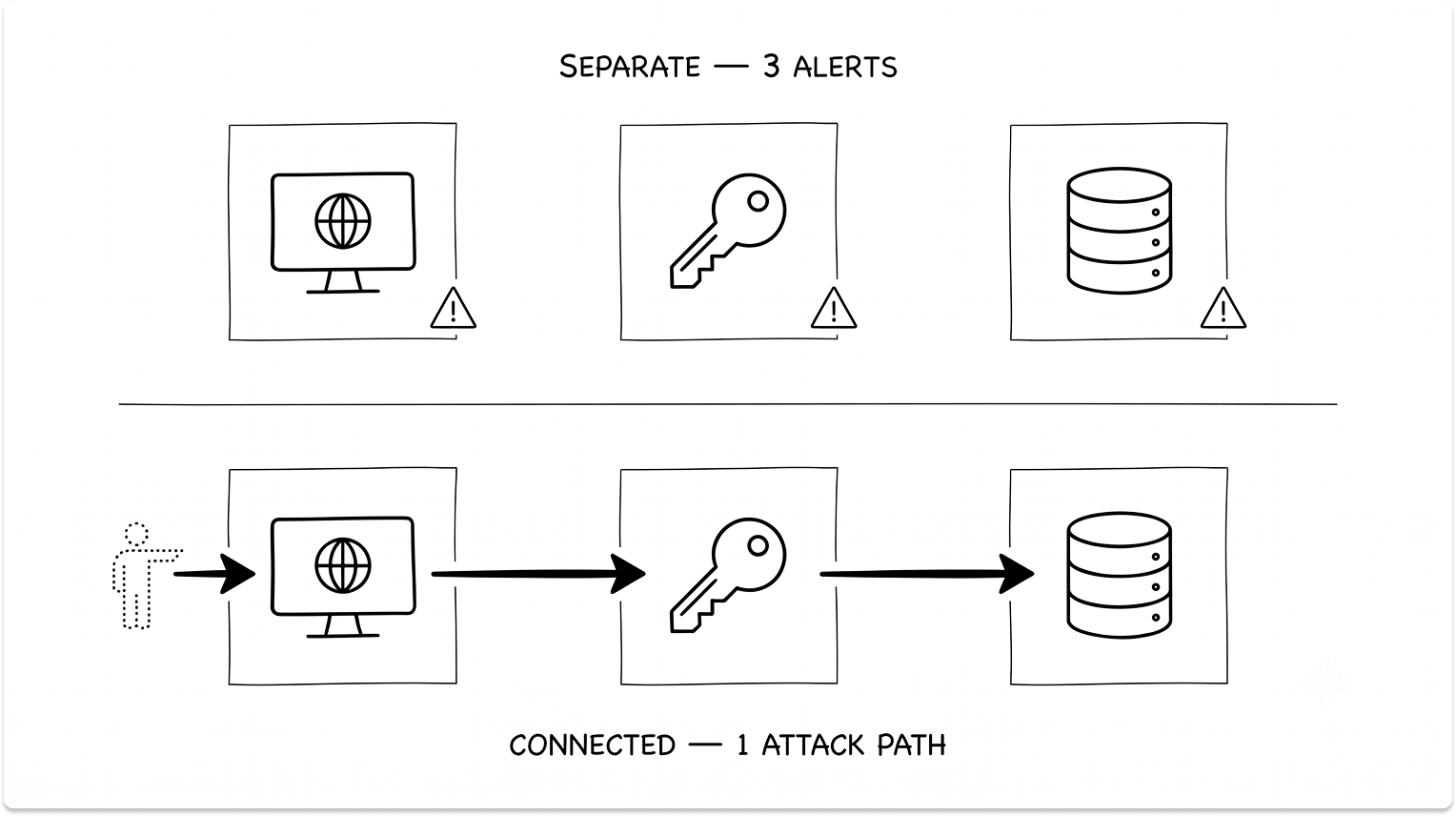
Wiz pioneered this with its Security Graph, which treats relationships like network reachability and net-effective permissions as first-class objects and collapses the three alerts into a single attack-path narrative.
In review after review, the Wiz CNAPP toxic-combination engine is the feature engineers single out, because it lets them self-serve fixes without a security analyst translating for them.
Orca CNAPP reaches the same outcome through its Unified Data Model. One detail from a buyer transcript stuck with me: a company chose Orca over Wiz because the underlying data was more accurate, even while admitting Wiz had the nicer interface. That is a useful reminder to test data quality and not just the dashboard.
Prisma Cloud has struggled here because infrastructure findings and workload findings have lived in separate modules, so correlating them often meant manual work and queries in a proprietary language. Cortex Cloud is Palo Alto's answer, promising unified data and AI prioritization. Verify that claim on your own data rather than the demo set.
FortiCNAPP prioritizes by behavior. A misconfiguration on a workload acting normally scores low. The same misconfiguration on a workload that just deviated from its baseline and holds excess privilege jumps up the queue. It is a genuinely different lens, and it complements graph analysis rather than copying it.
Capability gaps that actually change the decision
Feature parity at the headline level hides real differences underneath. These are the gaps I check first.
A few of these deserve a closer look.
DSPM. Wiz and Orca classify sensitive data across object stores and databases and feed that sensitivity into their graphs, which means an exposed test server ranks below an internal server holding unencrypted PII. Prisma Cloud trails here, with DSPM as a paid add-on historically limited to S3 and Azure Blob. FortiCNAPP only added native DSPM in January 2026, so treat it as new and test it.
Shift-left. Prisma's historical strength is Checkov, the open-source scanner from its Bridgecrew acquisition that draws more than 30 million downloads a month and ships over 1,000 policies across Terraform, CloudFormation, Kubernetes, Helm, and more. Wiz Code offers the cleanest developer loop, tying IDE findings to the production graph and opening one-click fix pull requests. Orca handles image and IaC scanning but is not a developer-first SAST tool, so heavy AppSec shops tend to supplement it.
Compliance. Orca stands out with more than 200 frameworks and reports that auditors accept without reformatting. Wiz covers 100-plus frameworks with strong overlap mapping, though its raw exports sometimes need cleanup. Prisma covers a wide set but splits findings across two interfaces, which slows audit prep.
Pricing and the real cost of running each CNAPP
Licensing is the part of the bill you can see. The part you feel is the engineering time to deploy, tune, and operate the platform.
Treat those numbers as planning ranges from public sources, not quotes. Multi-year commitments commonly bring 15% to 35% off.
Prisma's credit model is the one that surprises buyers. A host running applications consumes about 7 credits, a host running containers about 5, an on-demand Fargate container about 1, and the web and API firewall adds about 2 per Defender. In an auto-scaling environment, that math makes the monthly spend genuinely hard to forecast, and it is the complaint I hear most often.
Orca's single-SKU model covers any mix of assets, sensors, and repositories, and it lets you reallocate unused credits, for example shifting capacity from idle dev accounts to production sensors.
Wiz scales fairly linearly with cloud spend and gates some enterprise features behind higher tiers, which can get expensive in very large container estates.
The labor line is where Prisma's true cost lives. Managing an agent fleet, fixing pipeline breakage, and watching CPU contention is continuous work. Wiz and FortiCNAPP front-load effort into alert tuning and baseline maturation.
Orca tends to demand the least ongoing labor, leaning on its AI assistant for triage and remediation.
What practitioners report after living with these tools
Vendor decks are marketing. Verified reviews and buyer transcripts are closer to the truth, so I weight them heavily.
- Wiz holds a 4.7 on G2 across more than 770 reviews, with ease of setup scoring 9.1 against Prisma's 7.4 and support at 9.2 against Prisma's 7.5. The recurring complaint is alert volume that needs tuning at scale, plus reporting that lags dedicated GRC tools.
- Orca sits at 4.6 on G2. Reviewers praise sub-hour deployment, fast support even at standard tiers, and audit-ready compliance reports. The knock is a CIEM engine a step behind Wiz and less brand pull in the largest deals.
- Prisma Cloud scores 4.1. Buyers value its breadth and runtime depth, then cite operating overhead, a fragmented multi-tab interface, and unpredictable cost conversations. I have seen several teams migrate off it toward Orca or Wiz.
- FortiCNAPP earns good marks for anomaly-detection accuracy, low noise, and clear alert explanations. The criticism centers on slow alerting, pricing, and thinner third-party integrations outside the Fortinet ecosystem.
One cross-cutting pattern is worth stating plainly. In modern cloud-native shops, the final round usually comes down to Wiz versus Orca. Wiz tends to win the largest enterprises on brand and graph quality, and Orca often wins on data fidelity, deployment speed, and price.
Also read: How does Fortinet Compare to Cisco, Palo Alto, and HPE Aruba in terms of SD-WAN
Vendor stability and what each acquisition means for you
You will run this control plane for years, so who owns the vendor matters as much as any feature.
Google closed its acquisition of Wiz on March 11, 2026 for $32 billion, its largest deal ever, after Wiz crossed $1 billion in annual recurring revenue. Wiz stays an independent brand inside Google Cloud and has committed to multi-cloud support. If your estate leans heavily on AWS or Azure, make that commitment a contract term with roadmap and exit clauses, rather than trusting it on faith.
Palo Alto is merging Prisma Cloud into Cortex Cloud, which became available in late 2025. The company calls it a seamless upgrade with investments preserved. Some practitioner accounts describe it as closer to a platform replacement that needs fresh deployment work. The honest answer is that it depends on your configuration, so get the carry-forward scope in writing before you commit.
Fortinet absorbed Lacework into FortiCNAPP and the Fortinet Security Fabric, with findings now feeding FortiSIEM and FortiSOAR. The value concentrates for organizations already running FortiGate, FortiWeb, or FortiEDR, where network-aware risk scoring becomes a real advantage. Standalone buyers should pressure-test roadmap speed and integration breadth.
Orca is the only one of the four that is neither a hyperscaler asset nor a network-vendor sub-brand, which is itself a reason some buyers pick it. It earned FedRAMP Moderate Authorization in February 2025 and extended runtime protection to private cloud and on-premises in July 2025, including VMware, OpenShift, and Windows. Gartner expects 90% of organizations to run hybrid through 2027, and that coverage speaks directly to it.
Which CNAPP fits which team
Map your dominant constraint to the platform that removes it.
Choose Wiz if you are cloud-native and scaling fast, your developers will reject agent friction, and you want the strongest attack-path prioritization and IDE-to-production loop. You need to accept Google ownership and budget for ongoing tuning. If you are searching for a Prisma Cloud CNAPP alternative because of agent overhead, Wiz is usually the first name on the list.
Choose Prisma Cloud or Cortex Cloud if you already run PAN-OS, Cortex XDR, and Cortex XSOAR and want one vendor from SOC to cloud, and if a mandate requires always-on inline blocking. You must staff the agent lifecycle and pin down the Cortex migration scope.
Choose Orca if you want the best balance of coverage, simplicity, compliance reporting, and price with a lean team, or if you need FedRAMP Moderate, hybrid and on-prem coverage, or vendor independence. As a Wiz CNAPP alternative, Orca matches most of the capability at a lower operating cost, and as a lacework alternative it gives you faster time-to-value without a baseline wait.
Choose FortiCNAPP if your SOC prioritizes behavioral detection of zero-days and insiders over static posture, and you already run the Fortinet fabric. If you are weighing an Orca CNAPP alternative specifically for anomaly detection, FortiCNAPP is the behavior specialist, as long as you can tolerate slower alerts and a baseline that needs weeks to settle.
Use the Questionnaire Below to See Which CNAPP Platform Suits You
How to run a proof-of-concept that settles the question
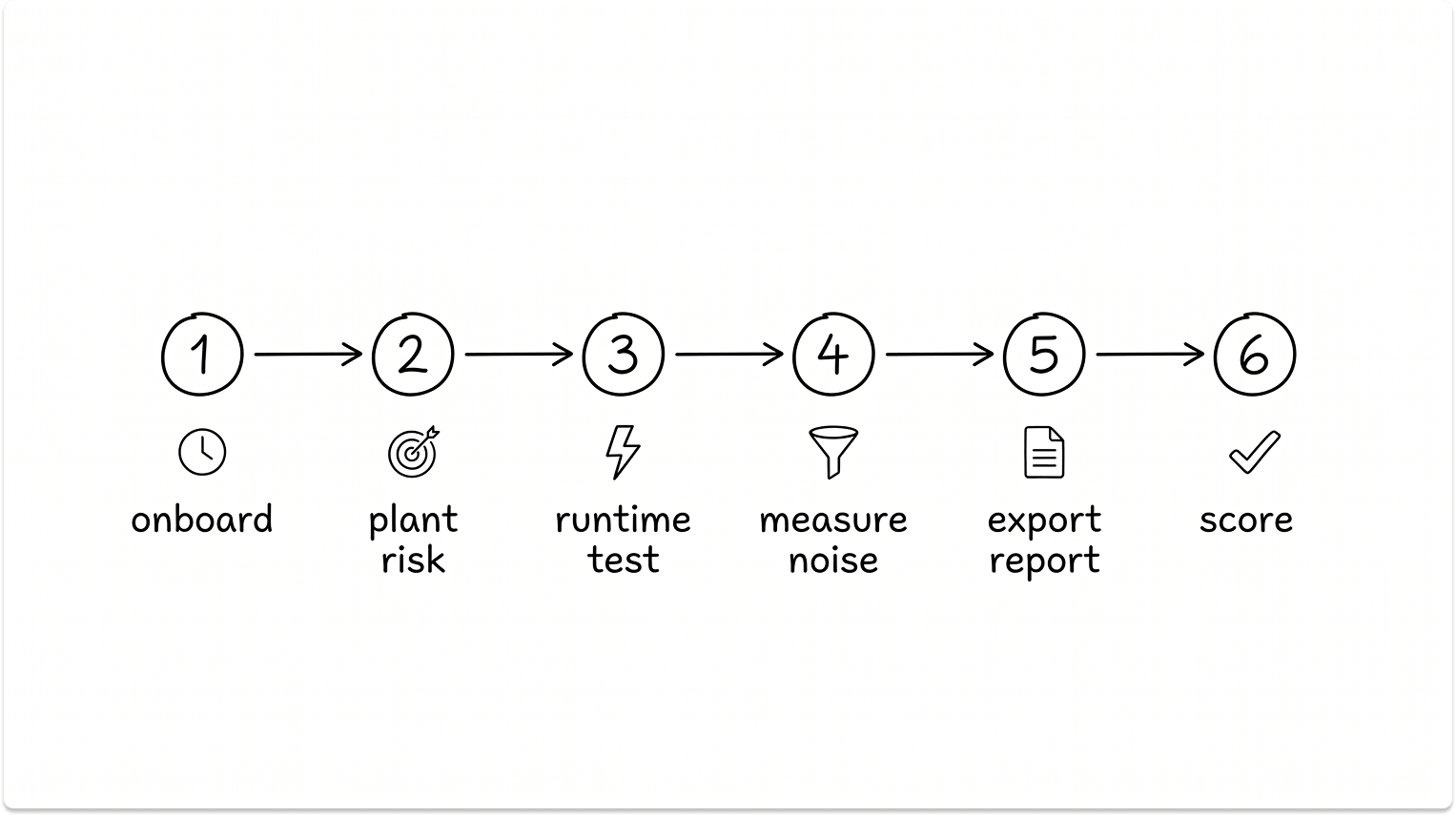
A demo runs on a curated environment. The only comparison that means anything is each finalist running on the same slice of your real estate for the same two to four weeks. I insist on parallel POCs with identical scope and exit criteria agreed up front.
- Pick one production account, one Kubernetes cluster, and one CI/CD pipeline, and keep the scope identical across vendors.
- Time the full onboarding from credential grant to first complete risk profile. This alone separates the agentless pair from the agent and baseline pair.
- Plant a known toxic combination: an over-privileged IAM role on an internet-reachable VM with a critical CVE that can reach a bucket of test data. See which tools report one path and which report scattered alerts.
- Trigger a runtime event, such as a reverse shell or container escape, on a sensor-protected workload, and record what gets detected, what gets blocked inline, and how long the alert takes.
- Count total findings against findings your team agrees are actionable in week two. That ratio is the product.
- Export a compliance report and hand it, unedited, to whoever owns your audit. Note the reformatting effort.
Ask each vendor the questions they would rather avoid. For Wiz, what are the contractual commitments to non-GCP investment. For Prisma, exactly which policies and integrations survive the Cortex move, and who pays for the migration. For FortiCNAPP, how long until the baseline is trustworthy and which capabilities are native versus add-on. For Orca, prove the CIEM depth on your identity graph.
The bottom line
There is no single most recommended CNAPP for cloud security, because the right answer depends on your architecture, your team size, and your tolerance for operating overhead. The strongest 2026 posture comes from clean data correlation that lets a lean team find and fix the exact toxic combinations that threaten the business.
For most cloud-native, multi-cloud organizations, the decision narrows to two.
- Wiz wins on graph fidelity, developer experience, and market validation, provided you accept Google ownership and invest in tuning.
- Orca wins on balance, simplicity, compliance, price, independence, and hybrid reach.
- Prisma Cloud remains the pick for Palo Alto estates that need the deepest inline prevention and will fund the overhead, and
- FortiCNAPP is the specialist for behavior-led detection inside a Fortinet fabric.
Run the parallel POC, score each finalist on your own evidence, and let the data from your environment make the call. No vendor narrative, including this one, should replace what you measure yourself.
Find CNAPP Vendors Anonymously
Browse pre-vetted CNAPP and cloud security vendors on TechnologyMatch. Filter for your cloud stack and operating model, and match with vendors who fit. Start conversations when you're ready. And it's free.
FAQ
What is the most recommended CNAPP for cloud security in 2026?
There is no single most recommended CNAPP for cloud security, because the right choice depends on your architecture, team size, and ecosystem. In modern cloud-native organizations, the final round usually narrows to Wiz and Orca: Wiz tends to win the largest enterprises on its Security Graph and developer experience, while Orca often wins on data fidelity, deployment speed, and price. Prisma Cloud fits Palo Alto estates that need deep inline prevention, and FortiCNAPP suits detection-focused SOCs already on the Fortinet fabric.
What is the best Wiz CNAPP alternative?
Orca Security is the most common Wiz CNAPP alternative, since both are agentless-first with optional eBPF runtime sensors, and Orca matches much of the capability at lower operating cost while remaining independent of any hyperscaler. Prisma Cloud is the stronger alternative if you need always-on inline prevention, and FortiCNAPP is the better fit if behavioral anomaly detection is your priority. The right Prisma Cloud CNAPP alternative or Orca CNAPP alternative depends on whether your constraint is agent overhead, pricing, or ecosystem lock-in.
Is Lacework still available, and what is FortiCNAPP?
Lacework is now FortiCNAPP, after Fortinet acquired it in August 2024 and folded it into the Fortinet Security Fabric, with lacework.com redirecting to Fortinet. The core Polygraph behavioral engine remains, findings now feed FortiSIEM and FortiSOAR, and native DSPM was added in January 2026. If you are evaluating a lacework alternative, the closest agentless options are Wiz and Orca, while Prisma Cloud is the heavier agent-based choice.
What is the difference between Prisma Cloud and Cortex Cloud?
Prisma Cloud is Palo Alto Networks' established CNAPP, and Cortex Cloud is the platform it is being unified into, announced in February 2025 and generally available in late 2025. Palo Alto describes the move as a seamless upgrade with investments preserved, while some practitioner accounts describe it as closer to a platform replacement that needs fresh deployment work. If you run Prisma Cloud security today, confirm in writing which policies, integrations, and configurations carry forward before committing.
Are agentless CNAPPs like Wiz and Orca good enough for runtime protection?
Yes, the agentless-versus-agent debate is largely settled for 2026. Both Wiz (Wiz Defend) and Orca (Orca Sensor) now ship lightweight eBPF runtime sensors that add real-time detection and active blocking for reverse shells, container escapes, and privilege escalation. This lets them keep frictionless agentless onboarding everywhere and place a sensor only on high-value workloads, which neutralizes the historical advantage of Prisma Cloud's always-on agent. Validate what each sensor actually detects and blocks in your own proof of concept.