How to Improve First-Meeting Conversion: What to Do, and in What Order
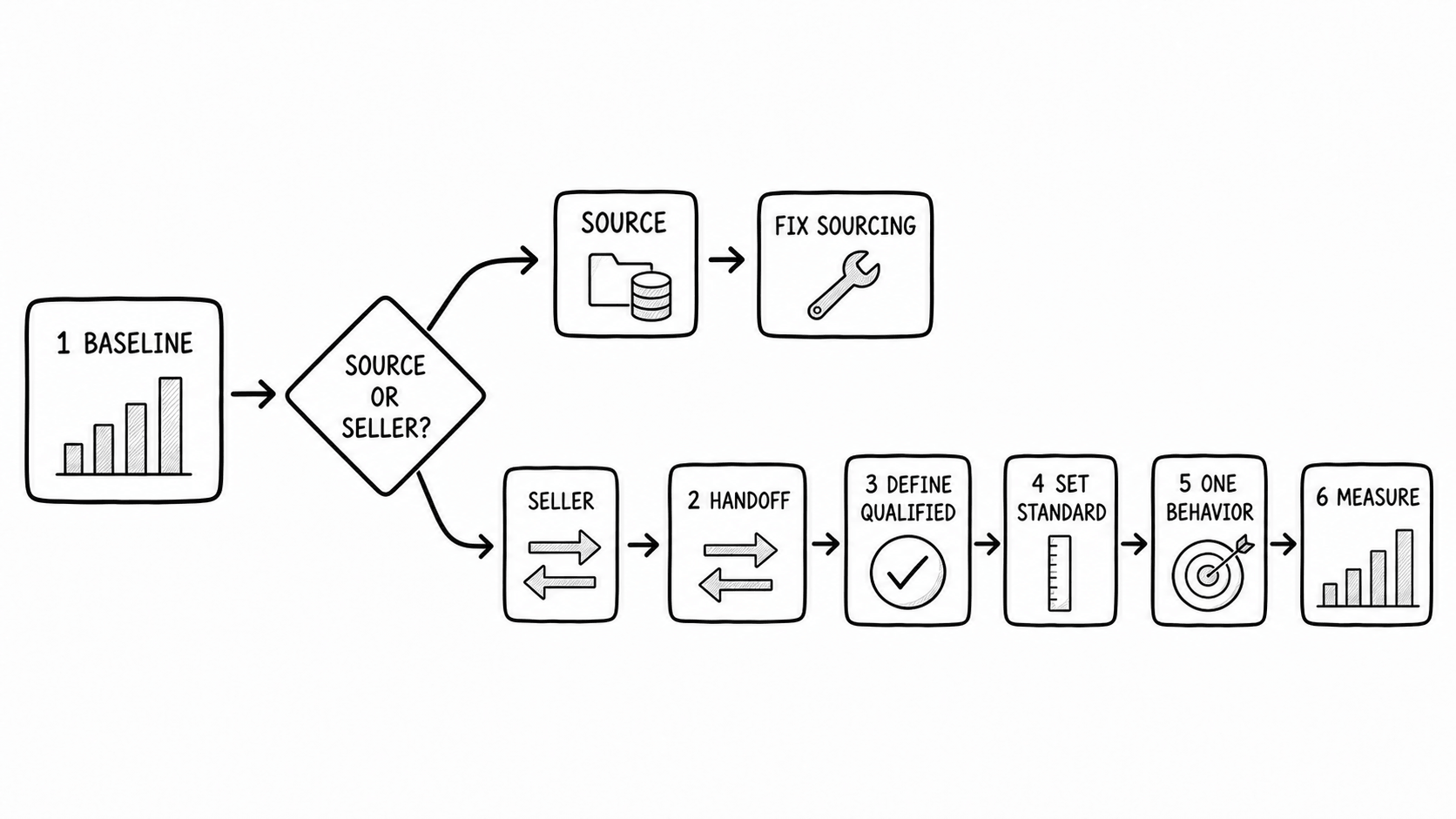
How to improve first-meeting conversion, in the order that works: baseline first, then the handoff, the definition, the standard, one behavior, then measurement.
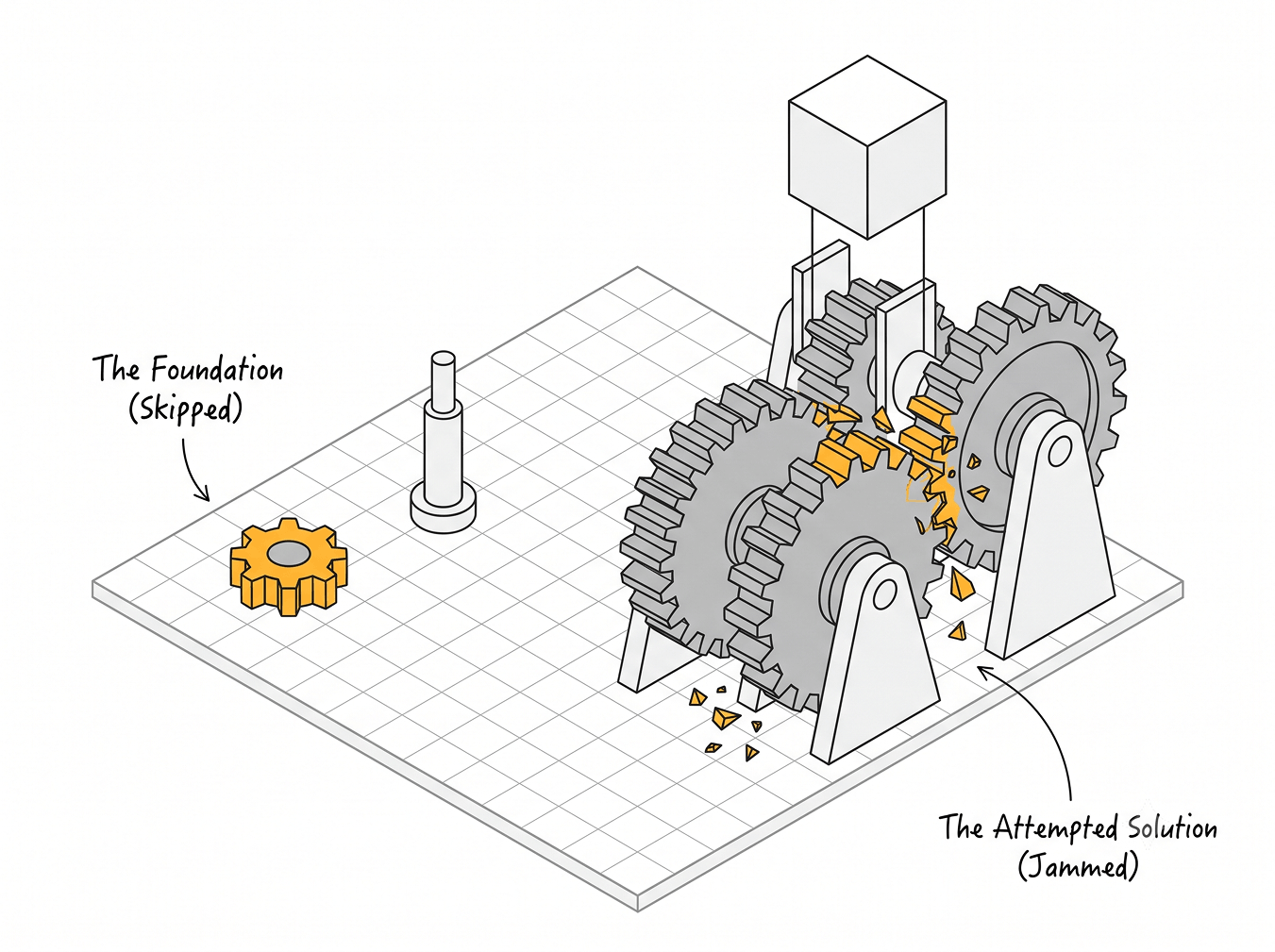
What I've learned is that improving first-meeting conversion is not hard. It's just usually attempted in the wrong order. The underlying shift — buyers evolved and most sales organizations haven't — is real, but the response to it is more ordinary than it sounds.
Most organizations start at step four or five below — they write a scorecard, or buy a tool, or run a training day. Those things aren't wrong. They're premature, and when they don't produce a result you don't know why, because there was no baseline to compare against and no agreement on what was being measured.
Below is the order I'd use. Six steps, cheapest first. The first three cost nothing but time and a few conversations, and in my experience they account for more of the gap than anything you can buy.
Each step also has a short note on how it runs if you're using the Evolve Suite. Skip those if they're not relevant to you — the sequence works without them, which is the point.
Step 1: Establish the baseline before you change anything
You cannot demonstrate improvement without a before. This is the step that gets skipped most often, and skipping it is why so many sales initiatives end in an argument about whether they worked.
Three numbers, from the last two to four quarters:
First-meeting-to-qualified-opportunity conversion, by lead source. Group by where the meeting came from — paid, events, partner programs, outbound, inbound, agency. Percentage that became a qualified opportunity.
The same metric by individual seller, holding the source constant. Take your highest-volume source and look only within it. Comparing sellers across different sources tells you mostly about what they were handed.
Discovery depth and talk ratio on a sample of recorded conversations. Twenty to thirty first meetings is enough to see the shape. Count the questions the seller asked. Estimate the share of the conversation they spoke.
Those five minutes of arithmetic do two things. They tell you whether your problem is sourcing or execution — if conversion varies mostly by source, the rest of this list isn't your priority.
I've written up how to run and read that comparison properly, including the five things that will make it lie to you, in Do you have a lead problem or a sales system problem? And they give you the number you'll measure against in step six.
Write the numbers down somewhere you'll find them in a quarter. I'm being literal. The most common failure I see isn't a bad baseline, it's a baseline nobody can locate three months later.
Our product, Evolve Suite, produces the conversation-level half of this continuously rather than as a one-time audit, so the baseline doesn't decay the moment you stop looking. The conversion cuts still come from your CRM, and that cannot be replaced.
Step 2: Fix the handoff
This is the first thing I check, and it's usually fixable inside a week.
When we hand a client a meeting, we send across what the buyer told us during qualification — the project they're working on, the timeline, the constraint they raised. Often enough, the seller who takes that meeting hasn't read it. Sometimes it never reached them. It sat in a routing field, or in an email that went to a shared inbox, or in an attachment nobody opened.
This is the situation I've written about as answering for the meeting you weren't in — the manager is accountable for a conversation they had no visibility into, and the information that would have changed it existed the whole time.
The effect on the conversation is immediate. The seller opens by asking the buyer to describe their situation. The buyer has already described it, to us, three days earlier. They answer politely and the meeting becomes an introduction rather than a business discussion. Those opening minutes are the most expensive ten minutes in enterprise technology sales, and they're decided before anyone speaks.
Ask your sellers what they knew about their last first meeting before it started. You'll know within ten minutes whether you have a handoff problem.
The fix is a routing change and a habit. Qualification information lands in the record the seller actually opens — not adjacent to it. And a manager confirms it was read before the meeting, which takes about two minutes.
This costs nothing and I've seen it move conversion on its own. It's also the step most organizations discover they had wrong, which is why it's this early in the list.
Evolve pulls qualification information into the brief automatically, so it sits in the same document as the account and stakeholder picture instead of arriving separately. That solves delivery. It doesn't solve whether anyone reads it — that stays a management habit either way.
Step 3: Settle what "qualified opportunity" means
If that phrase means different things to different managers, every number in step one is fiction and every measurement in step six will be too.
I've seen this go wrong in both directions. In one organization, two regional teams were applying criteria that differed by a full stage, and the region that looked like it was underperforming was simply recording things more honestly. In another, the definition had quietly tightened mid-year, and what looked like a conversion collapse was a change in bookkeeping.
Get the people who create opportunities in a room. Agree one definition. Write it down in a sentence, not a matrix. Then do the part that actually matters: agree it with whoever produces your meetings, so the qualification criteria at the front match what your sellers can work with at the back.
That last conversation is the one that tends not to happen. If your agency or your SDR team is qualifying against seniority and budget while your sellers need an active project and a timeline, you'll keep buying meetings that were never going to convert, and no amount of preparation will save them.
Step 4: Write the standard as numbers
Now write down what a good first meeting contains. Specifically enough that two different managers reviewing the same conversation would reach the same assessment.
"Be more consultative" is not a standard. These are:
- Discovery depth. Our corpus puts the productive range at eleven to fourteen questions in a first meeting. Observed practice sits closer to four.
- Talk ratio. Below fifty percent seller talk time. Observed practice runs around seventy.
- Next step. A specific commitment named and agreed before the call ends, not "let's reconnect."
- Stakeholder coverage. Who else has to agree, identified by name or role during the conversation.
Two things about those numbers.
First, where they come from: roughly 35,000 conversations recorded with the consent of both parties, across more than 1,200 IT vendors, over six and a half years, scored by people who were accountable for whether the pipeline converted.
Second, their limits: they're drawn from qualified first conversations in enterprise technology. They're strongest at the front of a deal and thin at the back of it, and I wouldn't assume they transfer to other categories without checking.
Similar ranges appear in published analyses from conversation intelligence platforms working from inside vendors' own call libraries. Two different vantage points landing in the same place is better evidence than either alone.
Where a standard comes from matters as much as what's in it, and I've made that case at length in how to build a sales coaching system that scales — a benchmark drawn from your own team's best conversations caps you at your current ceiling.
Adapt them to your motion rather than adopting them wholesale. A first meeting with a CIO about an infrastructure refresh is not the same conversation as a first meeting with a line-of-business buyer, and your standard should say so.
With Evolve: Coach ships with these benchmarks, sourced and dated, so you're not deriving a standard from your own team's average — which caps you at your current ceiling. You still have to decide which criteria matter for your deals. The product supplies the evidence, not the judgment.
Step 5: Change one behavior
Pick the behavior furthest from your standard, which for most teams is discovery depth. Then:
Set the threshold explicitly. "Eleven or more questions in a first meeting." A number sellers can hold in their head.
Give them what they need to hit it. This is the part that gets missed. A seller can't ask eleven specific questions about an account they know nothing about — they'll run out at four and start presenting, which is exactly what the talk-ratio number is showing you.
Questions come from having a view of the account. If you tell people to ask more without changing what they know going in, you'll get eleven generic questions and a worse meeting than before. That's the whole argument for pre-call intelligence: the brief isn't administrative, it's what makes the questions possible.
Review preparation before the meeting, not after. Five minutes on the brief the day before. This is the single highest-leverage change in the whole list, because it's the only point in the process where the outcome can still change. Most organizations review conversations after they happen, which is autopsy rather than coaching.
Hold it for six to eight weeks. Behavior change under a full calendar takes longer than people expect, and switching focus at week three guarantees you learn nothing.
Evolve handles the "give them what they need" half — the account picture, the technology environment, the stakeholders, the questions that follow from all of it. Coach handles whether it happened, and gives the seller a specific development point rather than a score. What neither does is choose the behavior. That's yours.
Step 6: Measure the behavior first, then the conversion
In that order, and the order matters.
Measure the behavior. Did question count move? Did talk ratio move? You'll know in six weeks. This is the honest test of whether the coaching worked, and it's available long before revenue tells you anything.
Then check conversion. Did first-meeting-to-opportunity conversion improve against the baseline from step one?
Four outcomes, and three of them are useful:
Behavior moved, conversion moved. It worked. Pick the next behavior and repeat.
Behavior moved, conversion didn't. The coaching worked and that behavior wasn't the constraint. This is a real finding, not a failure — you've eliminated a variable. Try the next one.
Behavior didn't move. The standard wasn't clear, the sellers didn't have what they needed to meet it, or nobody reviewed it. Look at those three before concluding anything about your team.
Neither moved and nothing is clear. Check your volumes. Below about twenty meetings per seller you're reading noise.
Don't try to attribute quota attainment or win rate to this. Those move for a dozen reasons at once and you'll spend a quarter arguing about causation. Behavior and one conversion step are enough.
Evolve tracks the behavior continuously, so step six is a report rather than a project. It won't tell you whether the behavior was the right one to pick — only whether it changed.
What this sequence won't do
It works on the front of the deal. Competitive displacement, pricing pressure, procurement, and stalled buying committees are all downstream of the first meeting and none of them are addressed here.
It also won't fix a sourcing problem. If step one told you conversion varies mostly by lead source, the work is with whoever produces your meetings, and steps two through six will produce very little — the diagnostic here covers what to do instead. I'd rather you found that out in week one than in month four.
And it takes a quarter minimum to know whether it worked, because you need a baseline, a behavior change, and enough volume after the change to read a conversion number. Anyone promising faster is guessing.
Where to start
If you do nothing else from this list, do steps one and two. The baseline takes an afternoon. The handoff check takes ten minutes and three conversations. Between them they cost nothing, and in my experience they account for more of the gap than most of what gets bought to close it.
The rest is worth doing in order. Not because the order is clever, but because each step depends on the one before it — you can't coach against a standard you haven't written, you can't write a standard without knowing where you are, and you can't know where you are while "qualified" means three different things.
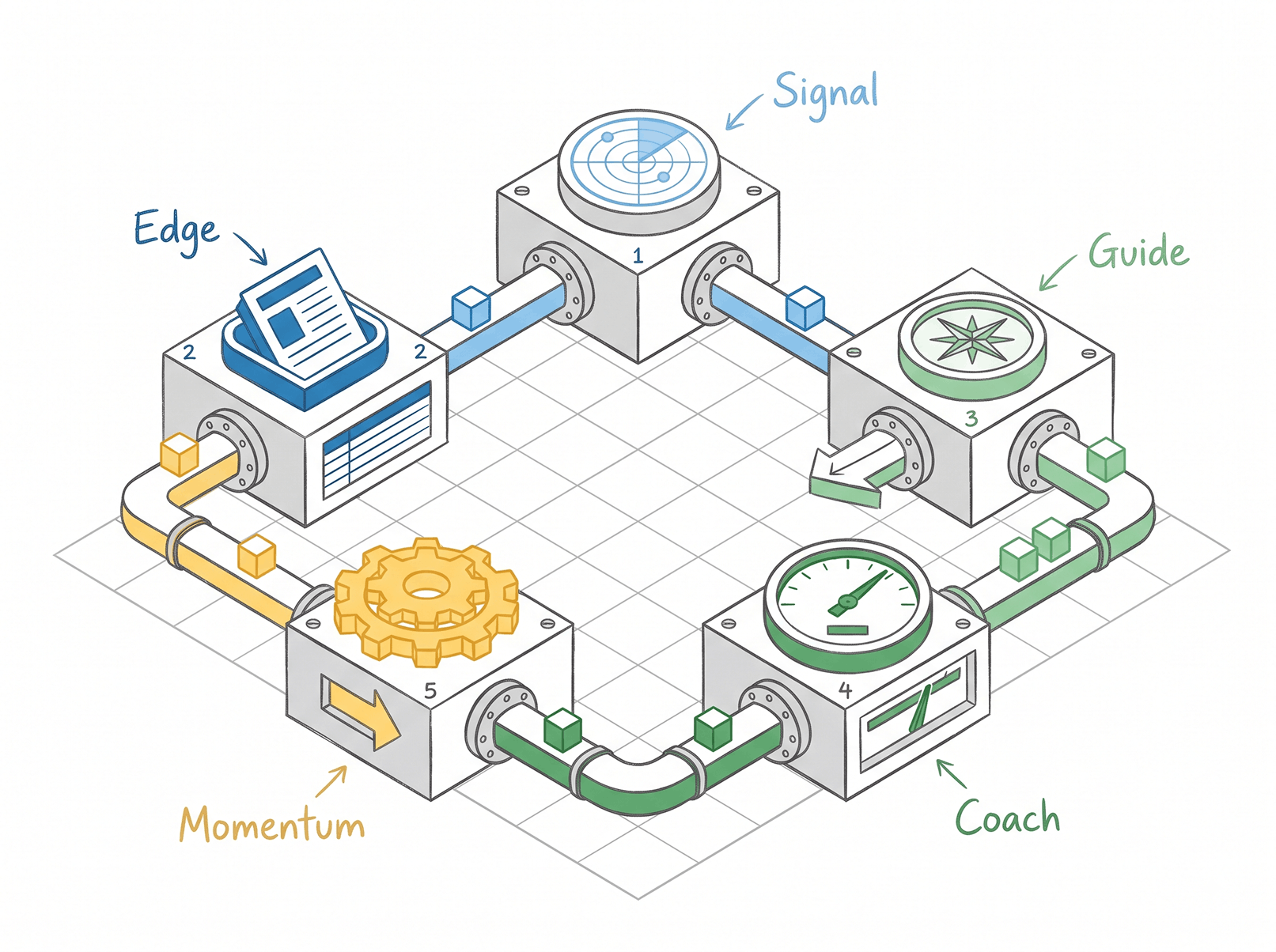
We built Evolve Edge and Evolve Coach to carry the parts of this that don't survive a full calendar: producing the brief before every conversation, and seeing what happened in all of them rather than the few a manager had time for. Edge is live. Coach is next. Neither replaces the three decisions in steps one, three, and five, which are yours regardless of what you buy.
See what your sellers could've known in first meetings
Evolve researches the buyers and gives your sellers a game-day brief to tell them what they should lead with and what to ask so they can prepare even 5 mins before the meeting.
FAQ
How do you improve first-meeting conversion?
Establish a baseline by lead source and by seller, fix the handoff so sellers know what the buyer already disclosed, agree one definition of a qualified opportunity, write your meeting standard as numbers, change one behavior against that standard, then measure the behavior before the conversion. In that order — later steps depend on earlier ones.
What's a good first-meeting-to-opportunity conversion rate?
It varies enough by segment, deal size, and source that a single benchmark isn't useful. What matters more is your own variance: whether conversion differs mainly between lead sources or between sellers working the same source. The first points at sourcing, the second at execution.
How many questions should a seller ask in a first meeting?
Our corpus of roughly 35,000 recorded first conversations puts the productive range at eleven to fourteen. Observed practice is closer to four. The gap is usually preparation rather than technique — a seller without a view of the account runs out of things to ask.
How long does it take to improve first-meeting conversion?
A quarter at minimum. You need a baseline, six to eight weeks of behavior change, and enough volume afterwards to read a conversion number. The handoff fix in step two can move things faster, but proving it takes the same time.
Do you need software to do this?
No. Steps one through six are all executable manually. Software helps with the parts that erode under a full calendar — producing a brief before every conversation, and reviewing all conversations rather than a sample. It doesn't help with defining "qualified," choosing which behavior to change, or deciding what your standard should be.
What if our conversion problem is lead quality, not execution?
Step one will tell you, and this diagnostic covers how to read the result. If conversion varies mostly by lead source and stays flat across sellers, the work is with whoever produces your meetings — tightening qualification criteria or reallocating spend. The rest of this sequence won't help much, and it's worth knowing before you invest in it.