The buyer evolved. It's time for the seller to evolve too.
Why the modern IT buyer has rewritten the rules of the first call — and what the best sales teams are doing about it.
You bought qualified appointments. Your team had solid first conversations. And then the prospect went quiet — no returned calls, no second meeting, no deal.
It's a pattern we hear about constantly, and it is real.
But here's the part that really matters: it isn't a lead-quality problem. It's a market-wide shift in how technology is bought, and it has quietly rewritten what a good sales call looks like.
The uncomfortable truth is that the buyer has evolved faster than the seller. The playbook that reliably booked meetings and moved deals a decade ago — dial hard, open with a company overview, walk through your logos and capabilities, pitch the features — is now the fastest way to lose the room.
Getting the most out of a sales team in 2026 means helping sellers evolve the same way their buyers already have.
The buyer changed — and they don't need your introduction
The people making technology decisions are different from the ones the old playbook was written for.
71% of B2B buyers are now Millennials or Gen Z (Forrester, 2024) — digital natives who research exhaustively before they ever speak to a rep, and who disengage quickly when a conversation doesn't respect their time. They arrive at the first call having already read your website, compared you against three to ten competitors, and formed a preliminary opinion.
Artificial intelligence has poured fuel on this. Buyers no longer need a phone call to learn what a vendor does — that's now a prompt.
That single change reframes everything. When the buyer is already informed, the value of a sales conversation is no longer information delivery. It's insight, judgment, and a clear connection between the solution and their specific problem — none of which comes from a capabilities deck.
Why pitching harder makes it worse
Faced with slowing traction, the instinct is to pitch more assertively. The data says that's precisely wrong. 85% of buyers feel overwhelmed when they're pitched, and 75% now say they prefer a rep-free experience entirely (Gartner, 2025). More noise lowers their confidence rather than raising yours.
At the same time, the decision got harder to reach. The typical enterprise buying committee has grown from three to five people to somewhere between 6 and 13 stakeholders (Gartner / Forrester, 2024), each arriving with their own independently gathered research.
Even an enthusiastic champion now has to build consensus across IT, finance, operations, procurement and the executive team — 79% of purchases require CFO participation, and 57% of buyers expect measurable ROI within 3-6 months. A contact going silent usually hasn’t lost interest. It's the sound of someone trying, and struggling, to move a large group forward.
The evolving seller talks less and listens more
If there is one habit that separates sellers who earn a second meeting from those who don't, it's the balance of the conversation. Gong's analysis of more than 100,000 sales calls found that top performers talk about 43% of the time and listen for 57%. Balanced talk ratios correlate with up to 31% higher deal progression (Demodesk, 2025). Yet the average rep does the opposite.
This is the most coachable gap in all of sales. It doesn't require more product knowledge or a better deck. It requires discipline: lead with discovery, resist the urge to present, and break any explanation with a question every two to three minutes so the call stays a conversation rather than a monologue.
Discovery beats demo — and the research is one-directional
Talking less only helps if the questions are good. The most effective sellers use that airtime to diagnose, reframe and add insight — not to interrogate.
Problem-focused sellers are 30% more effective, yet only 13% actually take a problem-first approach (Emblaze, 2025), which is exactly why the ones who do stand out.
Gartner's research on “sense-making” sellers found that 80% of them close high-quality, low-regret deals — far ahead of reps who simply “give” information or “tell” their expertise. RAIN Group found sales winners educate buyers with new ideas three times more often than the runners-up, and buyers overwhelmingly choose the sellers who focus on value and collaborate with them.
None of this is a matter of opinion. Gong, Gartner, Forrester, RAIN Group, HubSpot and G2 are looking at different data and arriving at the same conclusion: in a world where the buyer is already informed, insight and discovery win, and the feature pitch loses.
What evolving actually looks like
Reimagining the first call doesn't take more time or more people — the same 30 minutes and the same experts, simply pointed at the buyer's problem instead of the brochure. In practice it looks like five moves:
- Open with insight: lead with a relevant point of view about the buyer's world or role, not your credentials
- Diagnose: ask ten or more building questions and let the buyer talk about 55-60% of the time
- Reframe: connect what you heard to a risk or opportunity they hadn't fully considered
- Co-build value: tailor the “so what” to each stakeholder, and arm your champion to sell it to the wider committee
- Lock the next step: never end without a specific, mutually agreed follow-up — and send tailored value within 24 hours, not a generic recap
Why this is a system problem, not a people problem
It would be easy to read all this as a critique of individual reps. It isn't. Average seller tenure has fallen to roughly 18 months, down from three years, so many reps leave before they ever hit peak performance.
At the same time, portfolios have roughly doubled. Think of it as the difference between a Ferrari dealership and a CarMax: the specialist knows one product intimately, while the generalist sells scores of models and can't go as deep on any of them. Broader portfolios and shorter tenure push reps toward a shallow, generalist pitch at precisely the moment informed buyers demand specialist insight.
That's why evolving is a leadership and enablement challenge, not a matter of trying harder. The teams pulling ahead are the ones measuring how their calls actually run — talk ratios, discovery quality, next-step discipline — and coaching to it, call after call.
If you're not sure where the problem is, we have an article to help you diagnose if you have a lead problem or a sales system problem.
Evolving together
This is our category. For three decades and across roughly a thousand technology clients, we've watched demand generation change — and change again — and helped sales teams adapt to each shift.
Today that means giving sellers the tooling to run the modern first call: intelligence before the call so they walk in informed, objective scoring during it so the coaching is grounded in what really happened, and follow-up built around what was actually discussed so the champion can carry the deal to their committee.
The appointments are still real — real decision-makers, real budgets, real needs. What's changed is the conversation that has to happen once you're in the room. The sellers who evolve to meet the modern buyer won't just recover their traction. They'll pull away from the ones who don't.
Why we built the Evolve Suite
We didn't set out to build software. For three decades we ran demand generation for technology companies — building the campaigns, booking the meetings, coaching the reps, and sitting in on the conversations that closed and the ones that went quiet.
We watched the buyer change, and we watched the gap this article describes open up in real time. The Evolve Suite is that experience turned into tooling: not AI for its own sake, but the specific help a seller needs to run the modern first call.
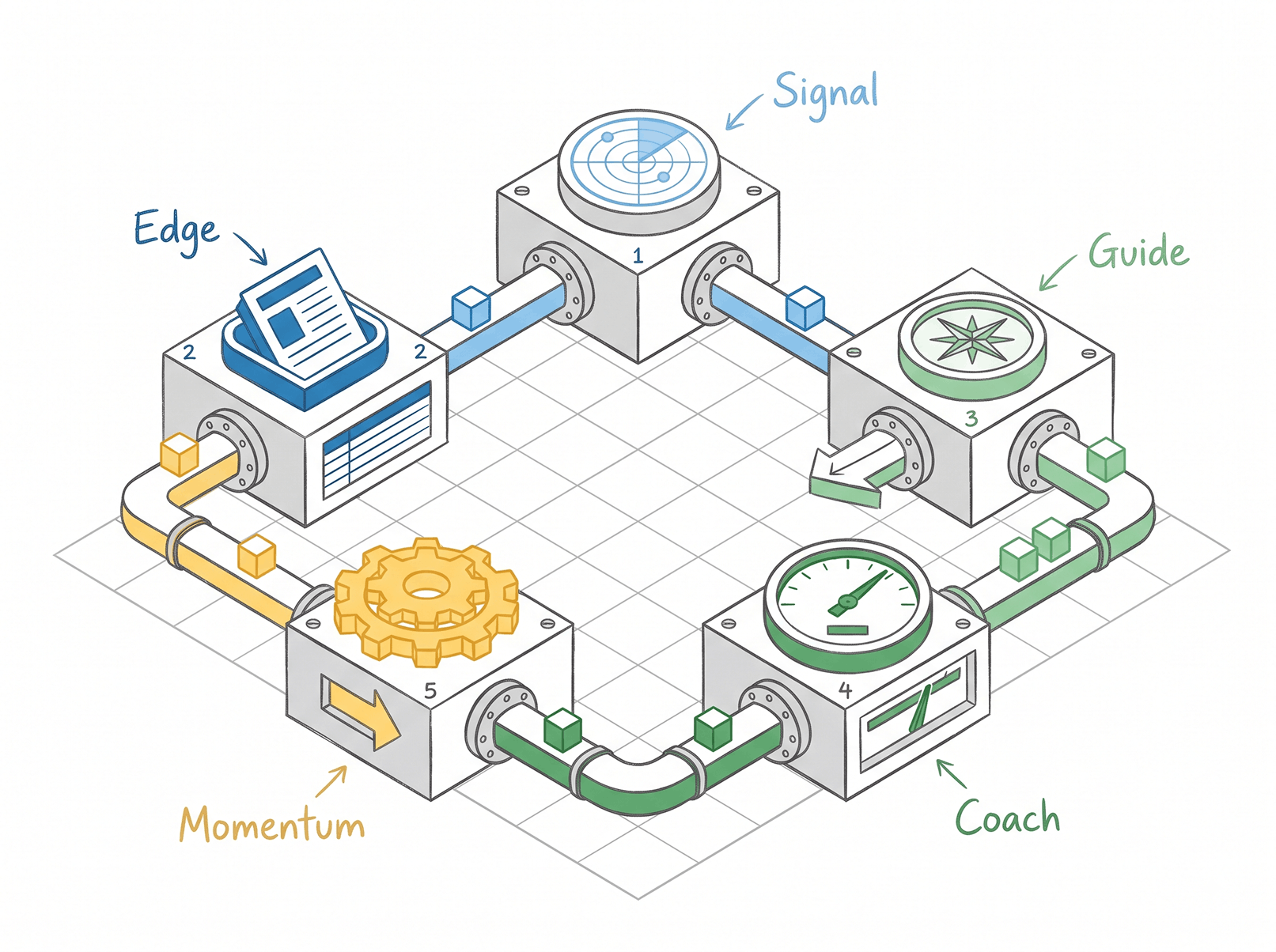
We built it as one continuous loop, because getting better isn't an event — it's a system. Five capabilities, each useful on its own, each making the next one sharper: know where the opportunity is, prepare for the conversation, stay sharp during it, learn from it, and carry the momentum forward. Here's how they fit together.
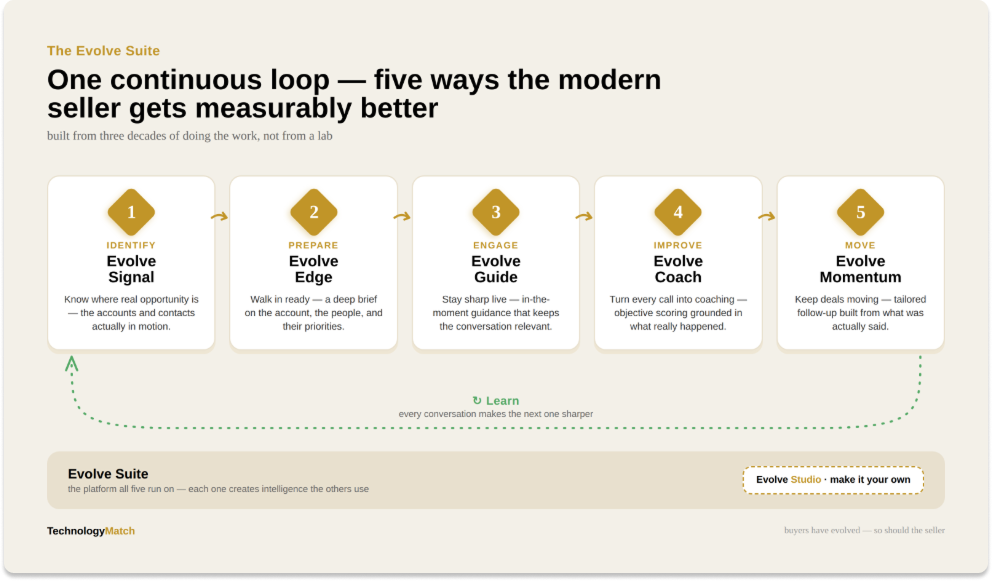
What each part brings to the table
The buyer evolved. The Evolve Suite is how we help the seller evolve with them.
Tell us where your calls are going quiet; we'll come with a point of view about why, and see where the Suite can help. Book any time that works for you.
FAQ
We bought qualified appointments and the first calls went well — so why do prospects keep going quiet?
It's usually not a lead-quality problem. The appointments are real decision-makers with real budgets and needs; what's changed is how technology gets bought. A contact going silent is most often the sound of a champion struggling to build consensus across a buying committee that's now grown to somewhere between 6 and 13 stakeholders — not someone who lost interest.
What actually changed about B2B buyers?
They arrive already informed. 71% are now Millennials or Gen Z who research exhaustively before speaking to a rep, and AI has made learning what a vendor does a prompt rather than a phone call. That reframes the value of a sales conversation away from information delivery and toward insight and judgment — so the old open (company overview, logos, feature pitch) now answers a question the buyer already Googled.
If traction is slowing, shouldn't reps just pitch harder?
The data says the opposite. 85% of buyers feel overwhelmed when pitched and 75% now prefer a rep-free experience entirely, so more noise lowers their confidence instead of raising it. The sellers who earn second meetings talk less and listen more — top performers talk about 43% of the time and listen 57%, and balanced talk ratios correlate with up to 31% higher deal progression.
Is this really a rep performance problem?
No — it's a system problem. Average seller tenure has fallen to roughly 18 months (down from three years) while product portfolios have roughly doubled, pushing reps toward a shallow, generalist pitch exactly when buyers demand specialist insight. That makes evolving a leadership and enablement challenge: measure how calls actually run (talk ratios, discovery quality, next-step discipline) and coach to it, call after call.
What does an evolved first call look like in practice?
Same 30 minutes, same experts — pointed at the buyer's problem instead of the brochure. Five moves: open with insight rather than credentials, diagnose with ten or more questions while the buyer talks 55–60% of the time, reframe what you heard into a risk or opportunity they hadn't considered, co-build tailored value for each stakeholder, and lock a specific next step with tailored follow-up sent within 24 hours.