What Is GRC Software and What It Does for IT Leaders
GRC software unifies governance, risk, and compliance on one control layer. See how it differs from point compliance tools and how to choose the right fit.
A regulator publishes a new rule, or an auditor hands you a finding with your name on the remediation line. The clock starts, and the spreadsheet you have been using to track controls stops being good enough. That is usually the moment the search for GRC software begins.
The reflex is to treat it as a compliance problem and buy a compliance tool. That reflex is what leads teams into a second, more expensive decision twelve months later. GRC software is the control layer underneath compliance.
Once you see it that way, the buying decision gets a lot clearer, and so does the reason the cheap option so often fails to scale.
The stakes are easy to underprice. The average cost of compliance sits at $5.47 million, against $14.82 million for non-compliance, a 2.71 times difference. The breach numbers have moved in the same direction.
The global average cost of a data breach has climbed to $4.44 million, and in the United States a record $10.22 million, driven largely by higher regulatory fines.
This guide explains what GRC software does, how governance, risk, and compliance actually converge inside one system, and where a full platform parts ways with the point tools most teams meet first.

What GRC software is
GRC stands for governance, risk, and compliance. The acronym was coined by OCEG, with the first peer-reviewed paper published by founder Scott Mitchell in 2007. The concept predates the software by decades. The software exists to do one thing the old way could not: run all three disciplines off a single, shared set of facts.
Read the three letters as functions rather than departments.
- Governance sets the objectives, the policies, and the lines of accountability. It answers what the organization is trying to achieve and who owns each part of it.
- Risk identifies what threatens those objectives, scores it, and decides how to treat it.
- Compliance proves to an outside party that the controls you operate satisfy a requirement they care about. That scrutiny increasingly extends past your own walls to your vendors' controls as well.
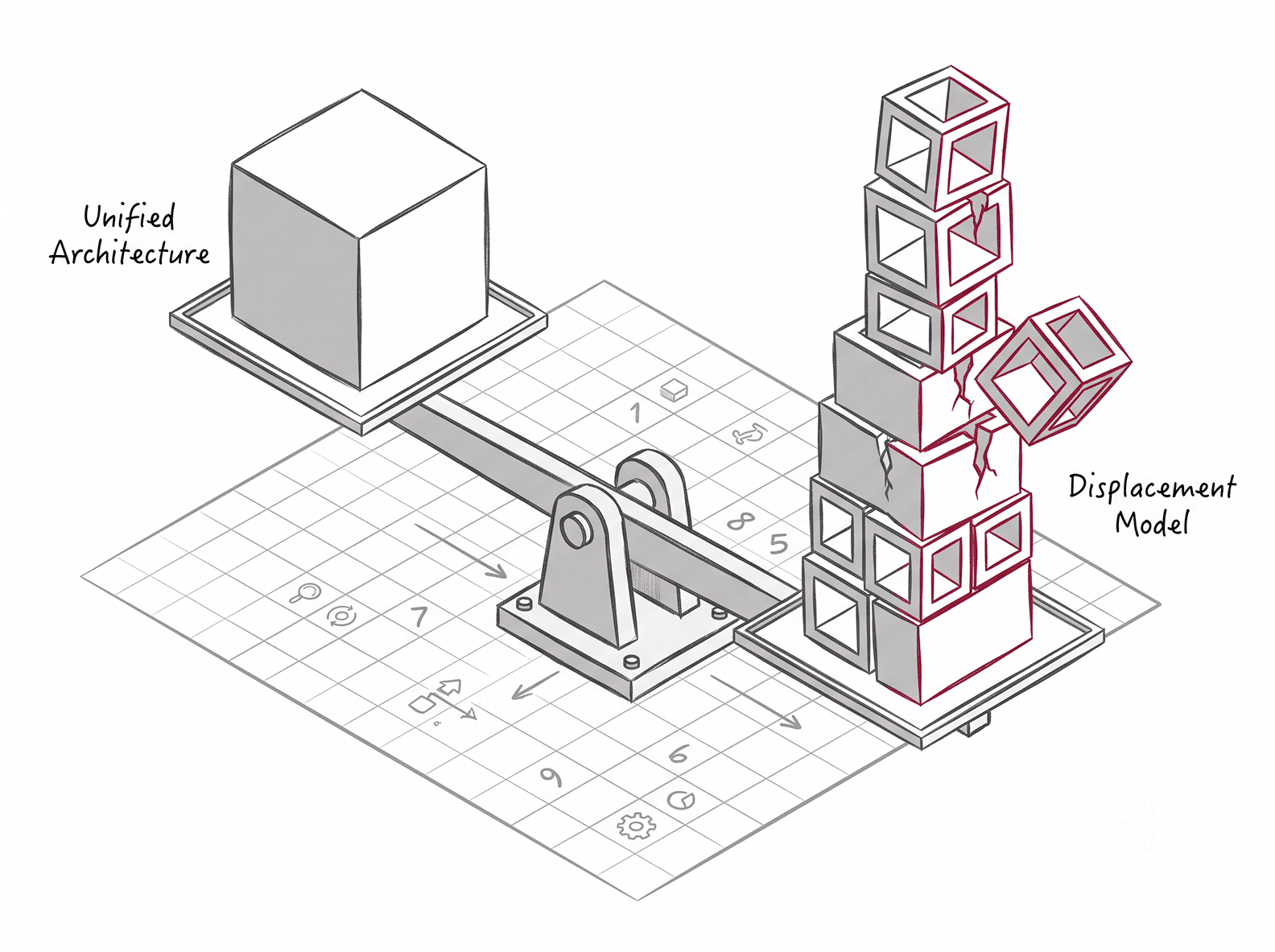
GRC software, then, is the system that holds the objectives, the risks, the controls, the policies, and the evidence in one place and keeps them connected. The point worth internalizing early: compliance is one output of that system, not the system itself.
That distinction matters because the market is crowded and the words are slippery. There are over 1,700 GRC products listed on G2 as of 2026, and many of them describe themselves with the same vocabulary while doing very different jobs.
How governance, risk, and compliance converge in one system
Convergence is a data model, and the model has one central object: the control.
A control is a thing you do to reduce a risk. Encrypting data at rest. Reviewing access quarterly. Logging privileged actions. In a spreadsheet world, each control gets re-documented and re-tested for every framework that asks about it. In an integrated GRC system, the control is defined once and mapped to everything it touches.
That mapping is many-to-many. One control links to the risks it treats, the policies that mandate it, the evidence that proves it runs, the owner accountable for it, and every framework requirement it satisfies. Change the control once, and every connected record updates with it.
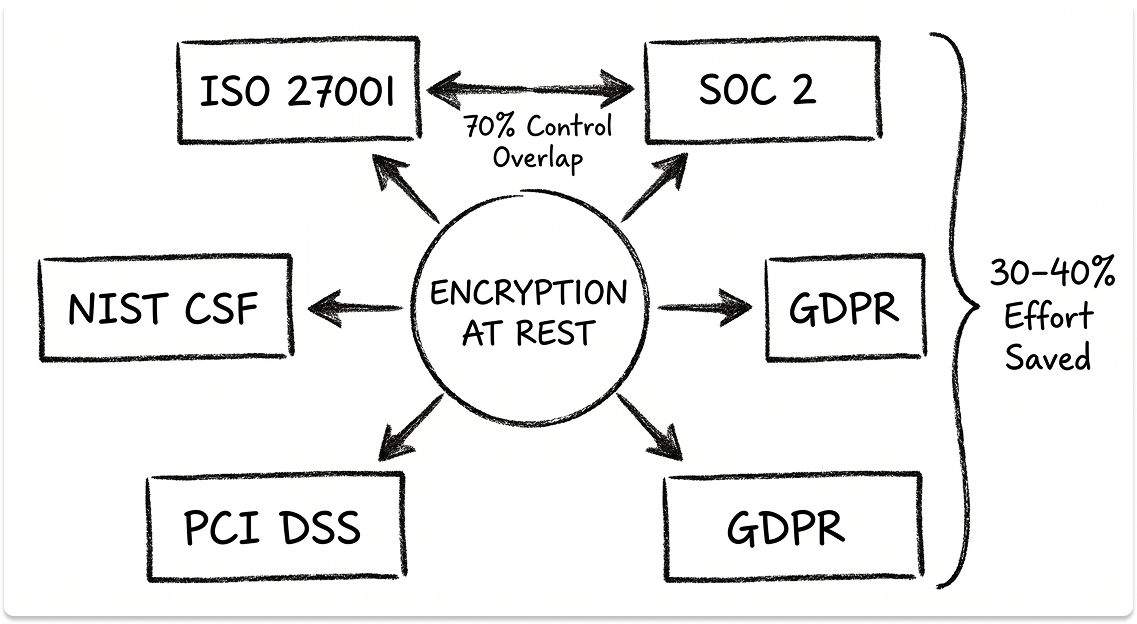
Take a single encryption at rest control. In a system that supports cross-framework mapping, that one control can satisfy ISO 27001 A.8.24, SOC 2 CC6.1, GDPR Article 32, PCI DSS, and NIST CSF PR.DS-01 at the same time. You implement it once. You collect the evidence once. It answers to five obligations. For teams in regulated sectors, that overlap is the difference between running one program and several, as it plays out in compliance-heavy industries like HIPAA and SOC 2.
The industry shorthand for this is test once, comply many. The payoff is measurable. SOC 2 and ISO 27001 overlap by roughly 70 percent at the control level, and organizations that pursue both in parallel save 30 to 40 percent of the combined effort compared with running them as separate projects.
Here is the reframe that changes how you buy. Frameworks do not define your security program. They describe and test it. You build the program once, against the union of your obligations, and map it many ways. A team that internalizes this stops treating each new audit as a fresh project and starts treating it as a new view of work already done.
This is also the answer to a question buyers ask constantly: what problems does GRC software solve? It solves the duplication problem. Without a shared control model, the same access review gets prepared three times for three auditors, and the three copies drift out of sync until one of them becomes an audit finding.
GRC platforms and point compliance tools do different jobs
The market splits into two segments, and confusing them is the most expensive mistake in this category.
Compliance automation tools connect to your cloud and SaaS stack through APIs, monitor whether controls are passing or failing, and assemble the evidence packages auditors expect. They are built for speed and for a first certification. This is the Vanta, Drata, and Sprinto category, and it dominates the startup and mid-market segment where the goal is a SOC 2 or ISO 27001 report. The pull is real: 78 percent of technology companies now fold SOC 2 into their go-to-market strategy, and the compliance automation sub-market is growing more than twice as fast as the broader GRC market.
Full GRC platforms cover the entire governance-risk-compliance lifecycle. Policy management, a risk register with quantification, third-party risk, regulatory change tracking, audit workflow orchestration, issue management, and board reporting all sit on the same data layer. This is the ServiceNow, Archer, MetricStream, OneTrust, AuditBoard, and Hyperproof category.
The honest line between them is what the point tools leave out. Vanta's risk register is basic, with no quantitative risk analysis, and its broader GRC features sit as a layer on top of a compliance core. Drata is a compliance automation tool rather than a full GRC solution; its strength is continuous control monitoring, but it lacks maturity assessments, incident management, and the governance features enterprises need.
There is a deeper architectural difference too. With a point tool, the control library is pre-built and vendor-owned, and you mostly consume it. With a GRC platform, you own and configure the control model itself. That ownership is what lets the same controls serve a risk committee, a regulator, and an auditor without rework.
The table below maps the two segments against the capabilities that decide most purchases.
Read: How do the compliance tools Vanta, Drata, Secureframe, and Sprinto compare to each another
The takeaway from the table is not that one column wins. It is that they answer different questions. A point tool answers, are my controls passing for this framework? A GRC platform answers, what are our objectives, what risks threaten them, which controls treat those risks, and how do those same controls prove compliance across every obligation we carry?
Why IT Leaders look for GSC software
A new or expanded regulatory obligation
Laws and frameworks change on someone else's timeline. A privacy law passes, the business expands into a regulated market, or a new sector rule lands. The deadline is fixed, and missing it carries fines, blocked deals, and a failed audit with the IT leader's name attached.
The volume of change is the real pressure. Financial institutions contended with more than 1,200 separate rules and around 250 regulatory updates a day in 2024, and the SEC's 2024 cybersecurity-incident disclosure rules added fresh obligations for public companies. Tracking that against a static spreadsheet is a losing position.
AI governance is the newest entry on this list, and the data already shows the gap. Shadow AI was involved in 20 percent of breaches, adding an average of $670,000 to the cost, and 97 percent of AI-related breaches occurred at organizations lacking proper AI access controls. That governance gap is the same one that will see shadow AI outpace shadow IT, and a new obligation is arriving whether your control set is ready or not.

An audit and its findings
Auditors arrive on their own schedule and set the bar. A qualified finding or a failed audit is a documented, visible failure, and the remediation lands on IT. You need the evidence and the controls in place before the auditors come back.
This is where the second-framework wall appears, and it is the through-line of the whole category. A team buys a point tool to survive the first SOC 2. It works. Then a customer demands ISO 27001, a regulator adds a requirement, or the board asks for a risk number, and the tool that aced the first audit has no model for any of it. The wall is not a tooling failure. It is the moment a compliance problem reveals itself as a governance and risk problem.
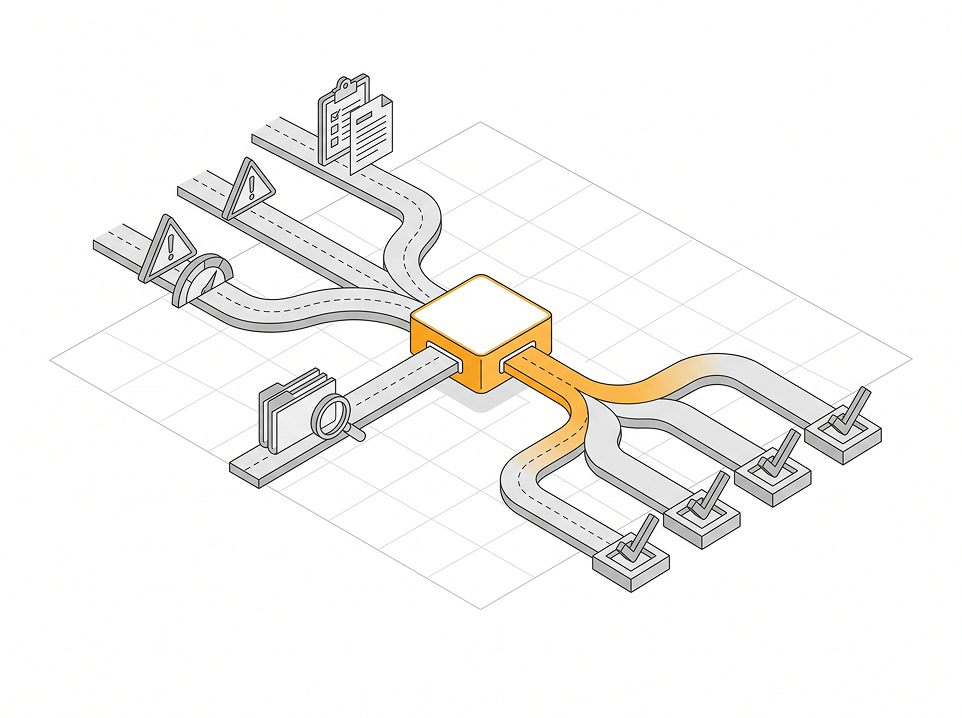
The work that gets you past that wall is the same work that makes the next audit a non-event. The checklist below is that work, broken into the four areas that auditors and regulators keep returning to.
If you can tick most of those boxes, you are operating a control program, not just preparing for an audit. If you cannot, the gaps you just found are your requirements document for the next section.
What's inside a GRC platform
GRC platforms ship as a set of modules. The names vary by vendor, but the functions are consistent. The useful way to read them is by the question each one answers.
- Control library. What do we do to manage risk, and which obligations does each action satisfy? This is the shared spine described earlier, and it is what separates integrated GRC software from a folder of disconnected tools.
- Risk register. What threatens our objectives, how likely is it, and how bad would it be? Mature platforms support quantification, so risk can be discussed in dollars rather than red, amber, and green.
- Policy management. What have we committed to, who approved it, and when is it due for review? Policies link directly to the controls that enforce them.
- Evidence repository. Can we prove the control ran during the audit period? Strong systems automate collection and tag each artifact to every framework it supports.
- Third-party risk. Which vendors can hurt us, and have we assessed them properly? Your suppliers' weaknesses become your findings.
- Regulatory change management. What changed in the rules, and which of our controls does it affect? This is the direct answer to trigger one.
- Audit workflow. Where does each audit stand, who owns the open items, and what evidence is still missing? Internal audit teams often drive GRC adoption from this module out.
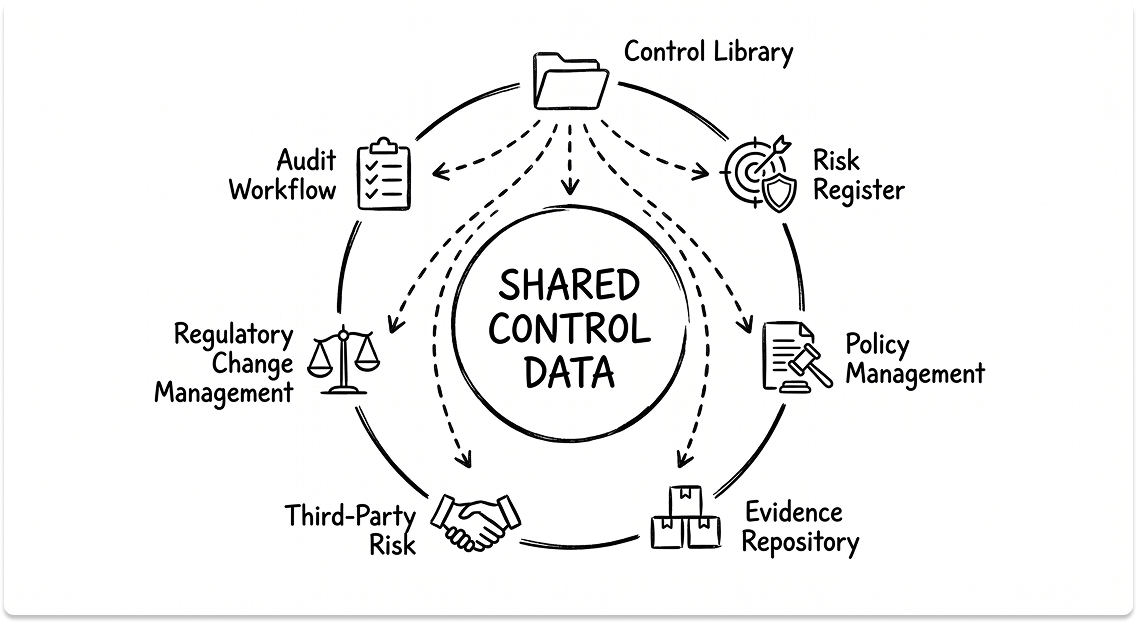
A platform earns the name when these modules share data. When a control fails in monitoring, the linked risk should re-rate, the responsible owner should be notified, and the affected audits should flag automatically. Disconnected modules that each need manual updating are a suite in name only.
This is also why grc audit software, grc risk management software, and grc compliance software increasingly describe the same platforms rather than separate products. The convergence happened in the architecture.
How to choose GRC software for your situation
The right tool depends on your maturity, not on a feature count. A team chasing a single SOC 2 with one part-time owner should buy a compliance automation tool and feel good about it. A platform would be cost and overhead with no payoff. The platform conversation starts when a second framework, a real risk mandate, or multiple entities enter the picture.
A few questions cut through most vendor pitches:
- Do we own and configure the control model, or only consume the vendor's library?
- How deep is cross-framework mapping, and which frameworks ship pre-mapped?
- What happens when a control fails? Does anything downstream update on its own?
- Can the risk register quantify, or only categorize?
- How does the platform track regulatory change against our existing controls?
The market will keep expanding around these questions. The overall GRC sector is projected to reach roughly $65 billion by 2026, growing at about 12 percent a year, with the AI-governance and compliance-automation segments growing fastest. More options will not make the decision easier. A clear read on your own maturity will.
To make that read concrete, the tool below scores your situation and points to the segment that fits.
The decision under the decision
Return to where this started. A regulation lands or an audit finding arrives, and you need an answer fast. The instinct is to ask which tool passes this audit.
The better question is which system governs the controls that this audit, the next regulator, and your own risk committee will all keep asking about. Answer that one, and the audit in front of you turns from a project into a non-event. That is the whole job of GRC software, and it is why the control layer, not the compliance report, is the thing worth buying.
Facing a new regulation or an audit on the calendar?
That's the moment the control layer stops being theory. Browse GRC, risk, and compliance partners from a catalog of pre-vetted vendors, filtered to your obligations and your maturity. Match with the ones that fit and reach out on your own timeline. And it's free.
FAQ
What is GRC software?
GRC software is a system that manages governance, risk, and compliance on a single connected data model. It holds your objectives, risks, controls, policies, and evidence in one place and keeps them linked, so the same control can satisfy a risk owner, a regulator, and an auditor without duplicate work. The acronym was coined by OCEG in 2007.
What does GRC software do, and what problems does it solve?
GRC software solves the duplication problem that breaks spreadsheets and disconnected tools. It defines each control once, then maps it to every framework, risk, and policy it touches, so evidence is collected once and reused everywhere. That removes the contradictory, out-of-sync copies of the same access review that often become audit findings.
What is the difference between GRC software and compliance automation tools?
Compliance automation tools (Vanta, Drata, Sprinto) connect to your stack, monitor whether controls pass or fail, and produce evidence for a certification like SOC 2 or ISO 27001. Full GRC platforms add risk quantification, policy lifecycle, regulatory change tracking, and governance reporting. Point tools let you consume a control library; GRC platforms let you own and configure the control model.
How does GRC software make governance, risk, and compliance converge?
It uses many-to-many control mapping. A single control, such as encryption at rest, can satisfy ISO 27001 A.8.24, SOC 2 CC6.1, GDPR Article 32, PCI DSS, and NIST CSF PR.DS-01 at once. Since SOC 2 and ISO 27001 overlap by roughly 70 percent, one control program maps to several obligations instead of running as separate projects.
When do you need GRC software, and how do you choose it?
You need it when a second framework, a new regulation, multiple entities, or a board-level risk mandate enters the picture. Below that threshold, a compliance automation tool is the right call. To choose, ask whether you own or only consume the control model, how deep cross-framework mapping goes, and what happens downstream when a control fails.