How to Build a Technology Vendor Shortlist as an IT Leader
A five-step framework for IT leaders to build a technology vendor shortlist that works. Covers problem definition, discovery channels, scoring criteria, shortlist size, and pre-demo preparation.

Building a technology vendor shortlist is where most IT procurement decisions are won or lost. Most IT leaders treat it as the part of the process that does not need a process.
Search a few terms on Google. Ask one peer. Check G2. End up with eleven vendors that all look the same. Schedule six demos. Cancel three. Buy from whoever followed up most persistently.
That is a habit. It produces poor outcomes consistently.
The consequences of getting vendor selection wrong are measured in years. A mismatched ERP sits at the center of your operations for a decade. A failed MSP partnership delays your security roadmap by eighteen months. The cost is every initiative that stalled while you were managing the wrong vendor.
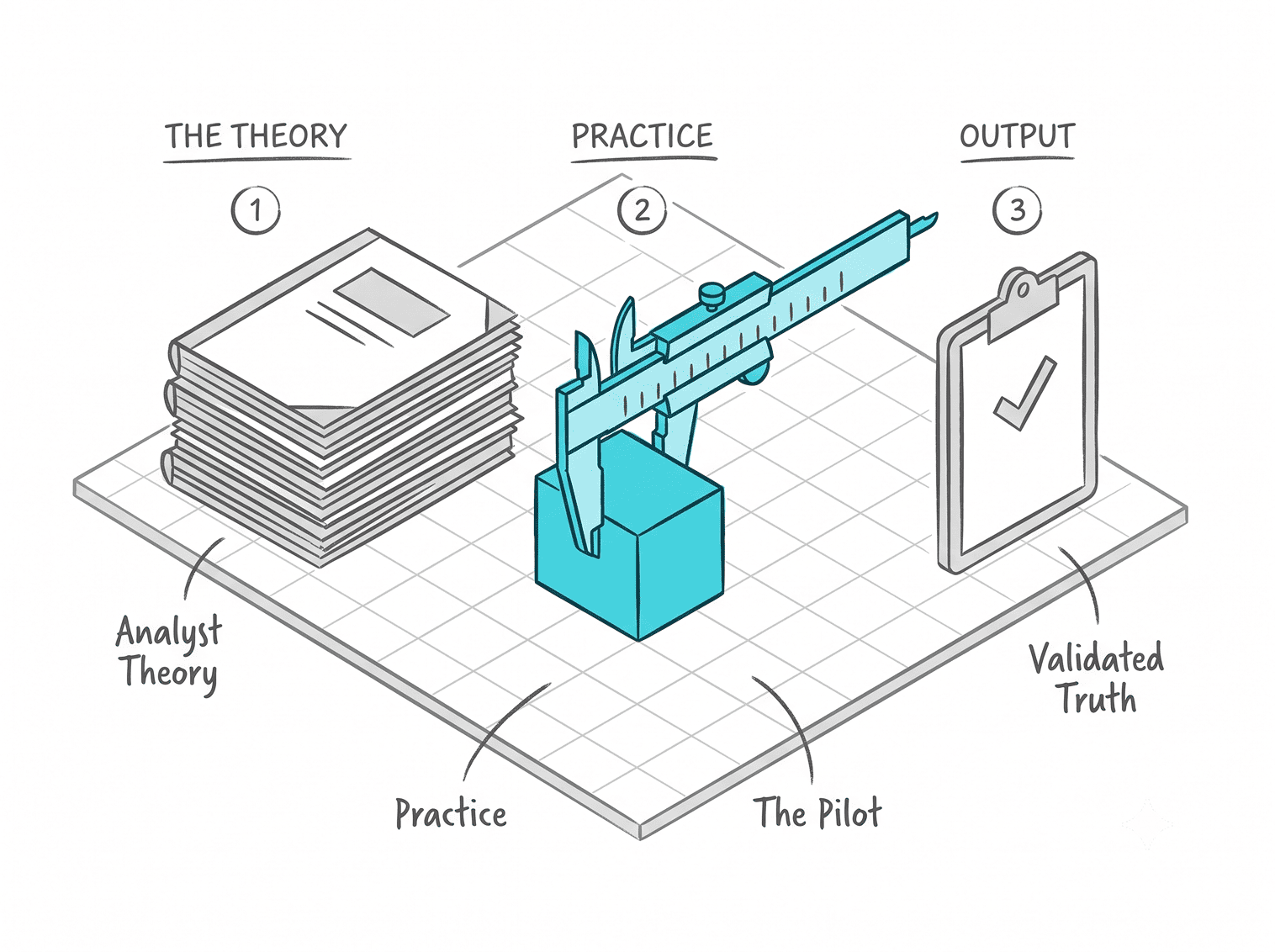
This guide gives you a five-step framework for building a shortlist that works. Three to four vendors who have cleared a structured filter, are genuinely qualified for your requirements, and are worth your team's evaluation time.
Step 1: Define the Problem Before You Define the Category
The most common shortlisting failure happens before a single vendor name is written down.
IT leaders open a search with a product category: "we need a new ERP," "we need an MSP," "we need a Zero Trust solution." Product categories are how vendors organise themselves. They are not how your business experiences pain.
Before you open any directory or send any RFI, answer these four questions in writing.
What is breaking, slowing, or creating unacceptable risk right now?
Be specific. "Our ERP vendor is ending support for the version we run, and the replacement they are pushing is missing core functionality our operations depend on" is a problem statement. "We need a new ERP" is a category.
What does success look like in twelve months?
Define the operational outcome. "Attorneys can draft documents and generate summaries without exposing client data" is an outcome. "Implement an AI solution" is a task.
What are your absolute non-negotiables?
These are binary filters: regulatory requirements, integration dependencies, budget ceilings. A healthcare organisation evaluating patient-facing tools has HIPAA compliance as a hard gate. A law firm evaluating AI has data sovereignty as a hard gate. Anything that fails a non-negotiable is disqualified before it reaches the shortlist.
Who else in the organisation has sign-off?
Get the CFO's budget threshold, the CISO's compliance requirements, and the relevant department head's operational constraints before you talk to a single vendor. Shortlists that bypass stakeholder criteria fail at the approval stage, after you have spent six weeks evaluating.

Use The IT Business Outcomes Worksheet to structure this exercise before discovery begins.
Step 2: Use at Least Two Discovery Channels
Once your problem statement is defined, the goal of discovery is straightforward. Generate a long list of candidates that pass your non-negotiables. You are populating, not evaluating.
Single-source discovery is the consistent mistake here. One channel and you stop when you have enough names. Single-source long lists over-represent well-marketed vendors, incumbent ecosystem players, and whoever invested most in SEO that month.
Use at least two of these four channels for every search.
Peer networks and CIO communities. The highest-trust signal available. One recommendation from a peer running a similar environment at similar scale and compliance posture is worth more than fifty G2 reviews. Peer recommendations surface the known. They consistently miss strong vendors without a word-of-mouth footprint.
Review platforms (G2, Gartner Peer Insights, Capterra). Useful for broad market mapping. Use them to understand the landscape. Filter by company size and industry before reading a single review. A five-star rating from fifty-person companies carries no signal if you have 1,500 employees and a compliance obligation they have never dealt with.
Vendor marketplaces and matching platforms. The fastest path from requirements to shortlist for mid-market IT leaders. Platforms like TechnologyMatch match your requirements against a vetted vendor catalog without requiring you to submit contact information to thirty separate sales funnels. You stay anonymous until you choose to engage.
Existing vendor ecosystems. The lowest-friction channel and the highest lock-in risk. Staying within Microsoft, AWS, or Salesforce for a new capability is convenient. Use it as one input alongside at least one external channel.
For a detailed breakdown of each channel, see Best Ways to Find IT Vendors or Partners in 2026.

Step 3: Score Every Candidate Before Any Demo
This is where your long list becomes a shortlist.
Score every candidate against a consistent set of criteria before scheduling a single demo. Same criteria, same format, applied to every vendor on your list. It is the only reliable way to compare vendors who have been trained to make themselves look incomparable.
Score each vendor 1 to 3 on each criterion. Set a minimum threshold before you start. Any vendor below it does not make the shortlist.
CriteriaWhat to EvaluateHard Gate?Compliance fitDoes the vendor meet your regulatory baseline: HIPAA, CMMC, SOC 2, GDPR? Can they provide current documentation?YesIntegration compatibilityNative connectors to your core stack, or custom middleware requiring a separate contract?Often yesScalabilityCan it handle your growth trajectory over a three-year horizon: headcount, sites, data volume?DependsSupport modelOnsite, remote, or hybrid? Named vs. pooled support? SLA response and resolution times?DependsCommercial modelFlat-rate, per-user, or variable? Hidden costs? Auto-renewal clauses? Exit terms?NoVertical referencesHas the vendor deployed in your industry at your company size? Can they produce a reachable reference this week?No
Compliance is almost always a hard gate. If you handle patient data and a vendor cannot produce HIPAA compliance documentation before a demo, they are off the list. The strength of their product does not change this.
Integration compatibility is consistently underweighted. An IT leader planning a Zero Trust rollout in a Microsoft-heavy environment needs a solution that works natively with Entra ID and Intune. Ask directly: "Is this a native certified integration or a third-party connector?" The answer changes the implementation cost, the support model, and the risk profile.
Vertical references matter more than feature depth. A vendor who has deployed in healthcare three times at your scale has already solved implementation problems your team has not encountered yet.
For a structured scoring template, see The IT Vendor Scorecard.

Step 4: Cut to Three Vendors
After scoring, the instinct is to keep five or six vendors to preserve optionality. Resist it.
Six vendors means six demos, six proposal reviews, six sets of reference calls, and six contract redlines. At four hours of evaluation time per vendor, that is twenty-four hours before you have made a single decision. Research on complex B2B purchasing consistently shows that expanding the consideration set beyond four options increases decision time without improving decision quality.
The right shortlist size is three vendors, occasionally four when scoring produces a genuine tie.
When cutting to your shortlist, apply one filter the scoring matrix cannot capture. Would you actually buy from this vendor? If the honest answer is no, replace them with a vendor you would genuinely select. Using a vendor as a price benchmark wastes their time and pulls your evaluation team's attention toward process management rather than the decision itself.
One exception. Always include the category benchmark, even if you do not intend to buy from them. If you are evaluating MSPs, include the provider your peers cite most frequently, even if their pricing is above your range. The benchmark gives your evaluation a calibrated reference point and makes it easier to identify where lower-cost alternatives are making genuine trade-offs.

Step 5: Complete Three Steps Before the First Demo
Most IT leaders treat the completed shortlist as the finish line. It is the starting line.
Send a standard intake questionnaire to every shortlisted vendor. Same questions. Same format. Due by the same date. Ask for: current customer references in your industry and size range, a completed security questionnaire (use your standard template or a Cloud Security Alliance CAIQ), documentation confirming the compliance certifications that cleared your hard gates, and a preliminary commercial proposal based on your stated requirements.
Vendors who cannot complete this before a demo are giving you behavioural data about how they will respond to requests after a contract is signed.
Define your evaluation team and their roles before anyone watches a demo. Who is the technical evaluator? Who owns the commercial negotiation? Who has veto authority on compliance? Each evaluator needs a scoring sheet before the vendor presents.
Set a decision timeline and communicate it to all shortlisted vendors. "We are targeting vendor selection by [date]. Demos completed by [date]. Reference calls completed by [date]." This creates accountability for your own process and filters out vendors who cannot manage their own sales process to a defined deadline.
For the due diligence process that follows shortlisting, see IT Vendor Due Diligence: A Practical Process and Checklist for IT Leaders.

The Shortlist Is the Decision in Rough Form
Every vendor that makes your final shortlist should be one you could defend selecting. If that is not true of all three, the scoring process did not do its job.
Define the problem before the category. Use multiple discovery channels. Apply consistent scoring. Cut to three. Complete the pre-work before demos begin.
Staying with the wrong vendor because the selection process was too compressed to find the right one is a cost most IT leaders absorb quietly, until they are fourteen months into a contract they cannot exit.
If the research process is the constraint, that is exactly the problem TechnologyMatch is built to solve. Describe your environment once: company size, infrastructure, compliance requirements, and budget. An account manager builds a shortlist of three to five vetted vendors matched to your specific situation. Introductory calls are arranged. Your information stays anonymous until you choose to engage. There is no cost to you.
We will help you find and talk to vendors
If the research process is the constraint, that is exactly the problem TechnologyMatch is built to solve. Tell us your requirements and we will give you a shortlist of vetted vendors matched to your specific situation. We will prep and arrange calls with them if you're ready. There is no cost to you.
FAQ
How many vendors should be on a technology vendor shortlist?
Three, occasionally four. Research on complex B2B decisions consistently shows that expanding the consideration set beyond four options increases decision time without improving decision quality. The last two vendors on a six-vendor shortlist almost never win.
What is the difference between a vendor long list and a shortlist?
A long list is every vendor that passes your non-negotiable filters. A shortlist is the subset, typically three vendors, that scored highest against your full criteria framework and have cleared enough of your requirements to be worth a structured evaluation.
When should I start building a vendor shortlist?
After you have a defined problem statement, confirmed stakeholder criteria, and a clear set of non-negotiable requirements. Building a shortlist before those three inputs exist produces a recommendation your CFO rejects on budget grounds you knew about but did not confirm upfront.
How long does the vendor shortlisting process take?
Two to three weeks from problem definition to confirmed shortlist for a well-scoped requirement. The most common delay is stakeholder alignment. Getting the CFO's budget ceiling and the CISO's compliance requirements confirmed before discovery begins saves more time than any other adjustment to this process.
Should I include the incumbent vendor on my shortlist?
Yes, if you are evaluating a replacement for an existing solution. The incumbent knows your environment better than any new vendor will at the point of evaluation. If they cannot compete on a level evaluation against two alternatives, that is the answer your process was designed to produce.
What is a vendor intake questionnaire and why does it matter?
A standard set of questions sent to every shortlisted vendor before any demo: references in your industry and size range, compliance documentation, security questionnaire responses, and a preliminary commercial proposal. It creates a consistent information baseline before demos introduce presentation quality as a variable. Vendors who respond thoroughly and on time demonstrate the responsiveness you need from a long-term technology partner.