Rubrik vs Cohesity vs Veeam: Cyber Resilience Platform Comparison (2026)
Compare Rubrik, Cohesity, and Veeam on security, recovery speed, and cost. A 2026 technical guide for IT leaders choosing a cyber resilience platform.

Ransomware has changed what enterprise backup needs to do. Attackers now target backup infrastructure first, encrypting or deleting backup catalogs before detonating the primary payload. Recovery capability is only as strong as the attack surface your backup platform exposes.
Cyber resilience assumes a breach will occur and measures success by whether clean, uncorrupted data can be recovered after a targeted attack, not just after an operational failure.
Three platforms dominate the enterprise shortlist in 2026: Rubrik, Cohesity, and Veeam. Each is built on a different architectural philosophy, and that philosophy determines how each platform performs under the specific conditions of a ransomware event. Two variables drive the right choice:
- Security architecture vs. operational flexibility. Rubrik and Cohesity are appliance-based platforms. The security posture is built into the hardware and software stack, reducing the attack surface at the cost of customisation. Veeam is software-defined, giving infrastructure teams more flexibility and lower TCO while placing security configuration responsibility squarely on the customer team.
- Recovery scope. Mass recovery after a large-scale ransomware event, hundreds of VMs and petabytes of data under time pressure, is a different engineering problem from granular file or database recovery after an isolated incident. Cohesity's Instant Mass Restore is purpose-built for the former. Veeam's Secure Restore with sandbox scanning fits the latter. Rubrik sits between them with strong threat hunting capability and solid recovery throughput.
All three platforms, their architectures, ransomware-specific capabilities, pricing models, and the environments each is built for are covered below.
Also, since you're looking for cyber-resilience or cybersecurity tools, we can help you find the right fit from a catalog of 1200+ pre-vetted vendors.
The Core Architectural Differences
The primary decision factor between these vendors is not a specific feature, but a deployment philosophy. You must choose between a converged appliance model and a software-defined model.
The Converged Appliance Model (Rubrik & Cohesity)
Rubrik and Cohesity typically deploy as purpose-built hardware appliances (or virtual appliances) that combine the software, the file system, and the storage into a single unit.
- The Architecture: These systems use a hyperscale, scale-out file system architecture distributed across multiple nodes.
- The Advantage: The vendor controls the entire stack. They harden the operating system, patch the firmware, and secure the file system. This "secure by default" approach reduces the risk of misconfiguration.
- The Trade-off: You must use their hardware or certified nodes, which often results in a higher upfront Total Cost of Ownership (TCO) compared to commodity storage.
The Software-Defined Model (Veeam)
Veeam functions as software that you install on your own infrastructure. You choose the compute (servers from Cisco, HPE, Dell) and the storage (Block, Object, or Tape).
- The Architecture: Modular. You deploy "Proxies" to move data and "Repositories" to store it.
- The Advantage: Extreme flexibility. You can reuse existing hardware or select low-cost commodity storage. It prevents vendor hardware lock-in and allows you to mix and match storage targets.
- The Trade-off: You share the security responsibility. You must secure the Windows or Linux operating system that Veeam runs on. If you fail to patch the underlying OS, the backup environment is vulnerable.
Rubrik: The Zero Trust Security Platform
Rubrik positions itself as a cybersecurity company rather than a backup vendor. Its Rubrik Security Cloud is built on a "Zero Trust Data Security" architecture that assumes the network is already breached and focuses on isolating data at the point of storage.

Best Cyber Resilience Features
- Native Immutability (Atlas): Rubrik uses a proprietary file system called Atlas. Unlike standard storage that exposes writable protocols (like NFS or SMB) to the network, Atlas does not. This creates a logical air gap, ensuring that even if an attacker gains administrative credentials, they cannot overwrite or delete backup data remotely.
- Anomalous Encryption Detection: Rubrik doesn't just store data; it observes it. It scans backup snapshots for high entropy (randomness) indicative of encryption. This allows IT teams to identify exactly which files were impacted by ransomware, defining the "blast radius" immediately.
- Agentic Recovery (Rubrik Ruby): Rubrik's generative AI companion, Ruby, guides and accelerates cyber recovery workflows. Instead of manually selecting snapshots, operators can use natural-language prompts like "Recover all VMs affected by the BlackCat ransomware variant to the last clean snapshot" to investigate the incident and orchestrate the restore.
Where It Might Lack
- Database Granularity: While excellent for VMs, DBAs often report that Rubrik lacks the "surgical" tuning options for complex Oracle/SQL clusters found in legacy job-based schedulers. It prefers a rigid policy-based (SLA Domain) approach.
- Troubleshooting Visibility: Because the appliance is a locked "black box," troubleshooting deep OS-level issues often requires waiting for Rubrik Support to access the system via a support tunnel.
Best Suited For: Organizations where the CISO controls the budget and ransomware defense is the primary decision driver.
IT Leaders Report 2026
What are your IT peers investing in 2026?
We spoke to about 1,300 IT leaders from various organisations to understand what they're evaluating. Insights about what they're prioritising, where they're moving, and how they're spending.
Read the report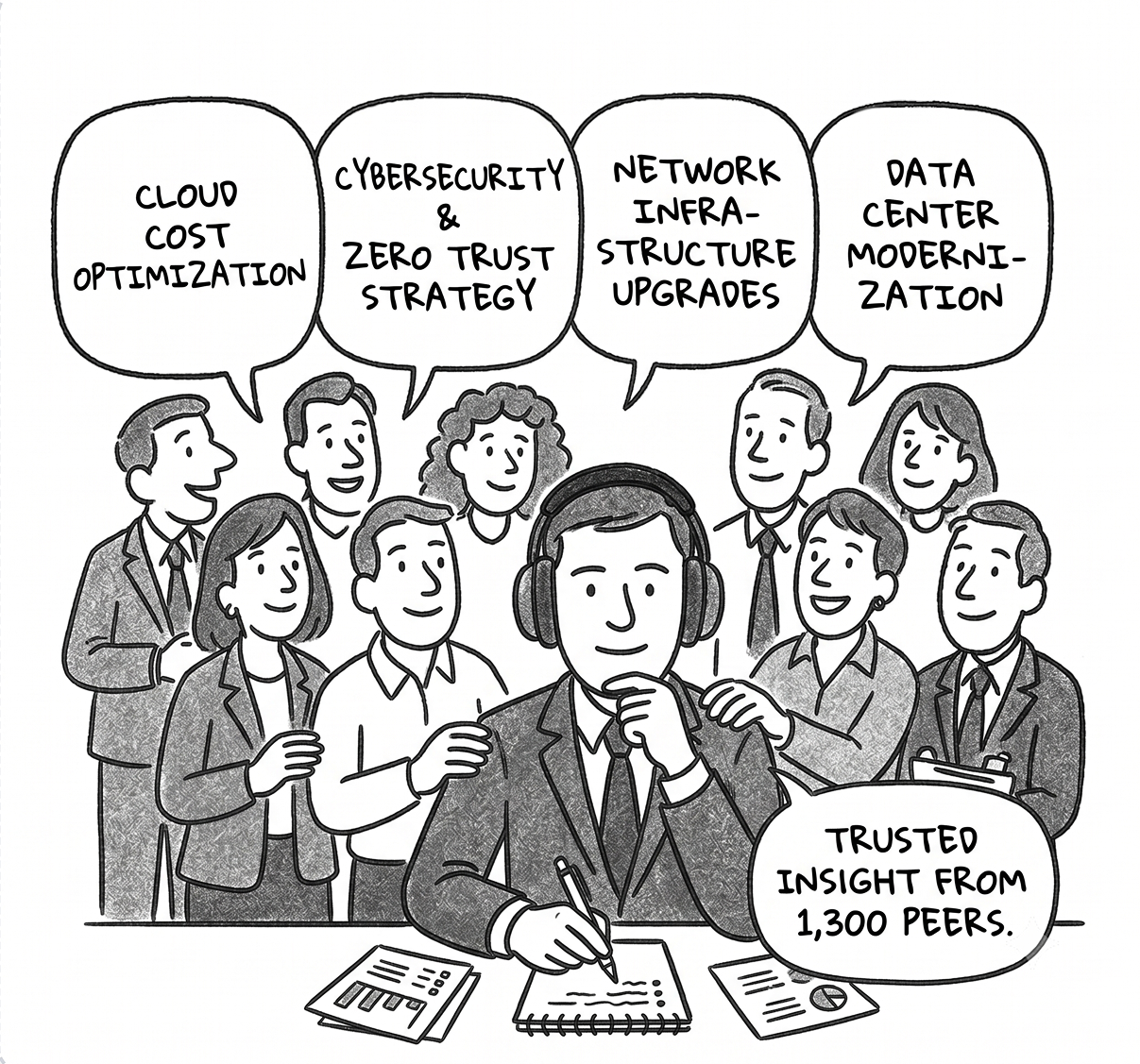
Cohesity: The Data Intelligence Platform
Cohesity views backup data as an underutilized asset. Its strategy focuses on Data Management, allowing organizations to run analytics, compliance checks, and development tests on backup data without restoring it first. Its merger with Veritas' data protection business gives Cohesity a massive footprint in the enterprise space.

Top Backup Recovery Solutions with Strong DR
- Cohesity FortKnox: This is Cohesity’s "Cyber Vault" service. It allows you to send an immutable copy of your data to a Cohesity-managed cloud vault. In the event of a total site compromise, you can recover directly from FortKnox, providing a clean "break glass" option.
- Instant Mass Restore: Cohesity’s SpanFS file system excels at performance during large-scale recovery events. Its architecture allows hundreds of virtual machines to be mounted and booted instantly from the backup appliance, minimizing downtime during major outages.
- Cohesity Gaia (AI Search): Cohesity leverages Retrieval Augmented Generation (RAG) to index backup data. This allows legal and compliance teams to search through archived data using natural language queries (e.g., "Find all PDF contracts from 2023 containing liability clauses") without a full restore.
Where It Might Lack
- Resource Contention: Cohesity’s "hyper-converged" model means the same box handles backups, file shares, and analytics. If you run heavy AI analytics jobs (Gaia) during a backup window, performance contention can occur if the cluster isn't sized correctly.
- Complexity: The platform is dense. Managing the convergence of backup, NAS, and security features requires a steeper learning curve than simpler point solutions.
Best Suited For: Fortune 500 enterprises with complex, hybrid environments who want to consolidate backup and file storage while leveraging data for business insights.
Veeam: The Portable Agnostic Platform
Veeam remains the market share leader due to its focus on Data Freedom. It prioritizes portability, allowing IT leaders to move data between on-premise infrastructure and public clouds without proprietary lock-in.

Ransomware Recovery & Disaster Recovery Capabilities
- Inline Entropy Analysis: In the Veeam Data Platform (v13), Veeam performs real-time analysis of data streams during the backup process. If it detects encryption activity (high entropy) while backing up a server, it flags the snapshot as suspicious immediately, preventing you from relying on a corrupted recovery point.
- Secure Restore: Before restoring a machine to production, Veeam can mount the backup image and scan it with your antivirus or YARA rules in an isolated sandbox. If malware is found, it can abort the restore or restore the machine with the network disabled to prevent reinfection.
- Hardened Linux Repositories: To address security concerns, Veeam introduced immutable Linux repositories. This allows customers to build a secure, locked-down storage target using standard hardware, providing "appliance-like" security without the appliance cost.
Where It Might Lack
- Security Responsibility: Security relies heavily on the customer’s implementation. If the underlying Windows server hosting Veeam is unpatched, the backups are vulnerable. It requires a disciplined infrastructure team to maintain.
- Management at Scale: For global organizations, managing patching and upgrades for hundreds of distributed Veeam proxies and repositories requires significant operational overhead compared to the centralized upgrades of Rubrik/Cohesity.
Best Suited For: Infrastructure Operations teams prioritizing flexibility, hardware independence, and low Total Cost of Ownership (TCO).
If you're looking to migrate between Rubrik and Veeam, read this detailed migration guide.
Immutability and Air-Gap Architecture Compared
Immutability is the single capability that separates a cyber resilience platform from a traditional backup tool. If an attacker with stolen admin credentials can delete or encrypt your recovery points, every other feature is decoration.
All three platforms claim immutability, but they achieve it in fundamentally different ways, and those differences change what an attacker can actually reach.
Rubrik builds immutability into its Atlas file system. Backups are written once and never exposed through standard writable protocols like NFS or SMB. This creates a logical air gap. Even an attacker holding domain admin credentials has no network path to overwrite or delete the data, because the protocol to do so does not exist on the cluster.
Cohesity enforces write-once-read-many (WORM) immutability on its SpanFS file system through DataLock, which time-locks snapshots so they cannot be modified or deleted until the retention period expires, even by an administrator. For higher assurance, FortKnox sends an isolated, immutable copy to a Cohesity-managed cloud vault that sits outside your network, providing a true air-gapped "break glass" recovery option.
Veeam does not own the storage layer, so immutability is something you architect rather than something you inherit. You achieve it through a Hardened Linux Repository (which uses the immutable flag, single-use credentials, and no root SSH access) or by writing to S3-compatible Object Lock storage in compliance mode. Both are effective. Both depend on your team configuring and maintaining them correctly.
The practical takeaway: Rubrik and Cohesity are immutable by default, while Veeam is immutable by design choice. During a proof of concept, test the failure mode directly. Attempt to delete a locked recovery point using a privileged account and confirm the platform refuses.
We also compare Veeam, Cohesity, and Rubrik with Zerto, Druva, Acronis, and Commvault. This guide explores 7 of the most popular cyber resilience and enterprise backup solutions to give you a larger picture
Answer the Questions Below to Get a Tool Recommendation
Want a personalized recommendation? You can get on a call with us and talk about your requirements so we can give you a shortlist of vendors that fit. If you wanna talk to them, we will also prep them so your conversation doesn't start from scratch.
Decision Framework: How to Decide
When choosing between Rubrik, Cohesity, and Veeam, avoid making decisions based solely on feature comparison charts. Instead, evaluate the platforms against your organization's specific operational constraints, security requirements, and long-term infrastructure strategy.
Use the following criteria to guide your decision-making process.
Criterion 1: Security Posture and Immutability Requirements
- Requirement: Your organization requires a "Zero Trust" architecture where backup data is physically or logically isolated from the production network with minimal configuration.
- Recommendation: Rubrik. Its proprietary file system creates a native logical air gap that does not expose standard writable protocols to the network. It offers the highest level of "out-of-the-box" security.
- Requirement: You need immutability but want to leverage existing hardware investments.
- Recommendation: Veeam. By deploying Hardened Linux Repositories or utilizing Object Lock with compatible storage, you can achieve immutability. However, this requires your team to possess the Linux skills to secure and maintain the underlying OS.
Criterion 2: Disaster Recovery and Data Portability Strategy
- Requirement: Your strategy involves migrating workloads between different environments (e.g., moving from on-premise VMware to AWS or Azure) or you need to exit a specific hypervisor platform.
- Recommendation: Veeam. Its portable data format is hypervisor-agnostic. You can back up a VM on-premise and restore it directly to a public cloud instance without complex conversion processes, making it the superior tool for migration and hybrid mobility.
- Requirement: You need to recover hundreds of virtual machines instantly to meet a strict Recovery Time Objective (RTO) of under 15 minutes.
- Recommendation: Cohesity. Its Instant Mass Restore capability, driven by the SpanFS file system, typically provides higher Input/Output (IO) performance for running workloads directly from the backup appliance during a crisis.
Criterion 3: Data Management and Compliance Needs
- Requirement: You have strict compliance mandates (GDPR, CCPA) that require you to search for and identify sensitive data (PII) across years of archived backups without restoring them.
- Recommendation: Cohesity. With Cohesity Gaia, you can index and search backup data in place. This allows legal and compliance teams to perform eDiscovery directly on the backup appliance, reducing the time and storage cost associated with restoring data for analysis.
- Requirement: You need to identify the exact scope of a ransomware attack (blast radius) to report to regulators within 4 days.
- Recommendation: Rubrik. Its Data Threat Analytics and Anomalous Encryption Detection provide the clearest visualization of which files were modified, allowing for rapid forensic reporting.
Criterion 4: Operational Complexity and Support Model
- Requirement: You have a lean IT team and prefer a "single throat to choke" for support. You do not want to manage OS patches for your backup infrastructure.
- Recommendation: Rubrik or Cohesity. Both offer a converged appliance model. If a drive fails or the software bugs out, you call one vendor. The vendor manages the security hardening of the platform.
- Requirement: You have a mature infrastructure team that wants full control over the hardware stack to optimize costs and performance.
- Recommendation: Veeam. It allows you to source your own hardware and storage, often resulting in a significantly lower TCO. This is ideal if you have established supply chain relationships with vendors like Dell, HPE, or Cisco.
Pricing and Licensing Models Compared
Pricing follows directly from the architectural split. The converged appliance vendors bundle hardware, software, and storage into one capacity-based subscription.
The software-defined vendor charges only for software and leaves the infrastructure spend to you. None of the three publish list pricing, and real costs are negotiated per deal, so treat the figures below as directional benchmarks rather than quotes.
Veeam uses the Veeam Universal License (VUL), a per-workload subscription where a single instance covers one VM, one physical server, one cloud VM, or one NAS share, and moves between them as your environment changes. List pricing runs roughly $250 to $450 per workload per year across the Standard, Advanced, and Premium tiers. Two things sit outside that number. You buy and operate your own compute, and you purchase object or block storage separately. A free Community Edition covers up to 10 workloads, which makes Veeam the only platform here you can pilot at zero licensing cost.
Rubrik sells Rubrik Security Cloud as a subscription metered by protected capacity, typically per terabyte, with per-user metering for SaaS workloads like Microsoft 365 and Salesforce. Hardware or virtual appliance and storage are included in the model, so the per-TB rate (third-party benchmarks put it near $480 per TB per year) reflects a more complete cost than a software-only line item. You pay more upfront and manage less.
Cohesity licenses DataProtect on a per-TB capacity basis, available as software-only, as a hardware appliance, or as DataProtect as a Service. Third-party benchmarks place software licensing around $150 to $400 per TB per year and the SaaS option higher. The detail that catches buyers off guard is modular pricing. Capabilities like FortKnox, DataHawk, and SmartFiles are licensed separately and can add meaningfully to the base, so price the platform with the modules you actually intend to use.
When you compare these, the lowest software quote is not the lowest total cost. Veeam's licensing entry point is the cheapest, but you absorb the hardware, storage, and operational labor. Rubrik and Cohesity carry a higher subscription that already includes the infrastructure and the security hardening you would otherwise staff for. Build the comparison on a three-year total cost of ownership, not the first-year license.
Comparison Summary Table
Closing Thoughts
The era of buying backup software purely as an insurance policy against accidental deletion is over. In 2026, you are selecting a cyber resilience platform that must survive a targeted attack.
- Choose Rubrik if your priority is a secure, isolated vault that minimizes configuration risk and provides deep forensic insights into cyber incidents.
- Choose Cohesity if you manage a massive, complex hybrid environment and want to leverage your backup data for analytics, compliance, and development.
- Choose Veeam if you require the operational flexibility to move workloads between clouds and hypervisors, and you have the internal skills to manage and secure your own infrastructure.
We strongly recommend conducting a proof of concept (POC) that goes beyond simple backup and restore jobs. Simulate a destructive ransomware event. Isolate the backup system from the network and measure the time and effort required to restore clean operations.
For further reading on how these platforms integrate with broader managed service offerings, refer to our analysis of the Best Enterprise IT Partners, Vendors, and Solutions to Work with in 2026. Selecting the right partner to implement these complex architectures is often just as critical as the software choice itself.
Looking for Cybersecurity Vendors?
We can shortlist the right vendors for your environment, arrange the introductory calls if you want to talk, and put you in control of the evaluation. Plus a $50 gift card for your time if you speak to us.
FAQ
Which platform is best for ransomware recovery: Rubrik, Cohesity, or Veeam?
Rubrik is often considered the strongest choice for pure ransomware recovery due to its "Zero Trust" architecture and proprietary immutable file system (Atlas), which prevents backups from being deleted or encrypted by attackers. However, Cohesity offers superior speed for recovering hundreds of virtual machines instantly via its Instant Mass Restore feature. Veeam provides excellent clean recovery options with Secure Restore, but its security relies on you correctly configuring immutable Linux repositories, whereas Rubrik and Cohesity are secure by default.
Is Veeam cheaper than Rubrik or Cohesity?
In terms of initial software licensing, Veeam is typically less expensive because it is a software-defined solution that allows you to use your own commodity hardware (servers and storage). Rubrik and Cohesity operate on a converged appliance model, which includes proprietary hardware or certified nodes, resulting in a higher upfront cost. However, organizations must calculate the Total Cost of Ownership (TCO): Veeam requires more internal labor to patch and secure the underlying operating system, while Rubrik and Cohesity reduce operational overhead by managing the full stack.
What is the difference between "Cyber Resilience" and traditional "Data Backup"?
Data Backup focuses on recovering from accidental deletions or hardware failures using metrics like RPO and RTO. Cyber Resilience—the 2026 standard—focuses on surviving a targeted cyberattack. Platforms like Rubrik and Cohesity are designed as Cyber Resilience tools because they include features like threat hunting, anomaly detection (spotting encryption in progress), and isolated cyber vaults (like Cohesity FortKnox) to guarantee that the data you restore hasn't been corrupted by malware.
Can Cohesity or Rubrik replace my existing NAS storage?
Cohesity is uniquely designed to replace both your backup target and your NAS (Network Attached Storage). Its SpanFS scale-out file system can host file shares, dev/test clones, and analytics workloads on the same cluster used for backups, effectively consolidating data silos. Rubrik is primarily a purpose-built backup and security vault; while it can store archival data, it is not optimized to replace high-performance production NAS filers in the same way Cohesity is.
How does Veeam’s "portability" differ from Rubrik and Cohesity?
Veeam offers superior data portability because its backup files are hardware-agnostic. You can take a Veeam backup file from an on-premise VMware server and restore it directly to an AWS EC2 instance or Azure VM without needing a proprietary appliance in the cloud. Rubrik and Cohesity generally require you to run their virtual appliances in the cloud to read and restore their proprietary data formats, which can add friction and cost during a cloud migration or disaster recovery scenario.