



10 Best Cloud Security Platforms and Providers for 2026
Compare the best cloud security platforms and managed providers for 2026. Evaluate CNAPP, CSPM, identity, data security, compliance, MDR, and multi-cloud fit.
Summary:
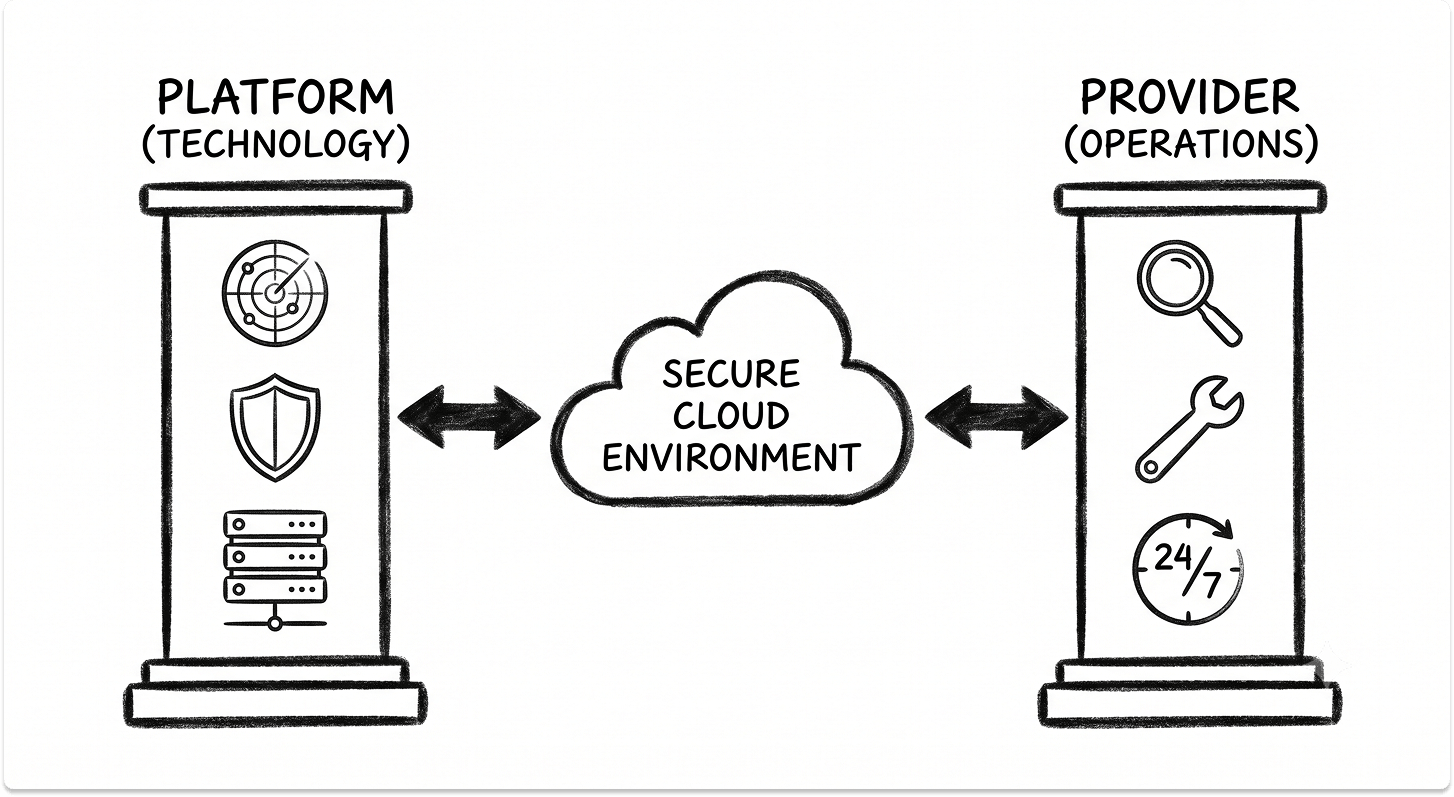
The best cloud security choice depends on your highest-risk gap, not a single leader. Cloud security platforms (CNAPP, CSPM, CIEM, DSPM, workload and runtime protection) supply the technology layer, while managed providers and consultancies supply implementation, monitoring, and response. Many organizations need both: a platform to find and prioritize risk, and a partner to operate detection and response.
Cloud security has moved beyond perimeter controls, static firewalls, and periodic vulnerability scans. Your cloud environment changes every day through new identities, software deployments, infrastructure-as-code updates, third-party integrations, and data movement across AWS, Azure, Google Cloud, SaaS applications, and Kubernetes clusters.
That pace creates a different security problem. You do not only need to identify a misconfigured storage bucket or an exposed virtual machine. You need to understand which issue creates a real path to sensitive data, production workloads, privileged identities, or business disruption.
Cloud security platforms give IT and security teams that visibility. They monitor cloud assets, workloads, identities, configurations, data, and application code. Managed security providers and cloud consultancies then help teams implement, operate, and respond to those controls when internal capacity is limited.
The distinction matters. A cloud security platform provides the technology layer. A cloud security provider, managed detection and response team, or consultancy provides implementation, monitoring, investigation, and operational support.
For many organizations, the right answer involves both. You may need a cloud-native application protection platform to identify risk across your environment, then a managed security partner to operate detection and response around the clock.
Cloud security platforms vs cloud security service providers
Cloud security platforms help you secure cloud infrastructure and applications directly. They typically provide capabilities such as cloud security posture management, workload protection, identity and entitlement security, sensitive-data discovery, vulnerability prioritization, and cloud detection and response.
Cloud security service providers help you deploy, manage, monitor, or improve those technologies. They may operate a security operations center, support cloud migration, design Zero Trust architecture, manage Microsoft security tooling, or provide incident response expertise.
Before shortlisting vendors, decide which problem you need to solve first.
- Choose a cloud security platform when you need visibility, prioritization, prevention, and continuous control across cloud accounts and workloads.
- Choose a managed security provider when you lack the people or coverage to monitor alerts, investigate incidents, and operate security tooling.
- Choose a cloud security consultancy when you need help designing secure architecture, migrating critical workloads, building Kubernetes controls, or improving cloud governance.
What is CNAPP and why does it matter?
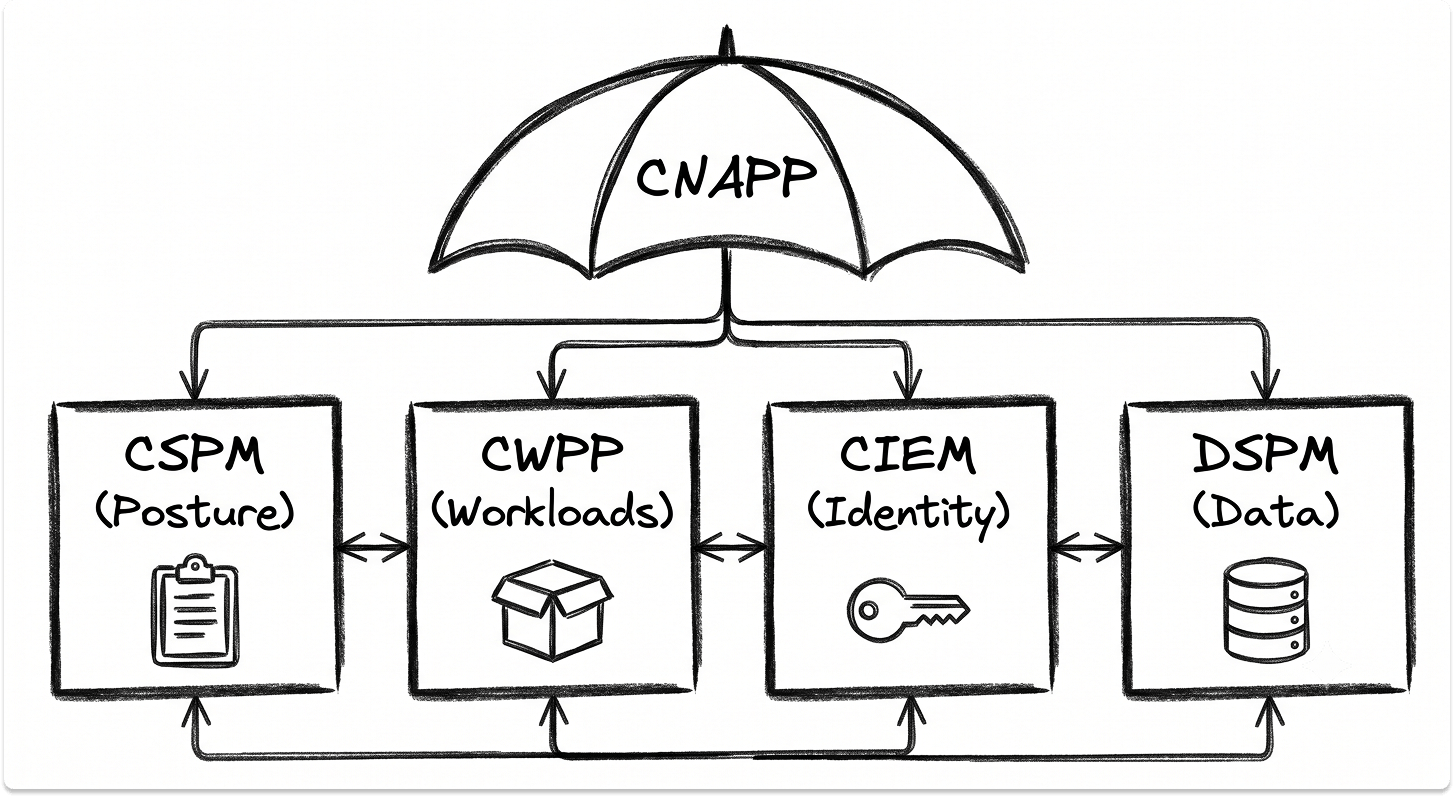
Cloud-native application protection platform, or CNAPP, has become the central category for cloud security buying. CNAPP combines several security functions that teams previously bought and operated separately.
A CNAPP may include:
- Cloud security posture management (CSPM) to identify misconfigurations, policy violations, and compliance gaps.
- Cloud workload protection (CWPP) to secure virtual machines, containers, Kubernetes clusters, serverless workloads, and runtime activity.
- Cloud infrastructure entitlement management (CIEM) to identify excessive cloud permissions, risky roles, and toxic identity combinations.
- Data security posture management (DSPM) to discover sensitive data, understand exposure, and identify risky access paths.
- Code and infrastructure-as-code security to find issues before teams deploy them into production.
This consolidation does not mean every organization should buy one large platform. It means you should evaluate how well a vendor connects cloud assets, identities, data, code, vulnerabilities, and runtime behavior. A dashboard full of findings does not reduce risk unless your team can identify which findings matter most.
The NIST Cybersecurity Framework 2.0 reinforces this approach by emphasizing governance, identification, protection, detection, response, and recovery. Cloud security tooling should help you produce evidence across each of those functions, not only generate alerts.
What to look for in a cloud security platform or provider
The best cloud security vendor depends on your cloud architecture, operating model, regulatory exposure, internal security maturity, and ability to respond when something goes wrong. I recommend evaluating vendors against the criteria below before you schedule demonstrations.
1. Multi-cloud asset visibility and attack-path context
A platform should discover assets across AWS, Azure, Google Cloud, Kubernetes, containers, serverless services, managed databases, and SaaS integrations where relevant.
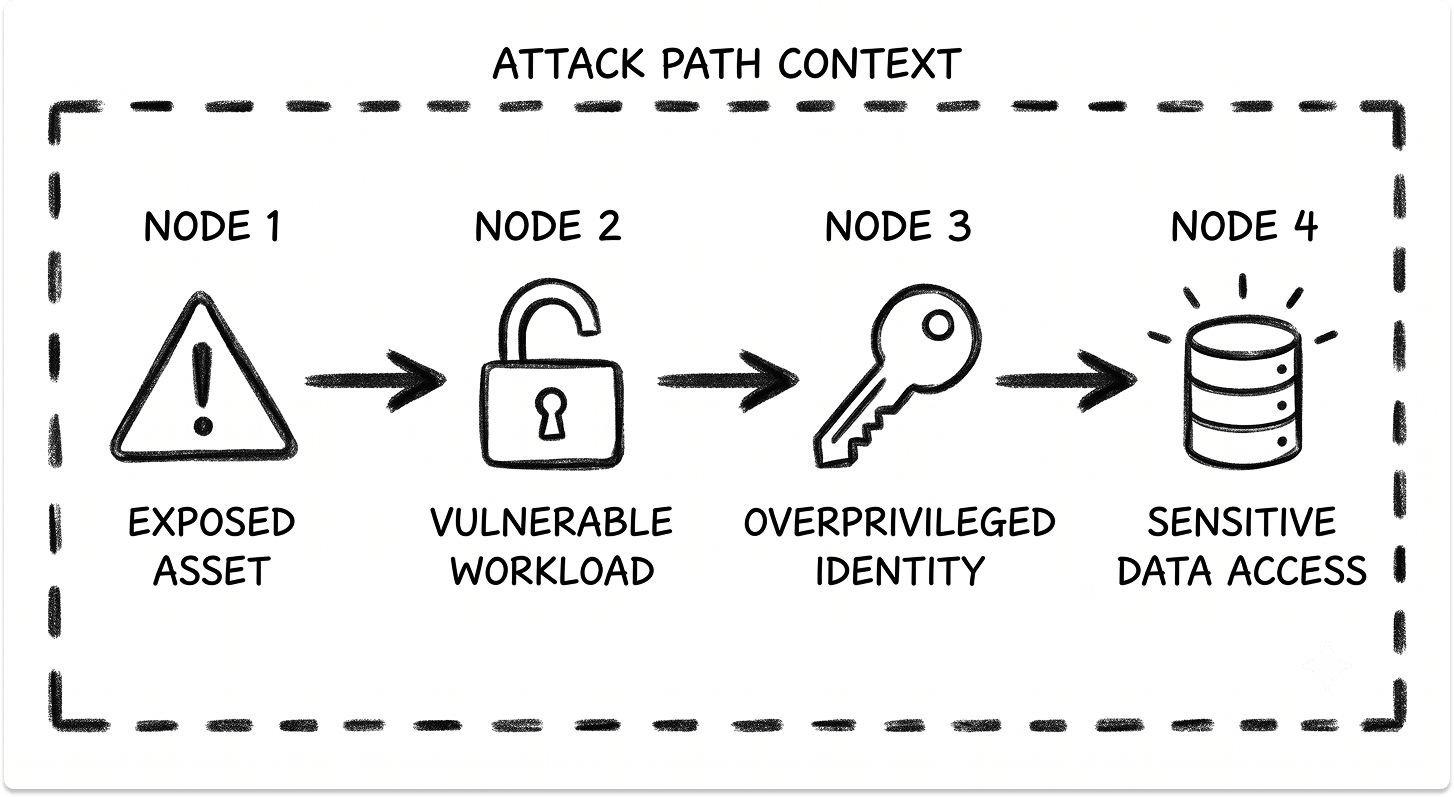
Asset inventory alone is not enough. Look for attack-path analysis that connects an exposed asset, a vulnerable workload, an overprivileged identity, and access to sensitive data. This context helps your team focus on issues that could create an actual breach path.
Ask each vendor how it handles ephemeral resources, multi-account environments, acquired business units, and cloud services that security teams do not manage directly.
2. Cloud identity and entitlement security
Identity has become one of the most important cloud attack surfaces. Your evaluation should include human users, service accounts, API keys, workload identities, automation accounts, and other non-human identities.
The vendor should identify excessive permissions, unused privileged roles, privilege escalation paths, risky cross-account access, and toxic permission combinations. It should also support least privilege, just-in-time access, and remediation workflows that do not interrupt critical operations without review.
3. Data security posture management
Cloud environments store data across object storage, databases, analytics platforms, SaaS applications, backups, and development environments. You need visibility into where sensitive data exists, who can access it, how it moves, and whether it is exposed.
Evaluate whether the vendor can discover and classify sensitive data, identify public or overly broad access, map data flows, and connect data exposure to identity and workload risk. This is especially important for organizations managing personal data, financial data, health information, intellectual property, or regulated workloads.
4. Code-to-cloud security
Many cloud risks begin before deployment. Infrastructure-as-code templates, container images, CI/CD pipelines, open-source dependencies, and application configurations can introduce vulnerabilities before a workload reaches production.
Look for integrations with your source control, CI/CD pipeline, infrastructure-as-code tooling, ticketing system, and developer workflow. The strongest platforms show developers how a code issue affects a live cloud environment, rather than forcing teams to triage disconnected findings.
5. Runtime workload protection and cloud detection
Posture management identifies risks before an incident. Runtime controls help detect suspicious behavior after a workload runs in production.
Assess support for cloud workload protection, Kubernetes runtime visibility, malware and exploit detection, cloud-native logging, threat hunting, and integration with SIEM, XDR, SOAR, and incident-response workflows. Confirm the vendor’s coverage for your operating systems, container runtimes, managed Kubernetes services, and serverless workloads.
6. Compliance evidence and audit reporting
Compliance reporting should do more than produce a generic score. Your platform should map controls to the frameworks that apply to your organization and export evidence that auditors, customers, and internal risk teams can use.
Common requirements include SOC 2, ISO 27001, PCI DSS, HIPAA, GDPR, NIST, CIS Benchmarks, and sector-specific standards. Verify the quality of evidence, the frequency of control checks, and the amount of manual work required to close findings.
7. AI and generative-AI security controls
Organizations now deploy AI services, connect models to internal data, and give employees access to generative-AI tools faster than traditional governance processes can adapt. Your cloud security strategy should account for AI workloads, model access, sensitive training data, API keys, prompt injection risk, and unauthorized data sharing.
Ask vendors whether they can discover AI services and related cloud assets, monitor access to data used by AI workloads, identify exposed credentials, and support your AI governance requirements. Do not accept broad AI claims without a clear explanation of what the product actually monitors and protects.
8. Deployment model, operational fit, and support
Agentless coverage can reduce deployment effort and speed up assessment. Agent-based controls can provide deeper runtime telemetry and workload protection. Many organizations need both.
Evaluate implementation time, required permissions, data residency, API limits, pricing model, support coverage, and the skills your team needs to operate the platform. If your team cannot monitor alerts continuously, include a managed detection and response provider in your evaluation.
The best cloud security platforms for 2026
The vendors below address different cloud security requirements. No single platform fits every environment. I would begin with the architecture you need to secure, the tools you already operate, and the operational capacity your team has to respond to findings.
1. Wiz: Best for fast multi-cloud CNAPP visibility
Wiz is a cloud-native application protection platform built for organizations that need rapid visibility across AWS, Azure, Google Cloud, Kubernetes, and cloud workloads.
Its platform focuses on agentless discovery, cloud risk prioritization, attack-path analysis, workload risk, identity exposure, and sensitive-data context. Wiz is a strong option for teams that want a broad cloud-security view without starting with a lengthy endpoint-agent rollout.
Best for: Multi-cloud environments that need rapid asset discovery, risk prioritization, and cloud exposure management.
Consider carefully if: You need a provider to operate your security program for you. Wiz provides a platform, not a replacement for a managed SOC or internal incident-response function.
Also read: How does Wiz compare to Prisma Cloud, Orca, and FortiCNAPP
2. Palo Alto Networks Prisma Cloud: Best for enterprise cloud-security consolidation
Palo Alto Networks Prisma Cloud provides cloud-native security across code, cloud infrastructure, workloads, runtime, identities, and applications.
It suits enterprises that want to consolidate multiple cloud-security functions into one strategic platform. It can support organizations with complex environments, large application portfolios, mature DevSecOps practices, and established security operations teams.
Best for: Large enterprises that need broad CNAPP coverage and want to connect cloud security with a wider Palo Alto Networks security ecosystem.
Consider carefully if: Your team wants a lightweight deployment with minimal administration. Broad platforms often require clear ownership, integrations, and operating discipline to deliver value.
3. CrowdStrike Falcon Cloud Security: Best for organizations standardizing on Falcon
CrowdStrike Falcon Cloud Security connects cloud security with endpoint, identity, exposure management, threat intelligence, and security operations capabilities.
It is a natural fit for organizations that already use CrowdStrike’s Falcon platform and want cloud workload and identity context inside the same security operating model.
Best for: Security teams that already rely on Falcon and want to extend its detection, identity, and exposure capabilities into cloud environments.
Consider carefully if: Your evaluation requires deep support for every cloud-native control category. Validate cloud service coverage, agentless versus agent-based controls, and integration depth in your specific environment.
4. Microsoft Defender for Cloud: Best for Microsoft and Azure environments
Microsoft Defender for Cloud provides cloud security posture management and workload protection across Azure, AWS, and Google Cloud, with strong integration into the Microsoft security stack.
For organizations using Azure, Microsoft 365, Defender XDR, Sentinel, Entra ID, and Purview, this integration can reduce tool sprawl and improve investigation workflows.
Best for: Azure and Microsoft-centric organizations that want cloud-security controls connected to identity, SIEM, XDR, data governance, and endpoint security.
Consider carefully if: Your cloud estate is heavily weighted toward non-Microsoft tooling. Confirm the depth of multi-cloud coverage and the licensing model before committing.
5. Check Point CloudGuard: Best for multi-cloud posture and network security
Check Point CloudGuard helps organizations secure cloud infrastructure, applications, networks, workloads, and posture across public-cloud environments.
It is a credible option for teams that need cloud-native controls while maintaining a strong focus on network security, threat prevention, and centralized policy management.
Best for: Organizations with multi-cloud or hybrid environments that need cloud posture management alongside cloud network and workload protection.
Consider carefully if: You need a narrow, highly specialized tool for one function such as data security posture management. Compare CloudGuard’s coverage with best-of-breed options for your highest-risk use cases.
6. Orca Security: Best for agentless cloud risk prioritization
Orca Security provides agentless cloud security across assets, workloads, identities, data, vulnerabilities, and configurations.
It is well suited to teams that want to establish broad cloud visibility quickly and prioritize cloud risks without deploying agents across every workload.
Best for: Organizations that need fast time to value, broad cloud discovery, and a practical way to reduce alert volume through risk context.
Consider carefully if: You require deep runtime enforcement inside every workload. Validate where agentless coverage is sufficient and where your architecture needs agent-based telemetry.
7. Zscaler: Best for Zero Trust cloud access and workload connectivity
Zscaler provides Zero Trust access and cloud security services that help organizations secure users, applications, and workload connectivity without relying on traditional network-perimeter models.
It is particularly relevant when cloud security depends on secure remote access, third-party access, application segmentation, and consistent policy enforcement across distributed users and workloads.
Best for: Organizations advancing Zero Trust, securing hybrid work, and reducing reliance on legacy VPN and network-centric access models.
Consider carefully if: You need a full CNAPP as the primary cloud-risk platform. Zscaler often complements, rather than replaces, a dedicated CNAPP or CSPM solution.
8. Netskope: Best for data-centric cloud and SaaS security
Netskope focuses on security service edge, cloud access security broker capabilities, data protection, SaaS security, and Zero Trust networking.
It helps organizations control how users access cloud applications and sensitive data, particularly where SaaS sprawl, remote access, shadow IT, and data movement create risk.
Best for: Organizations with large SaaS footprints, distributed workforces, and a strong need for data protection and cloud-access governance.
Consider carefully if: Your primary requirement is cloud workload posture, Kubernetes runtime controls, or infrastructure-as-code security. Pair Netskope with a CNAPP where necessary.
9. Cyera: Best for data security posture management
Cyera focuses on discovering, classifying, and protecting sensitive data across cloud and data environments.
Data security posture management has become more important as organizations store sensitive information across cloud storage, databases, analytics platforms, collaboration tools, and AI-related workloads. Cyera is relevant when the business risk centers on understanding where sensitive data exists and who can access it.
Best for: Organizations that need stronger visibility into sensitive data, data exposure, access risk, and data governance across cloud environments.
Consider carefully if: You need a single platform to secure infrastructure, workloads, code, identities, and data. DSPM is a critical layer, but it may not replace a broader CNAPP.
10. Rubrik: Best for cyber resilience and ransomware recovery
Rubrik helps organizations protect data, monitor cyber risk, and improve recovery from ransomware and other destructive incidents.
Cloud security cannot end with prevention and detection. You also need to know whether critical data can be recovered, whether backups are protected from privileged access, and whether recovery procedures work under pressure.
Best for: Organizations that want to strengthen cyber resilience, backup security, recovery readiness, and ransomware response.
Consider carefully if: You need primary cloud posture management or workload protection. Rubrik addresses recovery and data resilience rather than replacing a full cloud-security platform.
Cloud security service providers and managed security partners
A platform can identify cloud risk, but it cannot replace the people needed to investigate incidents, tune detections, manage escalations, and improve security operations. The providers below fit different operational requirements.
SecurityHQ: Best for 24/7 managed detection and response across mixed environments
SecurityHQ provides managed security services, 24/7 monitoring, incident management, and support across multi-cloud and hybrid environments.
It is a relevant option when your organization needs ongoing SOC coverage and wants support operating security tools across different vendors.
Best for: Teams that need managed detection and response, continuous monitoring, and incident support across a mixed technology estate.
Quorum Cyber: Best for Microsoft cloud security operations
Quorum Cyber focuses on managed security services across the Microsoft security ecosystem, including Microsoft Defender, Sentinel, and Purview.
It is a strong fit for organizations that run Microsoft security tooling but need experienced operators to improve detection, response, and security outcomes.
Best for: Microsoft-centric organizations that need 24/7 MDR, Sentinel operations, and security improvement support.
Labyrinth Labs: Best for cloud-native engineering and Kubernetes foundations
Labyrinth Labs supports cloud-native engineering, Kubernetes, infrastructure-as-code, observability, and secure platform foundations.
It is most relevant when the security challenge begins with architecture, platform engineering, deployment practices, and cloud-native operating models.
Best for: Teams building or modernizing Kubernetes and cloud-native platforms that need security embedded into engineering practices.
EchoStor: Best for secure architecture and Zero Trust implementation
EchoStor provides infrastructure and security advisory services, including secure cloud architecture, access controls, segmentation, and Zero Trust implementation.
Best for: Organizations that need architecture design and implementation support around cloud infrastructure, identity, segmentation, and resilience.
Tribloom: Best for AWS adoption, migration, and governance support
Tribloom supports organizations adopting, migrating, and optimizing AWS environments.
It can help teams improve cloud architecture, governance, DevOps practices, and operational readiness during AWS transformation programs.
Best for: AWS-first organizations that need migration and cloud-governance support alongside security planning.
Blumira: Best for smaller security teams that need straightforward SIEM and XDR
Blumira provides SIEM and XDR capabilities designed to help teams detect and respond to security threats with less operational complexity.
Best for: Small and mid-sized organizations, MSPs, and lean IT teams that need practical detection and response capabilities without building a large security operations function.
How to shortlist cloud security vendors quickly
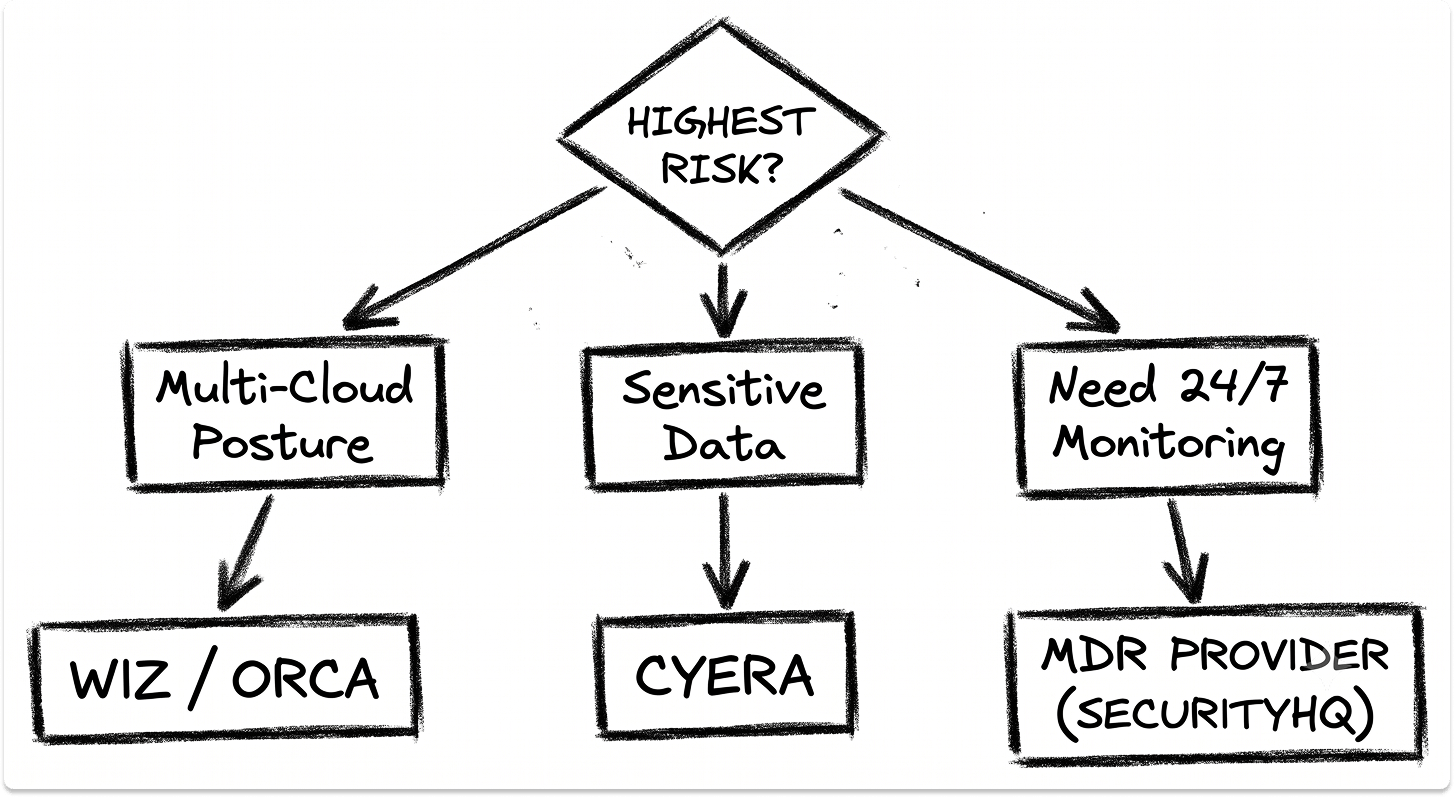
A long vendor list creates more work without improving the decision. I recommend narrowing the market based on your highest-risk environment and the capability you cannot operate effectively today.
- You need multi-cloud CNAPP visibility and attack-path prioritization: Start with Wiz, Palo Alto Networks Prisma Cloud, and Orca Security.
- You already run CrowdStrike across endpoints and identity: Evaluate CrowdStrike Falcon Cloud Security before adding another disconnected platform.
- You operate primarily in Azure and Microsoft 365: Start with Microsoft Defender for Cloud, then assess whether you need Quorum Cyber or another MDR provider to operate it.
- You need cloud posture and network security across hybrid environments: Evaluate Check Point CloudGuard.
- You need Zero Trust access and cloud-data controls: Evaluate Zscaler and Netskope alongside your CNAPP options.
- Your greatest exposure is sensitive data: Add a DSPM specialist such as Cyera to the evaluation.
- Your recovery capability is unclear: Add Rubrik or another cyber-resilience vendor to the shortlist.
- You lack 24/7 monitoring and incident response: Add SecurityHQ, Quorum Cyber, or another MDR provider after selecting the platform you need them to operate.
- You are migrating AWS workloads or building Kubernetes foundations: Consider Tribloom or Labyrinth Labs for architecture and implementation support.
A practical cloud-security proof of concept
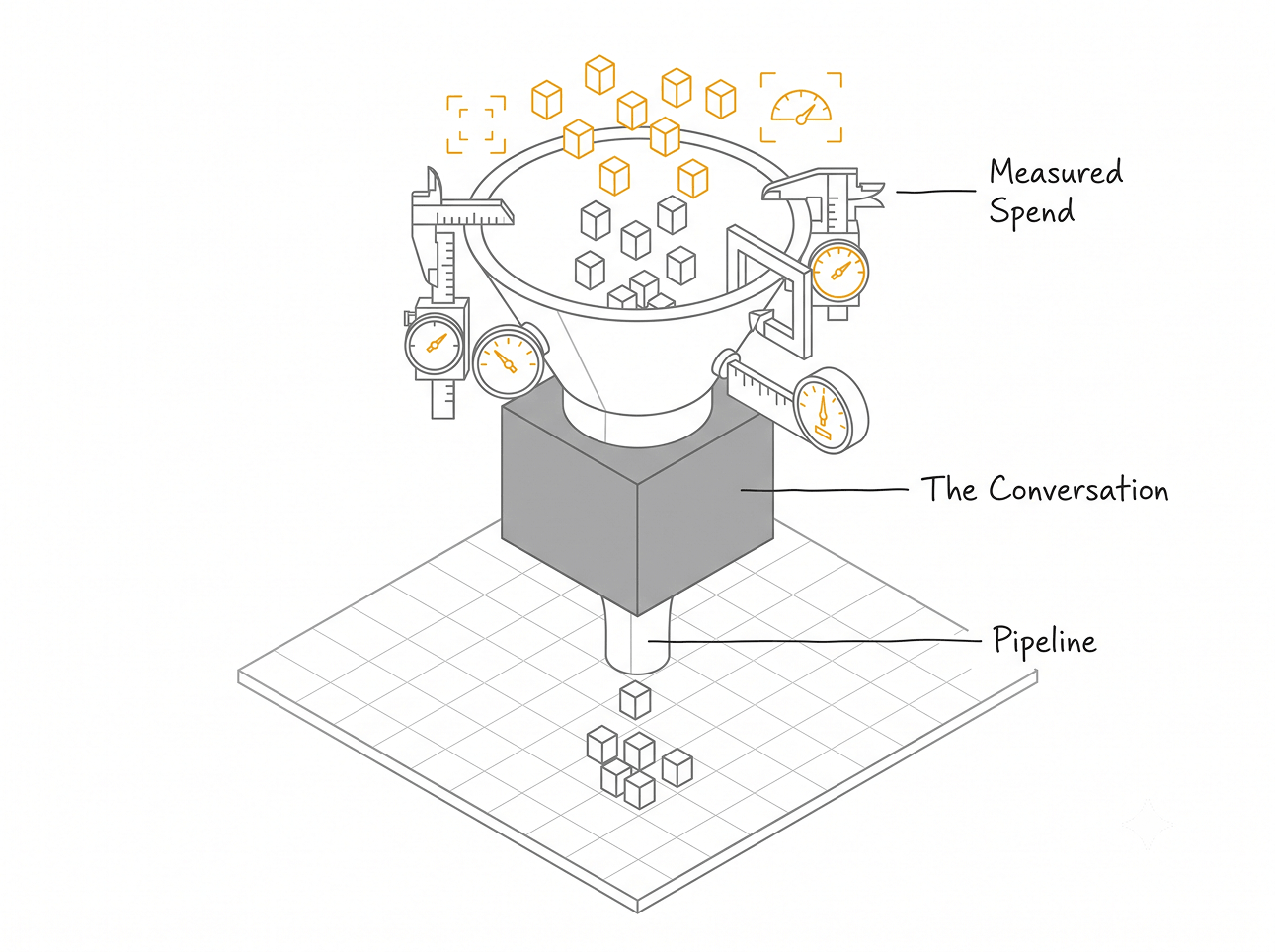
Do not run a proof of concept against a generic demo environment. Test each vendor against a defined slice of your own cloud estate.
Your proof of concept should measure:
- Time required to discover cloud accounts, workloads, identities, and sensitive data.
- Number of high-priority attack paths or exposure chains found.
- Accuracy of vulnerability and misconfiguration prioritization.
- Visibility into excessive permissions and non-human identities.
- Coverage for Kubernetes, containers, serverless services, and managed cloud services where relevant.
- Ability to map findings to NIST, CIS, SOC 2, ISO 27001, PCI DSS, HIPAA, or your internal control framework.
- Quality of remediation guidance and ticketing workflow integration.
- Integration with your SIEM, XDR, SOAR, IAM, source control, CI/CD, and service-management tools.
- Cost and effort required to operate the platform after implementation.
A platform that finds more issues is not always the better choice. Select the vendor that helps your team identify, validate, prioritize, and remediate the risks that matter to your business.
Choose cloud security based on the risk you need to reduce
Cloud security buying has become more complex because cloud environments now combine infrastructure, applications, identities, data, automation, third-party access, and AI workloads. A single point tool rarely gives IT leaders enough context to manage that risk effectively.
Start by identifying your highest-risk gap. You may need multi-cloud posture visibility, workload protection, identity controls, data discovery, better recovery readiness, or around-the-clock security operations. That requirement should determine the category you evaluate first.
For many organizations, a CNAPP provides the core technology layer. A managed security provider or cloud consultancy then fills the operational gap by helping you deploy controls, monitor threats, investigate incidents, and improve architecture over time.
The right vendor will not only identify risk. It will help your team prove what matters, prioritize action, and reduce the chance that one overlooked permission, exposed workload, or unprotected data store becomes a business incident.
Your search only begins here
Find the best cloud vendors, MSPs, and solutions providers on TechnologyMatch. Get matched based on your needs. Control the pace of the conversation by making the first move.
FAQ
What is the difference between CNAPP and CSPM?
CSPM focuses on cloud configuration risk, policy violations, and compliance gaps. CNAPP is a broader category that can include CSPM, workload protection, cloud identity and entitlement management, data security posture management, code security, and runtime protection.
Which cloud security vendor is best for AWS, Azure, or Google Cloud?
The answer depends on your architecture and existing security stack. Microsoft Defender for Cloud is a natural starting point for Microsoft and Azure environments. Wiz, Palo Alto Networks Prisma Cloud, Orca Security, and Check Point CloudGuard are common multi-cloud options. You should validate support for the services, workloads, identity models, and compliance requirements that apply to your environment.
Do I need a cloud security platform, an MDR provider, or both?
You need a platform when you require technology that discovers and prioritizes cloud risk. You need an MDR provider when your team cannot monitor alerts, investigate incidents, and respond around the clock. Many organizations use both because each solves a different problem.
What is data security posture management?
Data security posture management, or DSPM, helps organizations discover sensitive data, classify it, understand where it lives, identify who can access it, and detect exposure or governance gaps. DSPM has become important as sensitive data spreads across cloud storage, databases, SaaS applications, analytics environments, and AI-related workloads.
How should I evaluate agentless versus agent-based cloud security?
Agentless tools can provide fast cloud visibility with less deployment effort. Agent-based tools can provide deeper runtime visibility and workload-level controls. The right choice depends on your environment. Many security programs use agentless discovery for broad coverage and agents for high-risk workloads that need deeper protection.
What should a cloud security proof of concept include?
Test the platform against your own cloud accounts, workloads, identities, data stores, and deployment workflows. Measure time to deploy, asset coverage, attack-path prioritization, identity findings, data exposure, compliance evidence, integrations, remediation workflow, and ongoing operating effort.
How often should I reassess cloud security vendors?
Review the platform at least annually, and review your cloud-security strategy whenever you migrate critical workloads, add a new cloud provider, adopt a major SaaS or AI service, change identity architecture, acquire another company, or face new regulatory requirements.

%20to%20Intune%20Migration%20Guide.png)